

India has taken another step towards building a domestic rare earth permanent magnet manufacturing industry, with Coal India, ReNew and two other companies receiving initial approvals under the Centre’s ₹7,280-crore incentive scheme. The development is aimed at strengthening domestic manufacturing capabilities and reducing dependence on imported rare earth magnets, which are essential components in electric vehicles, electronics, defence equipment and renewable energy technologies.
The four companies include Coal India-led consortium, ReNew Energy, Prozeal Green Energy and Midwest Energy. The initial clearances follow the government’s assessment of industry preparedness and manufacturing capabilities under the Rare Earth Permanent Magnet (REPM) scheme.
Among the selected entities, the Coal India-led consortium has been declared the L1 bidder, with Coal India as its lead member and the Non-Ferrous Materials Technology Development Centre (NFTDC) as another consortium partner. The consortium has secured a contract to establish a manufacturing facility for sintered neodymium-iron-boron (NdFeB) rare earth permanent magnets, with an annual production capacity of 1,200 tonnes.
The government’s move comes amid growing concerns over India’s dependence on overseas suppliers for critical materials. China’s export restrictions on rare earth elements and related products have brought renewed attention to vulnerabilities in global supply chains, particularly for industries such as automotive, electronics, defence and clean energy.
Announced in November 2025, the REPM scheme is designed to support the establishment of up to five integrated rare earth magnet manufacturing facilities in India. The programme provides for a two-year period to set up manufacturing capacity, followed by five years of sales-linked incentives. Bidders were permitted to propose manufacturing capacities ranging from 600 tonnes to 1,200 tonnes per annum.
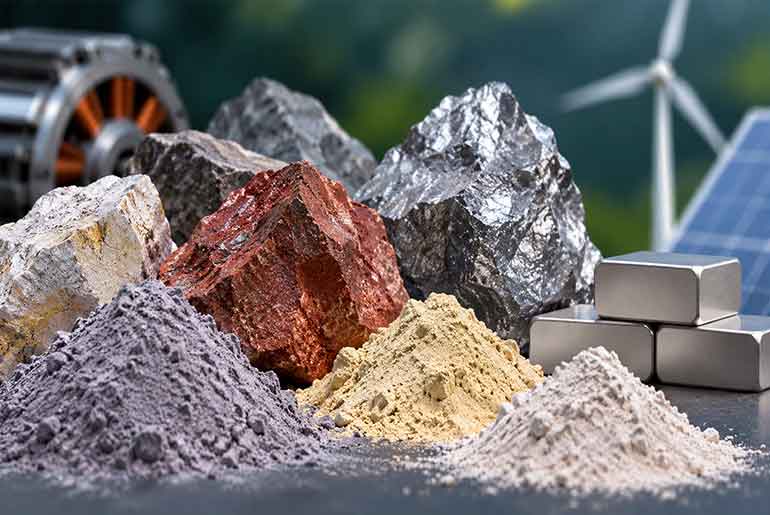
The scheme focuses on developing domestic capabilities across the value chain, from processing rare earth raw materials into usable magnet inputs to manufacturing finished magnets. These materials are found in deposits, including monazite, and require specialised processing and refining before they can be used in permanent magnet production.
IREL to Support Raw Material Supply
State-owned IREL (India) Limited is expected to play an important role in supporting the new manufacturing ecosystem. The company, which mines and processes rare earth materials into rare earth oxides, has an annual production capacity of around 400 tonnes of rare earth oxides. According to the report, this output can support the manufacture of approximately 1,200 tonnes of magnets.
IREL also holds a stockpile of around 500 tonnes of rare earth oxides, which could support the production of approximately 1,500 tonnes of magnets.
Under the scheme’s supply arrangement, IREL will assist the three lowest bidders for magnet sales-linked incentives by providing an assured, limited supply of rare earth oxides. The first-ranked bidder will be eligible for 200 tonnes, the second for 167 tonnes and the third for 133 tonnes.
However, the availability of raw materials remains a critical factor in determining how quickly India’s planned magnet manufacturing capacity can become operational. While the scheme seeks to establish domestic production, the country still has limited industrial-scale capabilities in several stages of rare earth processing, separation and refining.
The government is expected to complete the process of identifying the scheme’s beneficiaries and move towards issuing formal awards. The initial clearances therefore mark progress towards setting up domestic manufacturing facilities, while the next phase will depend on final approvals, project execution and the development of a reliable raw material supply chain.
By combining manufacturing incentives with access to domestically processed rare earth materials, the programme seeks to build a stronger foundation for India’s permanent magnet industry and reduce exposure to disruptions in international supply chains.
 Electrify your feed! Click here to join our Whatsapp group and to get the latest updates, expert insights, and innovations driving India’s energy storage revolution.