Chinese automaker Dongfeng Motor Corporation has introduced a prototype 1.5 MW ultra-fast EV charging system, marking a significant step in the race to develop next-generation high-power charging infrastructure. The company also announced plans to expand its charging portfolio with systems ranging from 720 kW to 2.4 MW, catering to both passenger and commercial electric vehicles.
The newly unveiled charging solution features a 1.2 MW main charging unit with a modular architecture that allows additional power cabinets to be integrated, increasing the system’s total output to 2.4 MW or higher. According to Dongfeng, each charging connector can deliver a peak current of 1,500 A across a voltage range of 150 V to 1,000 V, while maintaining an energy efficiency of at least 96.7%.
The company stated that the charger is among the first products to comply with China’s GB 46519-2025 national energy-efficiency standard for high-power charging equipment, positioning it as one of the country’s early Level 1 energy-efficient charging solutions.
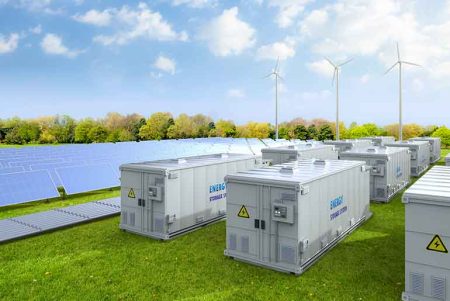
In addition to the current platform, Dongfeng revealed that it is developing a next-generation ultra-fast charging system integrated with battery energy storage, highlighting the growing role of energy storage in enabling high-power charging while reducing stress on electricity distribution networks. The company plans to build a comprehensive charging product lineup spanning 720 kW to 2.4 MW, capable of supporting diverse EV applications across passenger cars, buses and commercial vehicles.
Dongfeng’s 1.5 MW charging output matches the peak charging capability of BYD’s second-generation Flash Charger, which was unveiled in March alongside the latest version of the company’s Blade Battery. BYD described its charger as the world’s most powerful mass-produced single-gun charging system, capable of recharging compatible vehicles from 10% to 70% state of charge in approximately five minutes under optimal conditions. The company has also announced plans to deploy 20,000 Flash Charging stations across China by the end of 2026.
Alongside the charging technology, Dongfeng introduced the iD5-300SN, its first kilovolt electric drive system. The drive unit incorporates a 1,500 V-rated silicon carbide (SiC) power module, operates across a voltage range of 450 V to 1,000 V, and delivers a peak output of 300 kW. The system is compatible with existing 800 V EV platforms and is designed for future expansion to 1,200 V architectures.
According to Dongfeng, the new electric drive offers 30% higher power density than its predecessor while delivering industry-leading efficiency under China’s CLTC testing cycle. The company plans to integrate the technology into its Mach powertrain family and deploy it in the first kilovolt electric vehicle under the Epicland brand, which is being jointly developed with Huawei.
The announcement underscores the rapidly intensifying competition among Chinese automakers and technology companies in the ultra-fast charging segment. Manufacturers are increasingly focusing on megawatt-scale charging systems, high-voltage vehicle platforms, silicon carbide power electronics and battery energy storage integration to significantly reduce charging times while improving grid compatibility.
The development also follows Hongqi’s recent unveiling of an ultra-fast charging battery capable of charging from 10% to 70% in just three minutes and 41 seconds, further highlighting the pace of innovation in China’s electric mobility ecosystem. As EV adoption accelerates globally, megawatt-class charging solutions integrated with energy storage are expected to play a critical role in supporting next-generation electric passenger vehicles and heavy-duty transport while enhancing charging efficiency and grid resilience.
 Electrify your feed! Click here to join our Whatsapp group and to get the latest updates, expert insights, and innovations driving India’s energy storage revolution.