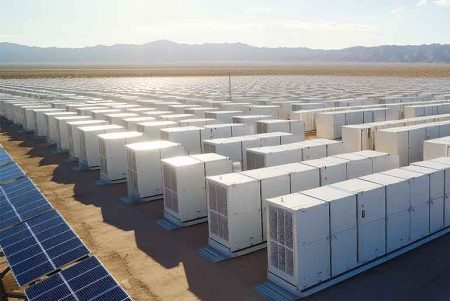
As India accelerates toward a digitally driven, electrified energy future, the conversation is no longer just about generation—it is about intelligence, storage, and seamless integration. From battery energy storage systems to AI-enabled grids, the energy ecosystem is undergoing a fundamental transformation, demanding not just infrastructure, but intelligent orchestration of power.
In an engaging and thought-provoking discussion, Shweta Kumari, Sub-Editor, got the opportunity to interact with Amit Tyagi, Vice President, Phoenix Contact India Private Ltd., who shared deep insights into how electrification, automation, and digitalization are converging to shape the next phase of energy systems. He highlighted the growing importance of BESS, cyber-secure communication, and real-time energy management as critical enablers of grid resilience and renewable integration.
Phoenix Contact has traditionally been strong in electrification and automation. How is the company repositioning itself to play a deeper role in BESS and grid-scale energy management?
Phoenix Contact has evolved significantly beyond its historic strengths in connectivity and automation to become a technology enabler for the emerging energy ecosystem, particularly in battery energy storage systems (BESS) and grid-scale energy management.
Today, Phoenix Contact offers a comprehensive portfolio across the BESS architecture, spanning:
• High-reliability connection and interface technologies
• Advanced industrial power supplies and energy monitoring systems
• Industrial communication infrastructure for grid-connected assets
• Automation controllers and software platforms for intelligent energy orchestration
These technologies support every layer of the BESS architecture from battery management connectivity and PCS interfacing to protection systems, digital communication, and real-time energy management platforms.
Importantly, this transformation aligns closely with India’s national energy transition strategy. India is targeting 500 GW of non-fossil fuel power capacity by 2030, which will require large-scale energy storage to manage renewable intermittency.
According to the national electricity planning framework, India’s energy storage requirement is projected to reach over 411 GWh by 2032, with battery storage playing a major role in grid stability and renewable integration.
Phoenix Contact is positioning itself as a technology partner for this transition, delivering the electrification, connectivity, and automation infrastructure required for reliable grid-scale storage.
In large-scale BESS installations, where do you see the biggest failure risks today—and how is Phoenix Contact addressing these gaps?
From our global experience in energy infrastructure, the most significant risks in BESS deployments typically arise in three critical areas: power electronics integration, communication systems, and operational safety.
Power Electronics & PCS Integration
Thermal stress, harmonics, and conversion inefficiencies can affect long-term reliability. Phoenix Contact addresses these challenges through robust DC connection technologies, optimized power architectures, surge protection, and industrial power supply solutions that enhance system stability.
Communication & Data Integration
Modern BESS installations involve multiple layers—BMS, PCS, EMS, SCADA, and grid operators—often from different vendors.
Phoenix Contact provides open-protocol industrial networking, cyber-secure communication modules, and high-availability automation controllers to ensure seamless interoperability and synchronized system operation.
Protection & Operational Safety
Issues such as thermal runaway, poor connection integrity, and insufficient monitoring remain key safety concerns.
Our solutions integrate reliable connection technologies, intelligent monitoring systems, and industrial-grade auxiliary power infrastructure, enabling high system availability and improved operational safety.
Together, Phoenix Contact’s connectivity, power, and automation ecosystem significantly enhances system resilience and uptime for utility-scale BESS projects.
As utilities adopt AI-based energy forecasting and optimization, how critical is intelligent automation hardware in ensuring data accuracy, cybersecurity, and real-time response?
AI-driven energy management systems are only as effective as the operational technology (OT) layer that provides the underlying data. Phoenix Contact delivers the industrial hardware backbone that ensures AI systems operate on high-quality, real-time, and cyber-secure data streams.
Our portfolio includes:
- High-precision energy meters and monitoring devices
- Industrial networking and communication gateways
- Automation controllers with edge computing capability
These solutions ensure:
- Accurate, high-resolution operational data for forecasting algorithms
- Real-time device-level response for grid balancing and demand response
- Cyber-secure communication aligned with IEC 62443 standards
In a highly digitalized energy system, Phoenix Contact ensures that AI operates on trusted data with deterministic control and secure infrastructure.
India is moving rapidly toward renewables backed by storage. How is Phoenix Contact localising its solutions for extreme climatic and grid conditions?
India’s renewable expansion is creating one of the fastest-growing markets for energy storage globally, supported by strong government policy and regulatory frameworks.
The government has introduced several key initiatives to accelerate BESS adoption, including:
- Viability Gap Funding schemes supporting more than 40 GWh of BESS capacity
- Waiver of interstate transmission charges for storage projects until 2028
- Energy Storage Obligations requiring utilities to procure storage capacity
- Production-Linked Incentive schemes for domestic battery manufacturing
These policies are creating a strong ecosystem for grid-scale storage and hybrid renewable-storage projects.
Phoenix Contact India complements these initiatives through localized engineering, application expertise, and nationwide service capabilities.
Our approach includes:
- Ruggedized product designs suitable for high temperature, dust, and humidity
- Modular plug-and-play solutions that accelerate installation and commissioning
- Engineering and service presence across 21 branch offices nationwide
This enables Phoenix Contact to support projects across renewable energy plants, BESS installations, EV charging infrastructure, and digital substations throughout India.
How do batteries, power conversion systems, and digital interfaces together enable the All Electric Society?
The All Electric Society represents a future where energy is generated, distributed, stored, and consumed entirely through electrified and digitally orchestrated systems. Three core technology pillars enable this transition.
Batteries
Energy storage provides the flexibility required to stabilize renewable energy generation and manage peak demand.
Power Conversion Systems
PCS technologies connect DC renewable sources, battery storage, and AC grids, enabling efficient power conversion and flexible energy flows.
Digital Interfaces & Automation
Advanced communication networks and automation platforms enable:
• Real-time orchestration of energy flows
• Predictive grid balancing
• Sector coupling across mobility, buildings, and industry
• Intelligent carbon-efficient operations
Phoenix Contact’s automation, connectivity, and digital infrastructure solutions ensure these elements operate as a unified, intelligent energy ecosystem.
With the rapid growth of EVs and fast-charging, how can smart charging, load management, and BESS work together to avoid urban grid stress?
India’s EV ecosystem is expanding rapidly, but high-power fast charging can create significant localized demand peaks in urban grids.
Phoenix Contact enables a grid-supportive EV charging architecture through three integrated technologies:
Smart Charging Infrastructure
Our CHARX portfolio provides high-power charging connectors, controllers, communication modules, and safety interfaces designed for high-performance charging networks.
Intelligent Load Management
Energy monitoring and automation platforms enable dynamic load balancing across charging stations, ensuring grid infrastructure is not overloaded.
Stationary BESS Integration
Local energy storage provides peak power support for fast charging, reduces grid stress, and improves operational resilience.
This integrated architecture allows EV infrastructure to scale while maintaining grid stability.
As batteries, EV chargers, and substations become connected, how serious is the cyber risk—and what role does industrial-grade communication play?
Energy infrastructure is increasingly becoming a cyber-physical system, where digital attacks can directly impact physical grid operations. Potential risks include unauthorized system access, data manipulation, and remote shutdown of critical assets. Phoenix Contact addresses these challenges through:
• Secure industrial communication networks
• Encrypted and authenticated device communication
• Tamper-resistant hardware architectures
• OT cybersecurity frameworks aligned with IEC 62443-4-2
By embedding cybersecurity at the device and infrastructure level, Phoenix Contact ensures that future energy systems remain secure, resilient, and reliable.
Looking ahead to 2030, which technologies will define the next phase of energy systems—and where does Phoenix Contact see its strongest impact?
The next decade will be defined by four major technology transformations that are reshaping global and Indian energy landscapes. Decentralized energy storage, particularly utility scale and industrial BESS, will become the backbone of grid flexibility, renewable balancing, and peak shaving strategies. In parallel, digital substations will emerge as critical infrastructure, offering automation driven visibility, remote operability, and advanced cyber secure architectures needed for a renewable heavy grid. AI driven energy automation will unlock predictive analytics, real time optimization, and autonomous grid balancing, enabling utilities to move from reactive to intelligent system management. Additionally, sector coupling and DC ecosystems will integrate renewables, mobility, industry, and buildings into unified, electrified value chains—forming the foundation of a future-ready energy architecture. These technology shifts strongly align with India’s policy direction focused on large scale storage deployment, renewable storage hybridization, and digitalization of power infrastructure. In this evolving landscape, Phoenix Contact’s core strengths in electrification, digitalization, and automation position the company as a key enabler of reliable, scalable, and sustainable energy systems of the future.
Through these capabilities, we are helping build a resilient, intelligent, and decarbonized energy future aligned with the vision of the All Electric Society.
 Electrify your feed! Click here to join our Whatsapp group and to get the latest updates, expert insights, and innovations driving India’s energy storage revolution.