European Energy has signed a long-term PPA with Mars for the majority of the energy produced annually by the project. The project is expected to generate around 490 GWh per year, and the agreement includes bundled guarantees of origin.
Based on this expected yearly production, the estimated amount of CO₂ equivalent avoided will be around 120,000 tonnes annually. Through the power purchase agreement (PPA), the project can guarantee financial sustainability for the project as well as ensuring that Mars is provided with Guarantees of Origin for newly built power capacity for its use.
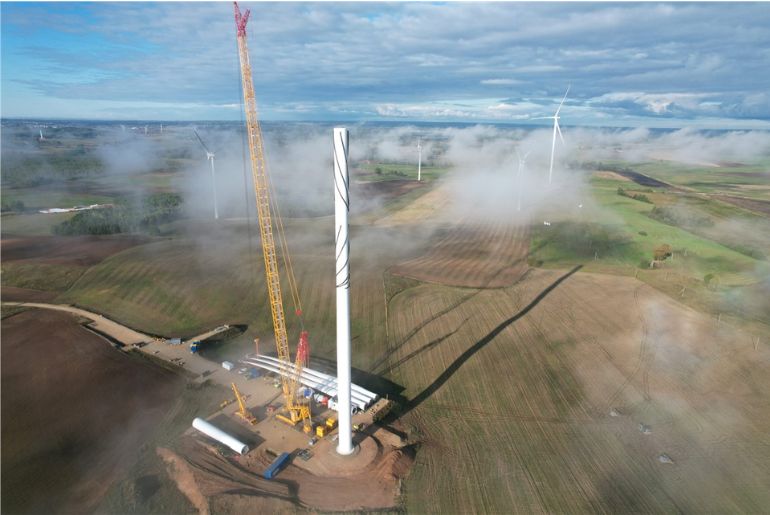
The Skuodas wind farm is set to have an installed capacity of 161 MW. Financial close on this project has not been achieved, while the PPA seeks to facilitate the commercial and financial framework for the same. Commissioning date expected is 2028.
The project will also support the Mars pet food manufacturing facility in Lithuania, providing a secure, long-term source of renewable electricity while reinforcing the site’s role as a key contributor to the company’s export performance.
“This agreement shows how companies like Mars are actively enabling new renewable generation. Through this collaboration, we are advancing the Skuodas wind farm and adding substantial new domestically produced capacity to Lithuania’s energy mix. It shows how corporate PPAs translate commitments into real infrastructure and strengthen national energy independence in Lithuania,” says Jens-Peter Zink, Deputy CEO of European Energy.
“We’re proud to partner with European Energy to help bring the Skuodas wind project to life. By working together on this long-term PPA, we’re not only securing renewable electricity for Mars operations and value chain in the region but also supporting new investment in Lithuania’s energy infrastructure,” said Kevin Rabinovitch, Global VP Sustainability at Mars.
“We’re also proud that our early involvement in Skuodas will help secure the project’s financing structure, providing the long-term certainty needed to unlock new renewable capacity. Through our Renewables Acceleration Program, we’re extending our impact beyond our own operations and directly scaling renewable energy across our value chain, bringing demand to the market faster and at greater scale.”
The agreement reflects the continued use of long-term corporate PPAs as a structuring tool for renewable energy investments and as a mechanism to support the development of new wind capacity in the Baltic region. It also reflects the ongoing expansion of renewable power generation in Lithuania, thereby reducing reliance on imported fossil fuels and strengthening the country’s energy independence.
 Electrify your feed! Click here to join our Whatsapp group and to get the latest updates, expert insights, and innovations driving India’s energy storage revolution.