Germany’s Fraunhofer Institute for Solar Energy Systems ISE has announced the launch of its “PVgoesMV” project to showcase the world’s first medium-voltage solar systems using 3 kV string inverters a step designed to address rising material limitations and cost challenges in the global solar industry.
The project’s main goal is to prove that running large-scale solar plants at medium voltage is both technically possible and cost-effective, as the solar sector prepares for an expected addition of around 73 terawatts of installed capacity by 2050.
Project Details and Timeline
The PVgoesMV project started in December 2025 and is planned to run for three years. It is funded by the German Federal Ministry for Economic Affairs and Energy under the 8th Energy Research Program, called “Innovations for the Energy Transition.”
Under the project, two pilot solar plants are being built in the German states of Baden-Württemberg and Rhineland-Palatinate. Each will have a connected load of about 135 kW and will be operated over several months.
The systems are designed to run at up to 3 kV on the DC side and 1.2 kV on the AC side, using medium-voltage inverters based on high-blocking silicon carbide semiconductors previously developed by Fraunhofer ISE. These inverters are now being adapted for use in real solar projects.
Two types of string setups will be tested: one with standard 1,500 V solar modules with midpoint grounding, and another with a full 3 kV string using specially developed prototype modules.
Fraunhofer ISE and its partners plan to use the data and experience from planning, building, and running the pilot plants to help create quality assurance and testing standards for future medium-voltage solar systems.
Addressing Industry Challenges
Fraunhofer ISE says that the solar industry’s expected growth will demand huge amounts of raw materials, especially copper and aluminum for cables, transformers, and substations. In a modern 50 MW solar plant, cable lengths can stretch for hundreds of kilometers, making conductor materials a major cost and supply concern.
According to the International Energy Agency’s Global Critical Minerals Outlook 2024, global copper demand is expected to exceed announced supply from 2025 onwards, which could push prices higher.
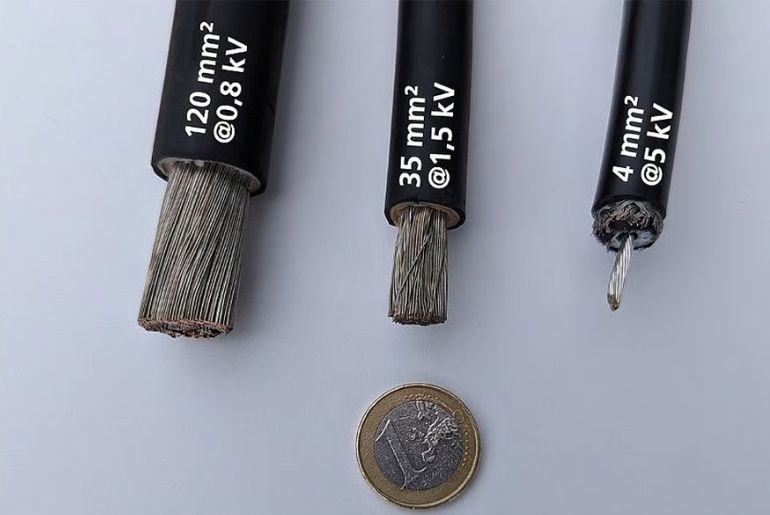
Moving solar systems to medium voltage can help reduce the amount of conductor material needed. Doubling the voltage level shrinks the required cable cross-section by about 75 %, reducing the need for copper or aluminum, easing installation, and cutting labour costs. It can also allow transformers and substations to handle double their load without growing in size, lowering material and investment costs further.
Fraunhofer ISE project manager Felix Kulenkampff pointed out that these advantages “already occur at relatively low medium-voltage levels” and that the effort needed to design components for higher voltages remains manageable.
 Electrify your feed! Click here to join our Whatsapp group and to get the latest updates, expert insights, and innovations driving India’s energy storage revolution.