For generations, Eveready has been synonymous with the simple promise of keeping everyday life powered. But the battery industry is changing—and so is the meaning of that promise. As consumers move towards smarter homes, connected devices, portable electronics and increasingly power-intensive applications, the familiar battery is evolving into a more performance-driven power solution. At the same time, localisation, supply-chain resilience, advanced manufacturing and sustainability are reshaping what it means to build batteries in India.
A significant step in this transformation is Eveready’s recently commissioned alkaline battery manufacturing facility in Jammu—the company’s only operating alkaline battery manufacturing facility in India, with an annual peak capacity of 360 million batteries and the potential to generate more than 500 jobs at scale.
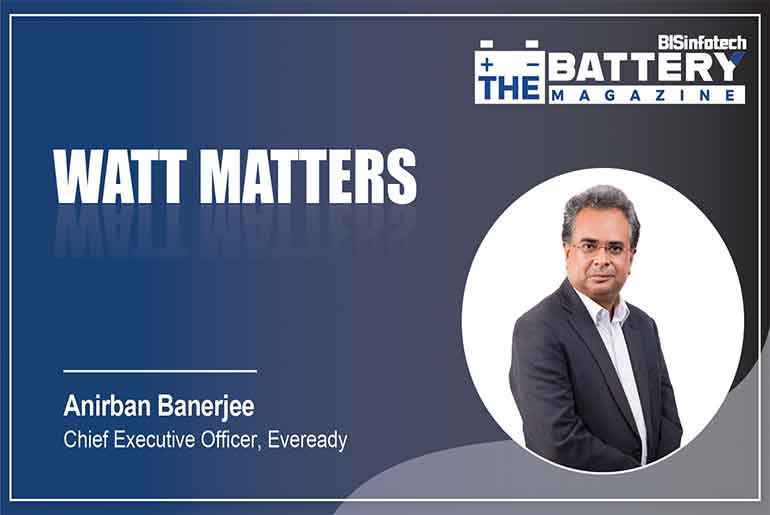
Against this backdrop, Shweta Kumari, Sub-Editor, The Battery Magazine, engaged in a thought-provoking conversation with Anirban Banerjee, Chief Executive Officer, Eveready, to explore what this manufacturing expansion signals for the company’s future and how Eveready is responding to the changing power needs of Indian consumers. The conversation spans alkaline and rechargeable technologies, premiumisation, localisation, sustainability, automation, portable power and the company’s broader ambition to evolve beyond traditional batteries.
Can a brand built on batteries become a broader power company for a more connected India? Let’s delve into the interview to discover how Eveready is recharging its legacy and powering its next chapter.
Eveready has recently commissioned India’s only operational alkaline battery manufacturing facility in Jammu. How does this investment reshape your long-term manufacturing strategy and reduce dependence on imported battery technologies?
The commissioning of our alkaline battery manufacturing facility in Jammu represents a landmark moment not only for us at Eveready but also for India’s overall battery manufacturing ecosystem. The plant is the country’s only operating alkaline battery manufacturing facility, which is a big boost to our domestic capabilities in a category that has traditionally relied on imports.
For Eveready, this investment is a strategic step towards building a more resilient, technology-led and future-ready manufacturing network. The facility gives us greater control over quality, supply chains and production planning while reducing dependence on imported finished products. It also enables faster response to evolving consumer demand in a category that is witnessing robust growth.
In addition, localized manufacturing enhances cost efficiencies by reducing dependence on imported finished products and improving supply chain responsiveness. This strengthens our competitiveness while enabling us to serve the growing premium battery segment more effectively.
More importantly, the plant reinforces our commitment to the broader vision of Atmanirbhar Bharat by developing local manufacturing capabilities in a high-performance battery segment. With an annual peak capacity of 360 million alkaline batteries and the potential to generate over 500 jobs at scale, the facility strengthens our ability to serve domestic demand while opening avenues for exports and private-label manufacturing opportunities in global markets.
As India’s battery market increasingly shifts toward high-performance and power-intensive applications, how do you see the role of alkaline batteries evolving alongside rechargeable and lithium-based technologies over the next decade?
The battery landscape is becoming increasingly diversified as consumers adopt more connected, digital and power-intensive devices. We believe the future will not be defined by one battery chemistry replacing another, but rather by multiple technologies coexisting and serving distinct consumer needs.
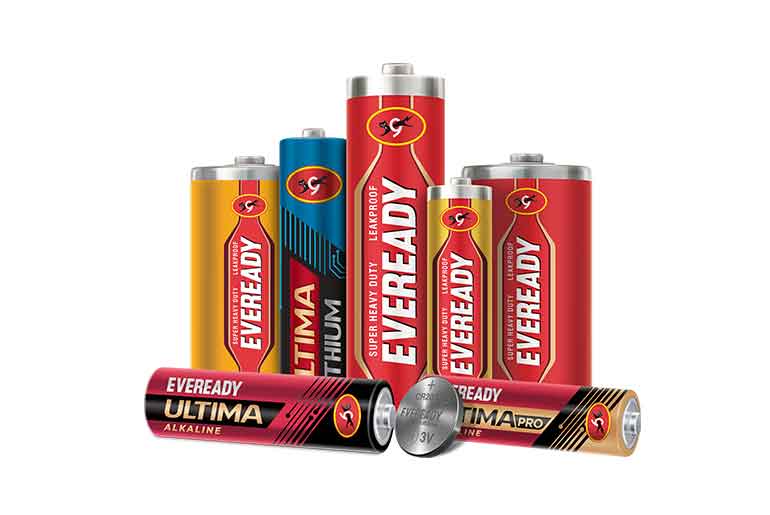
Each type of battery chemistry serves a distinct consumer need. Take carbon-zinc batteries for example, they continue to remain highly relevant for everyday household applications where dependable and cost-effective power is essential. Whereas, alkaline batteries are increasingly becoming the preferred choice for high-power household devices, such as smart home devices, toys, door locks, gaming accessories, remote controls etc. These devices demand longer runtime and enhanced performance which is why alkaline batteries become essential source of power for them.
On the other hand, rechargeable batteries deliver long-term value for consumers through repeated usage, making them suitable for applications where batteries are replaced frequently. In addition to this lithium batteries addresses specialized, high-efficiency and power-hungry devices. These include medical equipment like blood pressure monitors, security systems and other advanced electronic devices where consistent performance and reliability are critical.
Eveready is well-positioned to participate across this spectrum through its growing portfolio of carbon-zinc, alkaline, rechargeable and lithium battery solutions, enabling us to address evolving consumer needs across diverse applications.
Currently we are experiencing a strong growth in our alkaline business. This reinforces our belief that India is still in the early stages of premiumization within the battery category. Over the next decade, we expect alkaline batteries to emerge as a key growth driver while complementing advancements in rechargeable and lithium technologies.
Battery storage is becoming a critical pillar of India’s energy transition. How is Eveready evaluating opportunities in the broader energy storage ecosystem beyond traditional consumer batteries?
India’s energy transition offers exciting opportunities across the wider power and energy ecosystem. As renewable energy use increases and consumers become increasingly dependent on uninterrupted power, the demand for reliable energy solutions will only continue to grow.
At Eveready, we view this evolution through the lens of our core strength powering everyday life. While consumer batteries remain at the heart of our business, we are continuously evaluating adjacent opportunities that align with our capabilities, brand strengths and technological expertise.
Our recent expansion into mobile accessories, including power banks, charging solutions and related categories, is a reflection of our broader ambition to evolve from being solely a battery manufacturer into a more comprehensive power solutions company. We continue to focus on strengthening our core and building future-ready adjacencies to respond to evolving consumer and market needs. As the energy ecosystem continues to evolve, we will remain agile and evaluate opportunities that complement our long-term strategy while creating sustainable value for consumers and stakeholders.
With growing emphasis on localization and supply-chain resilience, what lessons from establishing the Jammu facility could be applied to future battery manufacturing expansions in India?
One of the most important lessons is that localization has evolved from being a cost advantage to becoming a strategic imperative. Recent global supply-chain disruptions have highlighted the importance of building domestic manufacturing ecosystems that can support long-term growth and resilience.
The Jammu facility demonstrates the value of integrating advanced manufacturing, supply-chain planning, technology and market demand forecasting from the outset. It also highlights the importance of collaboration between industry, policymakers and local stakeholders in creating a conducive environment for industrial development.
Another key takeaway is that India possesses the talent, scale and demand potential necessary to support world-class battery manufacturing. With the right investments in technology, automation, quality systems and skills development, India can emerge as a globally competitive manufacturing hub across battery technologies.
The experience reinforces our belief that future growth will increasingly be driven by localized manufacturing, operational excellence and continuous innovation.
Sustainability is becoming a decisive factor across the battery value chain. How is Eveready approaching responsible sourcing, manufacturing efficiency, and end-of-life battery management in its growth plans?
Sustainability is becoming an increasingly important consideration across the entire battery ecosystem, and we view it as an integral part of responsible growth.
At Eveready, sustainability is embedded across our manufacturing and operational practices. Our new Jammu facility has been developed with a strong ESG focus, incorporating initiatives such as solar integration, water harvesting systems and zero-discharge operations. These measures help improve resource efficiency while minimizing environmental impact.
We are equally focused on delivering products that offer higher performance, longer life and improved reliability, enabling consumers to derive greater value from every battery. Our primary battery portfolio, for instance, is free from mercury, lead and cadmium, reflecting our commitment to safer and more environmentally conscious product development.
As awareness around responsible disposal and recycling continues to grow, we recognize the importance of supporting industry-wide efforts towards a more circular battery economy. We remain committed to working closely with stakeholders and evolving regulatory frameworks to contribute meaningfully to India’s sustainability goals.
As digitalization transforms manufacturing, what role do automation, AI-driven quality control, and smart factory practices play in Eveready’s vision for next-generation battery production?
Digitalization is fundamentally reshaping manufacturing across industries, and battery production is no exception. At Eveready, we see technology as a critical enabler of productivity, quality, efficiency and competitiveness.
As manufacturing processes become more sophisticated, the adoption of automation, robotics and intelligent monitoring systems becomes increasingly important. Automated production lines and robotic interventions help improve precision, consistency and operational efficiency while minimizing process variability. These technologies help improve process consistency, reduce variability and enhance product reliability.
Our focus is on continuously modernizing our manufacturing footprint through globally benchmarked technologies and advanced quality systems. We believe future-ready manufacturing will be defined by the integration of digital tools, automation and real-time analytics that enable greater agility and operational excellence.
Supported by our dedicated R&D capabilities, we will continue investing in technologies that strengthen product innovation and manufacturing competitiveness while maintaining the high standards that consumers associate with the Eveready brand.
The boundary between consumer batteries, mobility batteries, and stationary storage is gradually narrowing. Which emerging technology or market trend do you believe will create the next major growth opportunity for Eveready?
One of the most significant trends shaping the industry is the growing demand for reliable power across an increasingly connected lifestyle. Consumers today expect seamless access to power whether they are using smart devices, portable electronics, home automation systems or mobility-related products.
We continue to see significant headroom for growth across the household battery category, where evolving consumer lifestyles are driving demand for differentiated power solutions. Alongside strengthening our leadership in carbon-zinc batteries, we are focused on expanding our presence across alkaline, lithium and rechargeable battery chemistries, with each designed to address specific consumer requirements and device applications.
Going forward, batteries will increasingly be segmented by the devices they power rather than being viewed as a one-size-fits-all solution. From everyday household appliances and remote controls to smart home products, gaming accessories, medical devices and security systems, consumers are seeking purpose-built power solutions that deliver the right balance of performance, longevity and reliability.
At the same time, the convergence of batteries, portable power and connected lifestyles is opening new avenues for growth. Our expansion into mobile accessories, including power banks, chargers and related products, reflects this evolving opportunity. We are also continuously evaluating adjacent household categories where Eveready’s trusted brand, strong distribution network and expertise in powering everyday life provide a strong platform for future expansion and long-term value creation.
We believe Eveready is well-positioned to participate in this evolution through innovation, manufacturing strength and deep consumer trust.
Looking ahead to 2030, what strategic milestones would define success for Eveready in India’s rapidly expanding battery and energy storage landscape?
For Eveready, success in 2030 will be defined by leadership, innovation and sustainability and our ability to meet the changing power needs of consumers.
We are focused on further strengthening our position in high-performance battery categories through accelerated adoption of our alkaline and advanced battery technologies. The recent commissioning of the Jammu facility gives us a strong base on this journey and reiterates our commitment towards localised manufacturing. We will also continue to invest in innovation across batteries, flashlights, lighting and adjacent power categories to ensure Eveready remains relevant in a fast-changing consumer landscape.
In today’s age of a more connected and mobile consumer lifestyle, we also see growing opportunities in portable power and power storage solutions. Our expansion into such categories is representative of our broader vision of powering consumers beyond traditional battery applications and expanding our footprint in the broader power ecosystem. We are also very committed to sustainability, and it will remain a key pillar of our long-term growth strategy. We want to develop manufacturing capabilities that are world-class and environmentally friendly. Our Jammu facility’s integration of renewable energy, water conservation and resource efficient operations are indicative of the path we wish to take in scaling our manufacturing footprint in the years to come.
We believe that this is going to be a defining decade for the Indian battery industry. The companies best placed to lead the next phase of growth will be those that can successfully combine trusted brands, advanced manufacturing, innovation and sustainability.
At Eveready, we have a clear vision to evolve from being India’s most trusted battery brand to one of the country’s most respected and future-ready power solutions companies, creating long term value for consumers, partners and the nation.
 Electrify your feed! Click here to join our Whatsapp group and to get the latest updates, expert insights, and innovations driving India’s energy storage revolution.