Google on Tuesday revealed plans to develop a new data center in Pine Island, Minnesota, about an hour southeast of Minneapolis. The facility will be supported by 1.9 gigawatts (GW) of clean power, marking Google’s first data center project in the state.
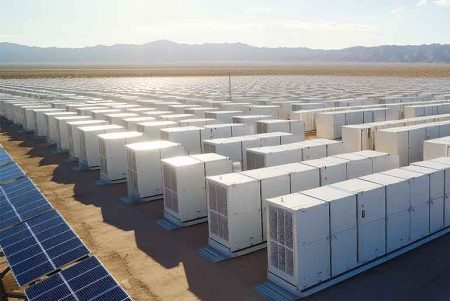
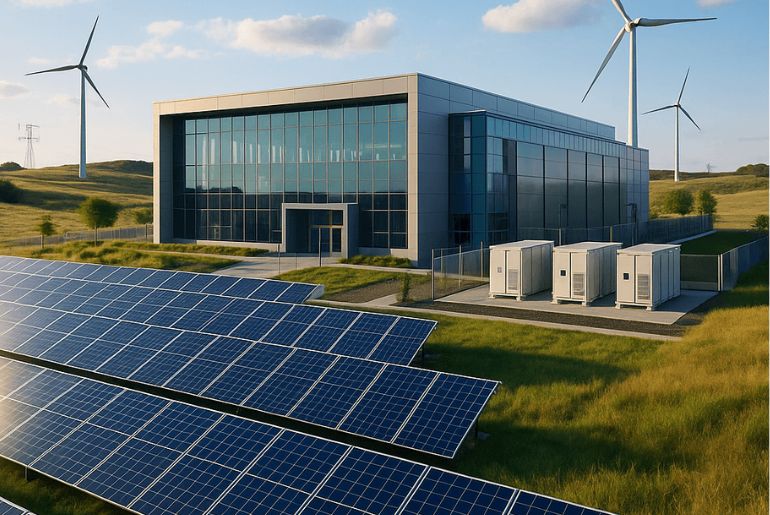
The company is partnering with Xcel Energy to develop 1.4 GW of wind energy and 200 megawatts (MW) of solar power. These renewable sources will be paired with a 300-MW battery system supplied by Form Energy.
For up to 100 hours, the battery will be able to provide electricity at its rated output. It is expected to become the biggest battery in the world, with a total storage capacity of 30 gigawatt-hours (GWh). The long-duration system will help the data center run on clean energy for longer periods of time, even at night or when there isn’t much wind or solar power.
Iron-Air Battery Technology
Form Energy’s batteries differ from conventional lithium-ion systems. Instead of lithium chemistry, the company uses iron-air technology. The system generates electricity when oxygen from the air rusts iron pellets inside the battery. During charging, an electrical current converts the rust back into metallic iron, releasing oxygen.
Iron-air batteries are heavier and less efficient than lithium-ion systems. They typically return 50% to 70% of the energy used to charge them, compared to over 90% for lithium-ion batteries. However, they offer a significant cost advantage. Form Energy says its technology could reduce storage costs to around $20 per kilowatt-hour, making it at least three times cheaper than lithium-ion alternatives.
The project also introduces a new utility pricing structure in Minnesota, sometimes referred to as a “clean transition tariff” or “clean energy accelerator charge.” This agreement allows utilities to adopt innovative clean technologies while ensuring regular ratepayers are protected, with Google paying a premium for the arrangement.
Form Energy is currently installing its first battery in Minnesota with Great River Energy, storing 150 megawatt-hours for 100 hours. The company manufactures batteries in West Virginia and has raised $1.4 billion to date, according to PitchBook.
 Electrify your feed! Click here to join our Whatsapp group and to get the latest updates, expert insights, and innovations driving India’s energy storage revolution.