The Minister of State in the Ministry of Power, Shri Shripad Naik submitted a written reply in the Rajya Sabha stated that The Government of India has set an ambitious target of achieving 500 GW of installed electricity generation capacity from non-fossil fuel-based sources by 2030. A major share of this capacity is expected from solar and wind energy, which are inherently intermittent and variable in nature.
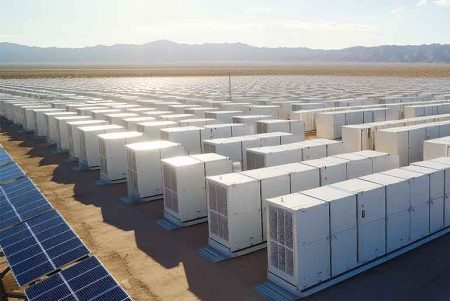
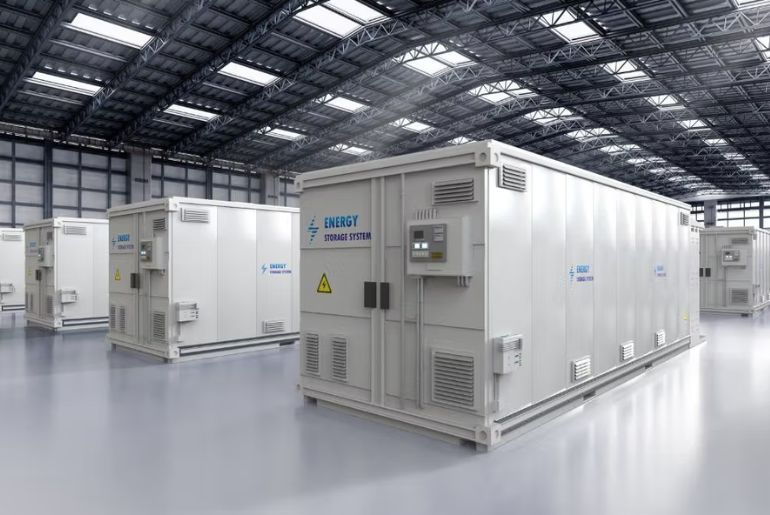
To manage variability and ensure reliable power supply, Energy Storage Systems (ESS) are being promoted as a critical solution. These systems help store excess renewable energy during high generation periods and release it during peak demand, ensuring 24×7 electricity availability. ESS also supports grid operations by providing frequency regulation, voltage control, and black start capability. As per the National Electricity Plan (2023) by the Central Electricity Authority (CEA), a requirement of 208 GWh of Battery Energy Storage Systems (BESS) has been projected by 2030.
As per available data, State/UT-wise BESS capacity above 1 MWh has been compiled, while 35.8 GWh of BESS capacity is currently under construction, indicating rapid progress in storage deployment across India.
Key Policy and Regulatory Measures
The government has introduced multiple initiatives to strengthen the energy storage ecosystem:
• Electricity Rules amended in December 2022 to recognize ESS as part of the power system
• ESS included in the Harmonised Master List of Infrastructure (October 2022)
• Resource Adequacy Guidelines issued in June 2023 integrating storage into planning
• National Framework for Promotion of Energy Storage Systems released in September 2023
• Draft CEA safety and technical standards for BESS issued in 2025
• Focus on improving safety, reliability, and standardization of storage systems
Market Development and Demand-Side Measures
• Waiver of ISTS charges for co-located BESS projects till June 2028
• BESS allowed in ancillary services like frequency and reserve management
• TBCB guidelines introduced for transparent procurement of storage systems
• Mandatory shift from diesel generators to cleaner backup solutions, including storage
• Participation of BESS in High-Price Day-Ahead Market since March 2023
• Viability Gap Funding schemes supporting ~43 GWh of BESS capacity (launched in 2024 & 2025)
Supply-Side and Manufacturing Support
• ₹18,100 crore Production-Linked Incentive (PLI) scheme for 50 GWh ACC manufacturing
• 10 GWh earmarked for grid-scale storage applications
• Separate grid connectivity allowed during non-solar hours
• Advisory recommending at least 10% storage with solar projects (minimum 2-hour duration)
• Flexible ownership models enabled (owned, leased, or operated by consumers)
These measures collectively aim to accelerate deployment of energy storage technologies and support India’s transition toward a stable, renewable-powered energy system.
Details of Battery Energy Storage Systems State/UT wise (>1 MWh capacity)
| State/UT | Capacity (in MWh) |
| Andaman & Nicobar | 08 |
| Bihar | 282 |
| Chhattisgarh | 120 |
| Delhi | 50 |
| Gujarat | 77 |
| Karnataka | 150 |
| Lakshadweep | 01 |
| Rajasthan | 100 |
| Uttar Pradesh | 03 |
| West Bengal | 06 |
| Total | 798 |
 Electrify your feed! Click here to join our Whatsapp group and to get the latest updates, expert insights, and innovations driving India’s energy storage revolution.