India, the world’s largest democracy, is at a critical juncture in its development journey, aiming to achieve the vision of a Viksit Bharat and Aatmanirbhar Bharat by 2047 while committing to net-zero emissions by 2070 as part of the Panchamrit goals. In the near term, India must also fulfill its Nationally Determined Contributions (NDCs) for 2030, creating a unique challenge of balancing rapid economic growth with responsible decarbonization.
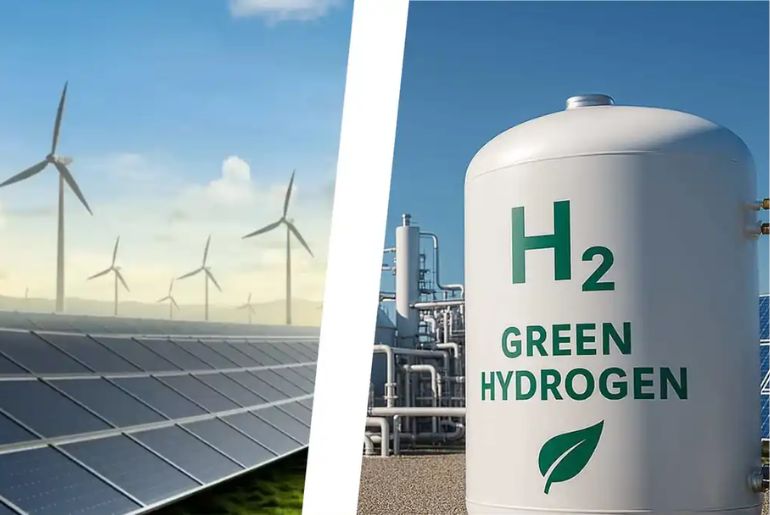
Amid this backdrop, green hydrogen has emerged as a key solution, offering a clean, scalable, and flexible energy option to meet India’s developmental, strategic, and climate objectives. The National Green Hydrogen Mission (NGHM), launched by the Ministry of New and Renewable Energy (MNRE) in 2023, aims to produce 5 MMTPA of green hydrogen by 2030, requiring 125 GW of renewable energy capacity and investments of INR 8 lakh crore, creating 6 lakh jobs and reducing 50 million tonnes of emissions. The Government of India’s Green Hydrogen Policy (2022) further supports this growth through supply-side measures and streamlined regulations.
Recognizing its role as a leading industrial and manufacturing hub, Gujarat has now launched the “Gujarat Green Hydrogen Policy-2025”. This Policy aligns with the State’s existing Aatmanirbhar Gujarat Scheme (2022) and the Viksit Gujarat @2047 Roadmap, aiming to build a comprehensive green hydrogen ecosystem across the State. Gujarat, already a major producer and consumer of renewable energy and hydrogen, seeks to contribute significantly to India’s NGHM targets.
The Policy outlines Gujarat’s vision of driving sustainable economic growth, strengthening energy security, and enabling the production, consumption, and export of green hydrogen and its derivatives. Its mission is to position Gujarat as a leading hub in the green energy ecosystem, targeting 3 MMTPA of green hydrogen production by 2035, in alignment with India’s Panchamrit commitments.
Key goals of the Policy include promoting sustainable development in line with NDCs, SDGs, and Panchamrit commitments, decarbonizing the State’s economy by increasing renewable energy share, and transitioning from fossil fuels to green hydrogen to enhance energy security.
The objectives of the Policy are ambitious:
- Achieve 30 GW of electrolyser capacity and 75 GW of renewable energy capacity.
- Attract INR 5,00,000 crore in investments in green hydrogen and renewable energy sectors.
- Generate around 6,00,000 direct and indirect green jobs.
- Reduce 2 MMTPA of natural gas consumption and cut 5 MMTPA of CO₂ emissions in Gujarat.
The Policy also defines critical terms such as “Green Hydrogen,” “Electrolyser,” “Green Hydrogen Hub,” and “Beneficiary,” and lays out a governance framework for effective implementation, including production incentives, infrastructure support, demand creation, R&D, and skill development initiatives.
With this forward-looking initiative, Gujarat is set to become a national and global leader in green hydrogen production, technology innovation, and exports, supporting India’s goals of energy security and climate action.
The Gujarat Green Hydrogen Policy-2025 comes into effect from the date of its official notification and will remain in force until 31st December 2035, or until a new policy is introduced.
 Electrify your feed! Click here to join our Whatsapp group and to get the latest updates, expert insights, and innovations driving India’s energy storage revolution.