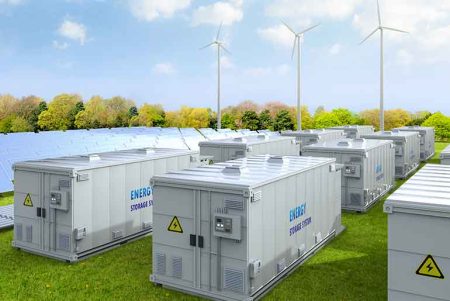



The Haryana government has increased the eligible solar installation capacity under its subsidy programme for shrimp farmers from 10 kW to 30 kW, offering financial assistance of up to 60% of the approved project cost. The move aims to reduce electricity expenses, improve aquaculture profitability and encourage the adoption of renewable energy in saline-affected districts.
The revised subsidy has been introduced under the Intensive Fisheries Development Programme for 2025-26. Under the scheme, the project cost for solar installations used in white shrimp farming has been fixed at ₹50,000 per kW. For a 30 kW solar system, the eligible project cost is capped at ₹15 lakh, making farmers eligible for financial assistance of up to ₹9 lakh, subject to programme conditions and approval.
The increase in the capacity limit is expected to support larger aquaculture operations with higher electricity requirements. Solar-powered systems could help shrimp farmers reduce their dependence on grid electricity and diesel generators, lowering recurring operational expenses and improving farm-level profitability.
Alongside the expansion of solar subsidies, the state is developing Integrated Aqua Parks in Sirsa and Bhiwani to strengthen its fisheries infrastructure. The facilities are planned as Centres of Excellence to provide farmers with scientific guidance, modern farming techniques, training and access to quality seed.
Construction work on the Centre of Excellence in Bhiwani has commenced, with completion targeted for June 2028. In Sirsa, an Integrated Aqua Park is being developed at Poharka village under the Centre’s Pradhan Mantri Matsya Sampada Yojana.
The initiatives come amid growth in India’s seafood export industry. According to the Marine Products Export Development Authority (MPEDA), India exported 19.72 lakh tonnes of seafood worth ₹73,890.46 crore during FY2025-26. Frozen shrimp contributed ₹49,037.93 crore, accounting for 66.52% of total seafood export earnings in US dollar terms.
Solar Energy to Support Agricultural Diversification
Haryana’s initiative also aims to promote alternative income opportunities in saline-affected regions, where conventional agricultural activities can face productivity challenges. Through the solar subsidy scheme, the state is encouraging white shrimp farming by helping farmers adopt solar energy and reduce operational costs. This alternative livelihood allows farmers to make productive use of land and water resources that may be less suitable for traditional crops while improving farm profitability.
Integrating solar energy into aquaculture operations could help reduce energy costs while supporting more sustainable farming practices. The combined focus on renewable energy adoption and fisheries infrastructure is expected to strengthen rural enterprises and improve the competitiveness of shrimp farming.
However, the long-term benefits will depend on solar installation costs, access to financing, maintenance support and the commercial viability of aquaculture operations.
 Electrify your feed! Click here to join our Whatsapp group and to get the latest updates, expert insights, and innovations driving India’s energy storage revolution.