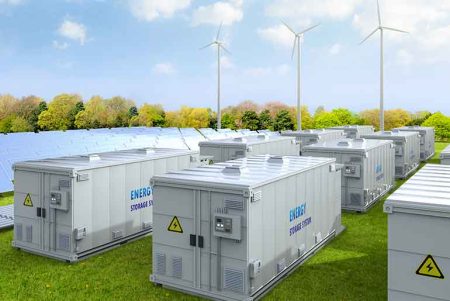


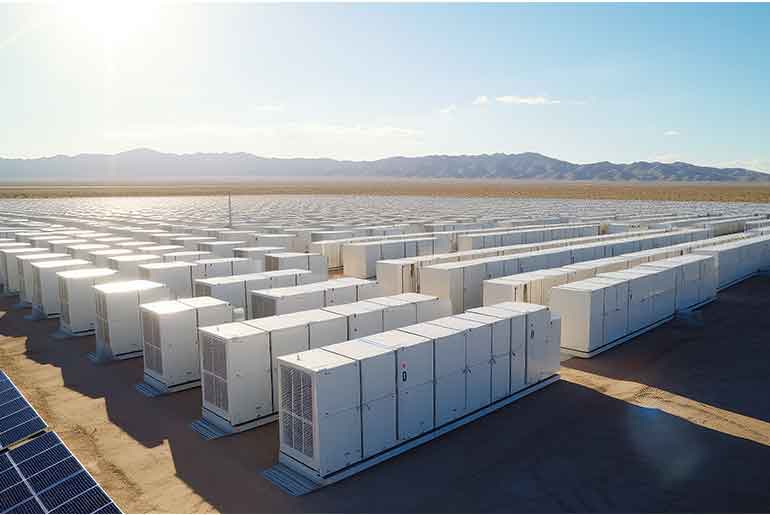
The U.S. energy storage sector has crossed 200 GWh of cumulative installed capacity, following the addition of 14.3 GWh of new capacity in the third quarter of 2026. Total installations during the first nine months of the year reached 48.3 GWh, according to the U.S. Energy Storage Market Outlook Q4 2026, released by the Solar Energy Industries Association (SEIA) and Benchmark Mineral Intelligence.
Last week, more than 300 solar and storage companies sent a letter to Congressional leadership urging swift passage of BAAJA. The legislation will accelerate energy storage deployment, reduce project costs, and expand access to lower cost, reliable electricity for households and businesses.
“Voters made it clear that they want lower prices, and the growing deployment of energy storage is helping make that happen. We’re urging Congress to pass BAAJA to build out America’s energy infrastructure and put downward pressure on prices,” said SEIA CEO Tim Pawlenty.
The outlook for energy storage continues to strengthen, with the report increasing its 2030 cumulative U.S. deployment forecast by 3.7% to 708 GWh across grid and BTM. The revised forecast reflects sustained industry momentum, with U.S. installations up 20% year over year through the first nine months of 2026.
Texas led the nation in utility-scale storage deployment through Q3, adding 12.3 GWh of capacity. Arizona and California followed with 7.7 GWh and 6.8 GWh, respectively. Recent SEIA analysis shows that rapid growth in solar and energy storage helped drive down average wholesale electricity prices by 42% in Texas and 51% in California from summer 2021 to summer 2026.
11 states surpassed their previous annual energy storage installation records in Q3, even with three months remaining in 2026: Colorado, Massachusetts, Utah, Michigan, Georgia, Mississippi, Virginia, Iowa, Montana, Alabama and Illinois.
“States are moving from targets to centralized procurements,” said Pete Tillotson, Senior Analyst at Benchmark Minerals. “Across utility mandates and bulk capacity contracts, energy storage pipelines are growing as a result of both investment appetite and flexibility requirements.”
U.S storage manufacturing continues to accelerate, ensuring that more of the batteries being deployed to strengthen the grid are made in the United States. In July, a new battery cell manufacturing facility opened in Tennessee. In October, a new cell manufacturing facility opened in Indiana, bringing total cell manufacturing capacity to 92.4 GWh, a 50% increase.
Utility-scale projects accounted for the vast majority of Q3 installations, with 12.2 GWh deployed, followed by 1.3 GWh of commercial and industrial storage, and 746 MWh of residential storage.
 Electrify your feed! Click here to join our Whatsapp group and to get the latest updates, expert insights, and innovations driving India’s energy storage revolution.