As the demand for renewable energy and self-sufficient power systems rises, residential energy storage system installation has become a key solution for homeowners seeking reliability, sustainability, and control over their energy usage. Whether paired with rooftop solar panels or used as a backup during outages, these systems are transforming homes into smart energy hubs.
In this comprehensive guide, we’ll explore everything you need to know about residential energy storage system installation—from understanding its components and benefits to planning, installation steps, and maintenance essentials.
What is a Residential Energy Storage System?
A residential energy storage system (RESS) is a setup that stores electricity generated from renewable sources (typically solar) or drawn from the grid during off-peak hours. The stored energy can then be used when demand spikes, during power cuts, or at night when solar panels are inactive.
Most contemporary residential energy storage systems utilize lithium-ion batteries because they last a long time, they are compact, and they are efficient. There are other energy storage systems as well, like lead acid batteries or saltwater batteries, but these renewable systems are highly uncommon in modern homes.
What is the purpose of installing a residential energy storage system?
1. Energy Autonomy
One of the biggest advantages of a home energy storage system is that it reduces your reliance on the traditional electrical grid. Once energy is generated and stored, you can use the stored energy generated in your system activity instead of the grid, moving you closer to energy autonomy.
2. Backup Power in Outages
When the power goes out during a storm, everything you do in your day can come to a screeching halt. Owning a home energy storage system can deliver guaranteed power for essential devices such as lighting, heating, Wi-Fi routers, and refrigeration.
3. Reduced Costs
Homeowners can store reserves of energy during off-peak hours (when electricity costs are lower) and use that stored energy during peak hours which can significantly reduce a household’s electricity bills.
4. Environmental Benefit
Using a solar energy system and a home battery storage configuration greatly reduces a household’s carbon footprint. The clean energy cycle contributes toward the global sustainability agenda.
5. Future-Ready Homes
As smart home technologies advance, residential energy storage systems can be easily integrated with IoT-based energy management and smart meters, allowing homes to become more efficient and smarter.
Key Components of a Residential Energy Storage Infrastructure
Before the energy storage setup for creating a residential energy storage going to occur, it is important to address the essential components:
- Battery Pack: The key battery pack, which is generally lithium-ion, that holds energy.
- Battery Management System (BMS): Where the battery health, safety, and operation are managed.
- Inverter/Charger: Provides a converter from DC current (from the battery) to AC current for home use and back to DC to charge the battery.
- Energy Management System (EMS): Whereinging that can flow energy from battery to solar panels to grid.
- Safety Equipment: Things such as disconnect switches, circuit breakers, fuses, etc.
- Monitoring Interface: Apps or Dashboards that can monitor current conditions in the storage system.
Each component plays an important role in the installation of a residential energy storage system that manages its operation and safety.
Steps Involved in the Installation of a Residential Energy Storage System
Step 1: Determine Your Energy Needs
Prior to installation, it’s advisable to conduct an energy audit. Review your electricity bills, examine your power usage patterns, and list any critical loads (like refrigerators, fans, or routers) that you would want to back-up during a power outage.
Most installers will use load calculators in order to accurately size the system.
Step 2: Determine the Right Battery
The type and size of your battery correlate with performance and cost. Some common options are:
– Lithium-Ion Batteries: Best efficiency, amazing life expectancy (10-15 years), compact.
– Lead-Acid Batteries: Low-cost but require maintenance.
– Flow Batteries: Great durability and scalability but are costly.
Be sure to use batteries that will properly work with your solar inverter and system setup.
Step 3: Site Inspection and System Design
A professional installer inspects your home’s electrical infrastructure, roof orientation, and available space. They design the residential energy storage system installation layout accordingly, considering ventilation, accessibility, and safety codes.
Step 4: Electrical Setup and Mounting
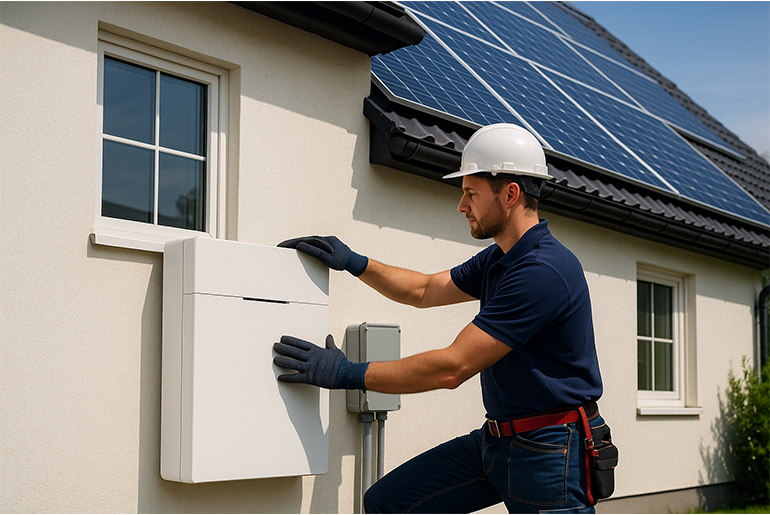
The battery unit is installed (or situated, depending on the setting), usually on a wall or the floor, in an environment such as a garage or utility room. This area should provide for temperature-controlled and good ventilation.
The technicians will connect the following:
- Solar panels (if any)
- Inverter and battery setup
- Connection to grid and backup panel
In addition, technicians must respect proper wiring and grounding to avoid overheating and dangerous conditions.
Step 5 : System Integration and Configuration
At this point, the installers will program the energy management system (EMS) to manage your energy usage by controlling the charging and discharging cycles of your battery, after the equipment has been installed and you are ready to incorporate smart energy management. The EMS will manage:
- Charging your battery with solar energy while the sun is shining
- Using the energy stored in the battery to power the home during peak pricing hours (morning and evening), times of higher cost levied by the utility company, and when the sun sets by utilizing solar storage
- Using the grid power to supplement your energy requirements when appropriate.
Step 6: Testing and Commissioning
- After installation is complete, the technician will test the residential energy storage system to ensure it works correctly and safely and communicates with the inverter correctly as well.
- After test and commissioning, they will also set up an app or apps that will allow you to monitor your energy usage as well as battery status in real time.
Maintenance and Safety Recommendations
For most residential uses, an energy storage system requires minimal maintenance, but you will want to perform some routine maintenance to get the most out of your system’s life and ensure it is safe.
Here are some considerations to ensure you are maintaining your system correctly:
- Regular Inspection: Look for any physical damage / corrosion.
- All Software is Current: Ensure that the firmware for your inverter and EMS is fully up-to-date.
- Monitor Battery Health: Use the system dashboard to check on battery cycles and max temperature.
- Adequate Ventilation: Do not install batteries in hot or humid places.
- Use Certified Technicians: Have a certified technician perform annual maintenance.
- Most modern systems will have the capability for ‘self-diagnostic’, limiting the user’s responsibility.
Cost of Home Energy Storage System Installation
Installing a home energy storage system has costs dependent on:
• The battery’s capacity (kWh rating)
• The battery type (lithium-ion battery vs. lead-acid battery).
• The level of integration (standalone energy storage system vs. Energy storage system integrated with solar energy system).
• The labor to install, paperwork to fill out, and permits to obtain.
In India, the average price of a residential energy storage system with 5–10 kWh of capacity costs between ₹4 lakh to ₹8 lakh, depending on the brand and the configuration. Government incentives and solar subsidies can help off-set some of the initial costs.
Picking the Appropriate Installer
When you hire a qualified installer, you can be confident that the system is designed to meet safety requirements and be the best performer. Select an installer with:
- Experience and certifications (MNRE approved or NABCEP certified)
- Warranty and service contracts
- After-sales support
- Customer reviews and referrals
Choosing a reliable installer will ensure that your residential energy storage system is installed safely, per best practices, and is ready for future advancement.
Factors Influencing the Market for Residential Energy Storage in India
India’s residential energy storage market is growing rapidly and enhanced by the following elements:
- Increased adoption of household rooftop solar energy systems
- More frequent power cuts and load-shedding, particularly in Tier-2 and Tier-3 cities
- Awareness and engagement around clean energy and carbon neutrality
- Technological improvements or advances in area like solid-state batteries and AI-based energy management
Companies like Tata Power, Amplus Solar, and EcoVolt are providing solar + battery systems as integrated packages, lowering barriers to entry and improving purchase options to convenience, affordability and access.
Conclusion
The move to install a residential energy storage system isn’t simply a change in technology—it’s a new way of life. As energy costs rise and outages occur with more frequency, investing in a home battery storage system gives homeowners the ability to achieve energy independence and lower costs while experiencing sustainability.
Whether it’s an integration with rooftop solar, or a backup power solution, purchasing a residential energy storage system will provide efficiency, sustainability, and resilience to your home of the future.
 Electrify your feed! Click here to join our Whatsapp group and to get the latest updates, expert insights, and innovations driving India’s energy storage revolution.