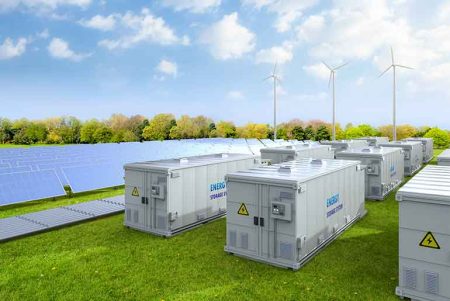
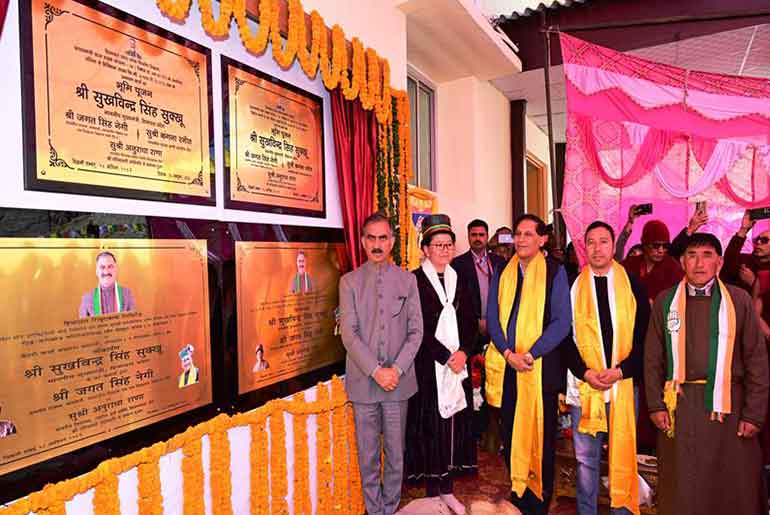
Himachal Pradesh Chief Minister Thakur Sukhvinder Singh Sukhu inaugurated the state’s first solar power project equipped with a battery energy storage system (BESS) at Rongtong in Kaza, Spiti Valley. The 2 MW solar power plant, developed at a cost of ₹4.42 crore at an altitude of approximately 3,600 metres, is expected to generate around 36 lakh units of electricity annually and strengthen clean energy supply in the remote Himalayan region.
The inauguration was part of the Chief Minister’s visit to the tribal district of Lahaul-Spiti, where he inaugurated and laid the foundation stones of development projects worth ₹116.28 crore. The solar project is expected to demonstrate the potential of renewable energy and battery storage in improving electricity reliability in high-altitude and strategically important border areas.
Solar Project Strengthens Clean Energy Supply in Spiti
The Rongtong solar power project combines 2 MW of solar generation capacity with a 1 MWh battery energy storage system. Construction began on 30 May 2023, and the plant was commissioned in December 2024 According to the state government, the facility generated 22,58,752 units of electricity during FY2024-25, FY2025-26 and the period up to 30 September 2026.
The project highlights the role of solar power and battery storage in supporting electricity infrastructure in remote areas where difficult terrain and extreme weather can affect the reliability of conventional power supply. Chief Minister Sukhu said the project would become a symbol of development in Spiti Valley. He also announced that the Rongtong hydel power project would be made fully functional, with ₹6 crore allocated for the work.
The solar project is expected to help address electricity supply concerns raised by residents during the Chief Minister’s visit to Spiti in 2023.
New Substations to Improve Power Reliability in Border Areas
The Chief Minister also laid the foundation stones for two 66/22 kV substations at Sumdo in Kinnaur district and Kaza in Lahaul-Spiti, with a combined investment of ₹47.95 crore. The substations are expected to strengthen electricity distribution infrastructure in strategically important border areas and improve power supply to Kaza, Sumdo and adjoining regions.
Currently, electricity supply to Spiti is primarily routed through the 66/22 kV substation at Pooh in Kinnaur district via an approximately 200-kilometre-long 22 kV Pooh-Kaza feeder. The length of the feeder and its multiple connections have contributed to voltage fluctuations, technical losses and difficulties in maintaining a consistent supply, particularly during adverse weather.
The proposed substations are expected to improve voltage regulation, reduce technical losses and increase the distribution network’s capacity to meet rising electricity demand. Reliable power supply is also essential for defence establishments, healthcare facilities, educational institutions, tourism and other public services in the region.
Road Infrastructure Projects to Support Regional Development
Alongside the energy and power infrastructure initiatives, the Chief Minister inaugurated two road projects aimed at improving connectivity in remote tribal areas. The Chhidang-Tangti Khar Telling Road project in Pin Valley was completed at a cost of ₹39.55 crore. The project aims to provide safer, more reliable, all-weather connectivity through road upgrades and safety measures, including crash barriers, parapets, signage and speed breakers.
The Chief Minister also inaugurated the upgradation of the 12-kilometre Tanzit-Hikkim Road in Spiti Valley, completed at a cost of ₹24.36 crore. The improved road is expected to facilitate the movement of agricultural produce and essential goods, improve access to public services and support tourism in the region.
Together, the projects are intended to strengthen electricity reliability, expand clean energy use and improve transport connectivity in Himachal Pradesh’s remote Himalayan communities.
 Electrify your feed! Click here to join our Whatsapp group and to get the latest updates, expert insights, and innovations driving India’s energy storage revolution.