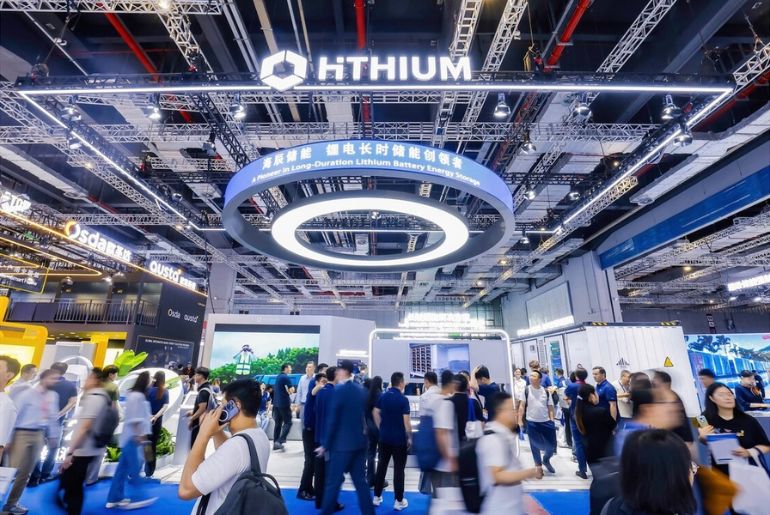
HiTHIUM has announced the launch of its latest energy storage innovation, the ∞Power 6.9MWh Battery Energy Storage System (BESS), a solution designed specifically to support long-duration, eight-hour energy storage applications. The new system represents a significant step forward in large-scale stationary storage technology, targeting utility-scale renewable integration, grid stability, and extended discharge requirements.
At the core of the ∞Power 6.9MWh system is a newly developed 1300Ah battery cell, engineered to deliver higher energy density, improved efficiency, and enhanced lifecycle performance. By utilizing this advanced cell architecture, HiTHIUM aims to optimize energy output while reducing system complexity and total cost of ownership for large storage deployments.
The 6.9MWh configuration is designed to meet the growing demand for long-duration energy storage, particularly in markets with increasing renewable energy penetration such as solar and wind. These resources often require extended storage windows to smooth out intermittency and ensure reliable power delivery during peak demand or low generation periods.
According to the company, the Power platform emphasizes safety, scalability, and modular deployment, making it suitable for utility projects, industrial energy management, and grid-support applications. The eight-hour discharge capability positions the system as a strong candidate for replacing or supplementing conventional peaker plants, helping reduce reliance on fossil-fuel-based backup generation.
In addition, the integration of the 1300Ah cell technology is expected to improve system efficiency by reducing the number of parallel connections required, thereby enhancing overall reliability and simplifying maintenance.
With this launch, HiTHIUM continues to strengthen its position in the global energy storage market, focusing on next-generation battery solutions that support the transition toward cleaner and more resilient power systems. The ∞Power 6.9MWh BESS highlights the industry’s ongoing shift toward longer-duration storage solutions capable of meeting future grid demands.
 Electrify your feed! Click here to join our Whatsapp group and to get the latest updates, expert insights, and innovations driving India’s energy storage revolution.