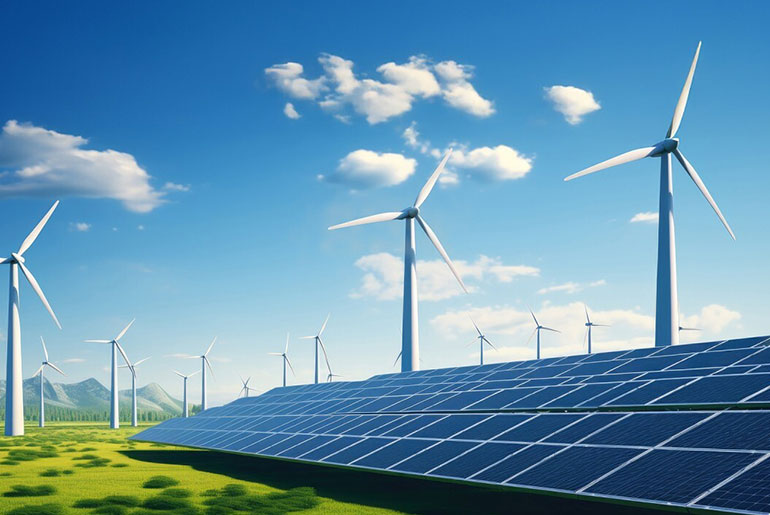
Hybrid renewable energy projects combining solar power with battery energy storage are poised to become the next major growth engine of India’s clean energy sector, according to a new report by GlobalData. The report says the increasing integration of energy storage with renewable generation is expected to reshape project development, investment strategies, and power procurement between 2027 and 2030.
In its latest report, India Power Market Trends and Analysis by Capacity, Generation, Transmission, Distribution, Regulations, Key Players and Forecast to 2035, GlobalData highlights a sharp rise in utility-scale tenders that combine solar generation with battery energy storage systems (BESS). The trend reflects India’s growing focus on ensuring reliable renewable power while addressing grid stability challenges.
According to the report, India’s electricity demand is projected to increase from approximately 1,418 TWh in 2025 to nearly 1,945 TWh by 2030. The growth will be driven by rising industrial activity, expanding cooling requirements, urbanisation, and accelerating electric vehicle (EV) adoption.
GlobalData noted that hybrid renewable projects can help bridge the gap between intermittent renewable energy generation and peak electricity demand. By storing excess solar energy generated during the day and supplying it during evening peak hours, these systems can improve grid flexibility, reduce renewable energy curtailment, and maximise the value of clean power generation.
The report also pointed to a landmark tender concluded by the Solar Energy Corporation of India> in January 2026 for 1.2 GW of solar capacity coupled with 3.6 GWh of battery energy storage. The projects will operate under long-term power purchase agreements (PPAs), demonstrating India’s commitment to scaling up hybrid renewable energy procurement.
GlobalData believes hybrid energy solutions are rapidly transitioning from pilot initiatives to mainstream infrastructure. Increasingly, utilities are favouring solar-plus-storage projects because they provide more predictable power dispatch while enhancing system reliability and reducing dependence on conventional power sources during peak demand periods.
The report also highlights that developers are paying close attention to evolving auction frameworks, battery storage compensation mechanisms, grid connectivity requirements, and performance guarantees. These factors are expected to play a crucial role in determining project viability and long-term returns.
While the outlook for hybrid renewable energy remains positive, GlobalData cautions that continued growth will depend on improvements in transmission infrastructure, regulatory clarity, auction design, and faster project execution. Addressing these challenges will be essential to maintaining investor confidence and supporting India’s ambitious renewable energy targets.
With demand for electricity continuing to rise and renewable energy deployment accelerating, hybrid solar-plus-storage projects are expected to play a central role in delivering reliable, flexible, and sustainable power across the country over the coming decade.
 Electrify your feed! Click here to join our Whatsapp group and to get the latest updates, expert insights, and innovations driving India’s energy storage revolution.