The Government of India is strengthening the country’s electric mobility and domestic manufacturing ecosystem through a combination of demand incentives, battery manufacturing support, charging infrastructure investments and production-linked incentive (PLI) schemes, according to multiple updates shared by the Ministry of Heavy Industries (MHI).
The PM Electric Drive Revolution in Innovative Vehicle Enhancement (PM E-DRIVE) Scheme, with an outlay of ₹10,900 crore, has been implemented on a pan-India basis from April 1, 2024, to March 31, 2028. The scheme aims to support approximately 28.30 lakh electric vehicles, including electric two-wheelers, three-wheelers, trucks, buses and ambulances.
The government clarified that no state-wise allocation has been made under the scheme. EV incentives are provided to eligible buyers as an upfront reduction in vehicle purchase prices, which is subsequently reimbursed to Original Equipment Manufacturers (OEMs) by the Ministry of Heavy Industries.
For FY 2025-26, ₹1,300 crore was allocated under PM E-DRIVE, of which ₹1,160.32 crore was utilised. For FY 2026-27, ₹1,500 crore has been allocated, with ₹169.06 crore spent as of July 22, 2026, while ₹139.43 crore in claims were under processing.
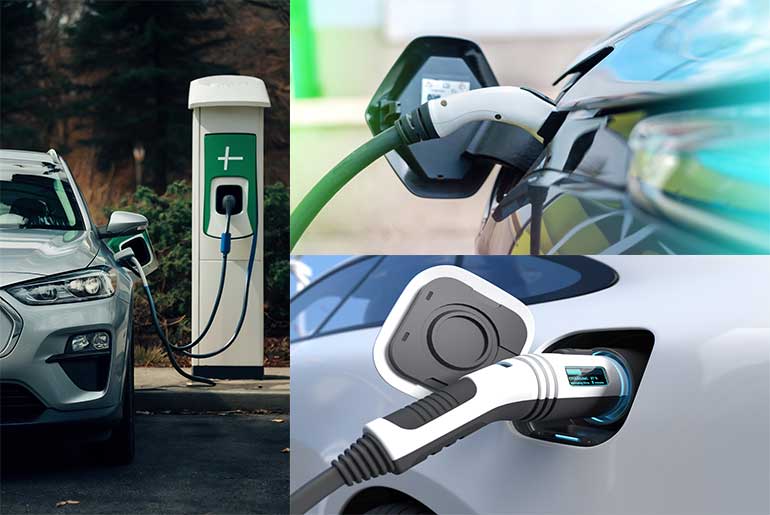
The government has also allocated ₹2,000 crore for EV public charging stations on a pan-India basis. The scheme includes support for e-buses and testing infrastructure, while incentives are aimed at accelerating EV adoption.
Alongside PM E-DRIVE, the PLI Scheme for Automobile and Auto Component Industry (PLI-Auto), approved with a budget of ₹25,938 crore, is driving investment in advanced automotive technology, including EVs. As of March 31, 2026, approved applicants had reported ₹44,326 crore in investments, exceeding the targeted ₹42,500 crore investment by March 31, 2027. The scheme has also generated 67,820 jobs.
The government is simultaneously building a domestic battery manufacturing ecosystem through the PLI Scheme for Advanced Chemistry Cell (ACC) Battery Storage, with a budgetary outlay of ₹18,100 crore. The programme targets 50 GWh of ACC manufacturing capacity, of which 40 GWh has been awarded to four beneficiary firms. A 1.4 GWh giga-scale ACC manufacturing plant has already been established, with ₹5,180 crore in investment and 1,277 direct jobs reported as of May 31, 2026.
To strengthen the wider EV supply chain, the government has also notified a ₹7,280 crore scheme to promote manufacturing of sintered rare earth permanent magnets, targeting 6,000 metric tonnes per annum of domestic production.
Under PM E-DRIVE, ₹780 crore has been earmarked for upgrading automotive testing agencies, with ₹16.63 crore disbursed as of July 20, 2026.
The government has also stated that no National Electric Vehicle Policy or National Framework is currently under consideration. Meanwhile, EV penetration in India has risen from 0.7% in FY 2019-20 to 8.2% in FY 2025-26, supported by government schemes and policies.
Together, these initiatives are aimed at building a coordinated EV ecosystem spanning vehicle demand, battery manufacturing, charging infrastructure, testing capabilities and critical components, while strengthening India’s position as a global hub for electric mobility and advanced automotive manufacturing.
 Electrify your feed! Click here to join our Whatsapp group and to get the latest updates, expert insights, and innovations driving India’s energy storage revolution.