
India has strengthened its clean-energy transition in FY 2025–26, adding 31.2 GW of non-fossil capacity by October 2025 and issuing 67.5 GW of renewable energy Letters of Award (LoAs) since April 2023 — with no cancellations reported so far.
According to data released by the Ministry of New and Renewable Energy (MNRE) through the Press Information Bureau, India has already achieved 50% of its installed electricity capacity from non-fossil fuel sources, meeting the Nationally Determined Contribution (NDC) commitment under the Paris Agreement five years ahead of schedule.
As of October 31, 2025, India’s total installed non-fossil capacity stood at approximately 259 GW, underlining the scale and pace of the country’s renewable energy expansion.
Central Agencies Issue 67.5 GW LoAs with Zero Cancellations
The government said that Renewable Energy Implementing Agencies (REIAs) have collectively issued 67,554 MW of LoAs for renewable power tenders since April 2023.
These agencies include:
- Solar Energy Corporation of India
- NTPC Limited
- NHPC Limited
- SJVN Limited
The government confirmed that none of the issued LoAs have been cancelled, indicating sustained investor confidence and strong bid-to-award conversion in India’s renewable-energy ecosystem.
In addition to central tenders, states are also issuing renewable procurement bids, while commercial and industrial consumers are adding capacity through Open Access and captive projects, ensuring multiple demand channels for clean power.
Shift Toward Solar + Storage and Dispatchable Renewables
The government noted a visible shift in procurement preferences away from standalone solar projects toward solar-plus-storage, peak-power systems, and Firm and Dispatchable Renewable Energy (FDRE).
With falling battery costs and increasing need for reliability, distribution companies are favouring projects that can supply power during peak demand hours. Solar-plus-storage solutions are also being preferred over wind-solar hybrid projects due to their superior scheduling flexibility.
As a result, the Centre has advised implementing agencies to move away from plain solar tenders and focus on storage-backed and dispatchable renewable bids.
Transmission Planning and Storage Integration
Transmission planning is being undertaken in advance by the Central Electricity Authority (CEA), based on renewable-capacity projections from MNRE. The transmission network is being developed in phases to match generation growth and avoid congestion.
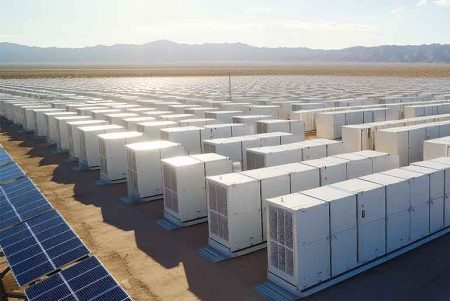
To support grid resilience, 47.2 GW of Battery Energy Storage Systems (BESS) has already been factored into national transmission planning up to 2032.
Storage deployment is expected to enable peak shifting, reduce grid congestion, and maximise utilisation of transmission infrastructure.
Further enabling this, the Central Electricity Regulatory Commission (CERC) has amended connectivity rules to allow access during both solar and non-solar hours, easing co-location of BESS with renewable projects.
Statement to Parliament
The details were shared by Union Minister for New and Renewable Energy Pralhad Joshi in the Rajya Sabha on December 2, 2025.
 Electrify your feed! Click here to join our Whatsapp group and to get the latest updates, expert insights, and innovations driving India’s energy storage revolution.