India has added a record 52,537 MW of power generation capacity during the current financial year 2025–26, up to 31 January 2026. The Ministry of Power says that this is the highest amount of capacity added in a single year.
The addition significantly exceeds the previous annual record of 34,054 MW set in FY 2024–25.
Renewables Drive Capacity Growth
39,657 MW of the total capacity added this fiscal year has come from renewable energy sources. This shows how quickly India’s clean energy sector is growing.
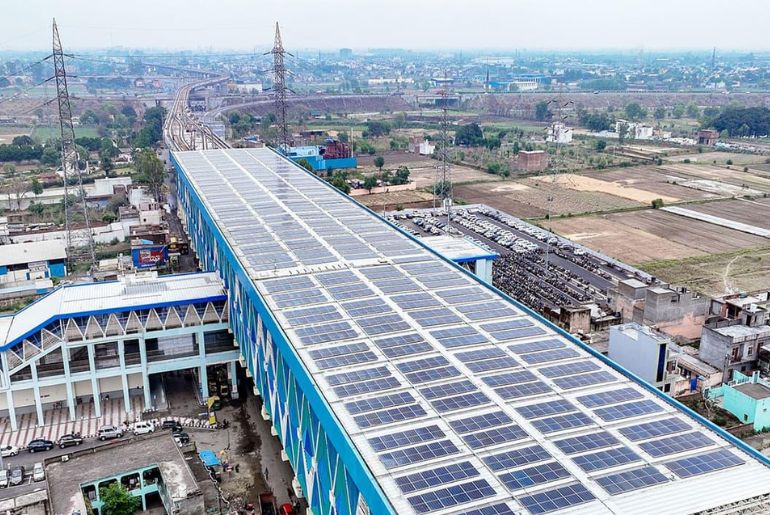
Solar power contributed the largest share, adding 34,955 MW during the period. Wind energy followed with 4,613 MW of new capacity.
The Ministry of Power stated that the capacity added in FY26 so far represents an increase of over 11 percent in the country’s total installed power generation capacity.
Total Installed Capacity Crosses 520 GW
As of 31 January 2026, India’s total installed power generation capacity stands at 520,510.95 MW.
Fossil fuel-based capacity accounts for 248,541.62 MW, while non-fossil fuel capacity has reached 271,969.33 MW, now taking the lead in the overall generation mix.
Within the non-fossil segment, renewable energy sources contribute 263,189.33 MW. Nuclear power capacity stands at 8,780 MW.
Gujarat Leads Renewable Capacity Rankings
By the end of January 2026, Gujarat and Rajasthan were leading the charts in total installed renewable energy capacity (including small hydro and bio power) among all Indian states.
Both states have contributed around 44 GW of renewable power capacity each. Gujarat recently overtook Rajasthan to secure the top position. The state is also recognised as a leading hub for solar manufacturing in India.
Other major contributors include Maharashtra with over 31 GW, Tamil Nadu with 27 GW, and Karnataka with 26 GW, according to the latest government data.
The latest figures underline India’s accelerating shift toward clean energy while continuing to expand its overall power generation capacity.
 Electrify your feed! Click here to join our Whatsapp group and to get the latest updates, expert insights, and innovations driving India’s energy storage revolution.