In a written reply to the Rajya Sabha, Union Minister of State for New and Renewable Energy Shri Shripad Yesso Naik stated that the Government of India is accelerating the National Green Hydrogen Mission (NGHM) to position the country as a global hub for the production, use, and export of green hydrogen and its derivatives, with India’s green hydrogen capacity projected to reach 5 million metric tonnes per annum by 2030 through focused incentives, policy reforms, and large-scale renewable energy expansion.
Incentive Schemes to Reduce Costs
Significant progress has been made under NGHM to lower the cost of green hydrogen and build a domestic supply ecosystem. Under the incentive scheme for electrolyser manufacturing, 15 companies have been awarded a combined manufacturing capacity of 3,000 MW per annum, with total incentives amounting to ₹4,440 crore. In addition, under the incentive scheme for green hydrogen production, 18 companies have been allocated a cumulative production capacity of 8,62,000 tonnes per annum.
To promote adoption in hard-to-abate sectors, the incentive scheme for procurement of green hydrogen for refineries has awarded two companies a total capacity of 20,000 tonnes per annum. Further, the Solar Energy Corporation of India (SECI) has discovered prices for the production and supply of 7,24,000 tonnes per annum of green ammonia, a derivative of green hydrogen, to 13 fertiliser units across the country.
Key Cost-Reduction Measures
Other measures undertaken to facilitate reduction in green hydrogen costs include:
- Exemption for the plants producing green hydrogen and green ammonia from charges paid to the Inter-State Transmission System for a period of 25 years from the date the plant was commissioned, for plant commissioning on or before 31st December 2030
- Duty benefits under Section 26 of the SEZ Act, 2005 for installation and Operation & Maintenance of renewable energy equipment used exclusively for captive consumption
These incentives are designed to ensure stable and predictable demand by enabling long-term offtake agreements and integrating green hydrogen into industrial decarbonisation pathways.
Renewable Energy Enablement and Policy Support
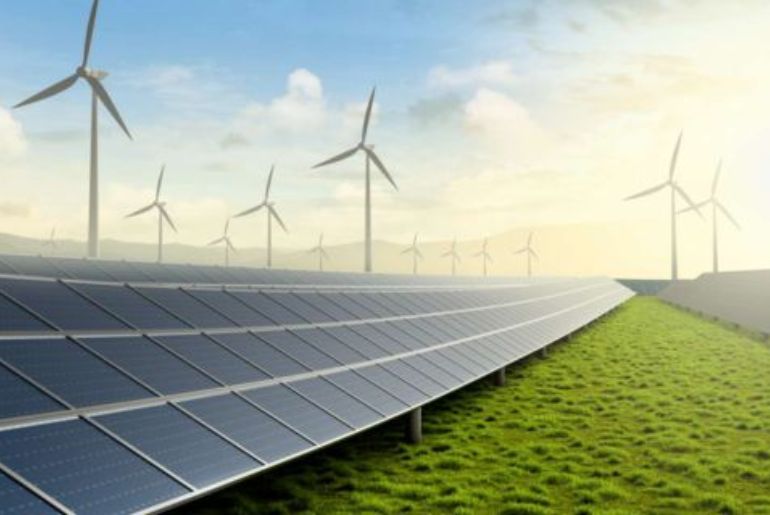
India is optimising its energy mix for green hydrogen production by rapidly expanding low-cost renewable energy capacity through competitive tariff-based bidding and large-scale solar and wind deployment. To support this effort, the Government has undertaken several policy measures:
- Issuance of Standard Bidding Guidelines for procurement of power from grid-connected solar, wind, wind-solar hybrid, and Firm & Dispatchable Renewable Energy (FDRE) projects
- Exemption from ALMM and RLMM requirements for renewable energy plants located in SEZs or EOUs supplying power exclusively to green hydrogen production units
- Allowance of 100% Foreign Direct Investment under the automatic route
- Implementation of solar park and ultra mega solar power schemes to provide land and transmission infrastructure
- Waiver of ISTS charges for green hydrogen projects till December 2030 and offshore wind projects till December 2032
- Funding of transmission infrastructure under the Green Energy Corridor Scheme and preparation of a transmission plan extending to 2030
 Electrify your feed! Click here to join our Whatsapp group and to get the latest updates, expert insights, and innovations driving India’s energy storage revolution.