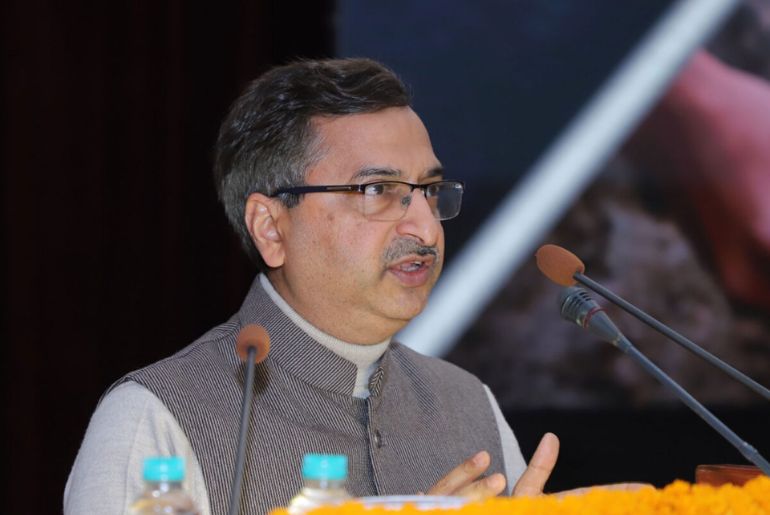
India is confident of establishing a complete electric vehicle (EV) battery ecosystem within the next two to three years, Mines Secretary Piyush Goyal said, outlining a comprehensive strategy focused on lithium sourcing, processing, global acquisitions, and mining sector reforms.
“With the strategy that we have made, we are confident that the whole ecosystem of the EV battery chain will be ready in the next couple of years, or 2-3 years,” Goyal said during an interaction with reporters.
Focus on Lithium and Global Sourcing
Goyal said that lithium is very important for EV batteries. He also said that India is working hard to get lithium from other countries, even though it is not widely available in India. The government is looking into mineral resources in places like South America, Australia, and Canada, especially for lithium and rare earth elements.
“In spodumene, lithium content is around 1-6%. Spodumene can be imported and further processed. The technology for this is available with our companies today,” he said.
A consortium of public sector undertakings, including Hindustan Copper Limited, is also participating in overseas bids, including copper assets in Chile.
Strengthening Domestic Processing Capabilities
Goyal highlighted existing gaps in India’s battery value chain, particularly in large-scale conversion of raw materials into battery-grade products.
“If lithium is brought, there is no conversion plan at scale, so it often gets traded abroad,” he noted, stressing the need for downstream processing.
To address this, the government is considering incentives to encourage companies to set up lithium and nickel processing facilities and reduce import dependence.
Policy Push and Mining Sector Reforms
India is almost done with a policy that focuses on processing important minerals, and two important EV-related resources have already been found. The National Critical Mineral Mission has sold 46 blocks so far, but the goal is to sell 100.
The mining sector has also seen accelerated reforms, with 212 mineral blocks auctioned in 2025–26 compared to less than 100 annually earlier. Improved transparency through the National Geoscience Data Repository and faster operationalisation of mines are supporting this growth.
Advancing Resource Efficiency and Supply Stability
Efforts are underway to recover critical minerals from industrial waste, including red mud, tailings, and fly ash. “Gallium and cadmium have recently come into production,” he said.
Addressing global uncertainties, Goyal noted, “It has to be a win-win arrangement,” referring to international collaborations. On supply chain concerns, he added, “Availability of LPG and critical inputs like explosives is being closely monitored… There has been some impact on prices, but we are working to mitigate it.”
The initiative reflects India’s broader push toward self-reliance in EV battery manufacturing and clean energy transition.
 Electrify your feed! Click here to join our Whatsapp group and to get the latest updates, expert insights, and innovations driving India’s energy storage revolution.