India’s electric mobility market is entering a more mature phase. The conversation is gradually moving beyond how many EVs are sold to a more fundamental question: how well do these vehicles perform over their working life?
This shift is particularly important for commercial mobility. India’s electric three-wheeler market alone continues to expand rapidly. The International Energy Agency estimates that India sold almost 800,000 electric three-wheelers in 2025, up 15% from the previous year, while more than two-thirds of India’s three-wheeler sales were electric.
For these users, the battery is not simply another component. It directly influences daily earnings, uptime, operating cost and customer confidence. This is why India’s EV race is increasingly becoming a battery race and reliability may prove more important than range alone.
From range to real-world reliability
Range will remain an important consideration for EV buyers, but it is only one part of the ownership equation. For a commercial driver, a battery that delivers predictable performance over thousands of operating cycles can be more valuable than one offering higher headline range.
The industry is consequently seeing greater attention towards battery lifecycle, thermal performance, charging behaviour, safety and total cost of ownership.
This is also reflected in India’s broader EV growth. FY2026 EV sales crossed 25 lakh units, with electric two-wheelers accounting for 57.8% of sales and passenger electric three-wheelers contributing approximately 29%.
As volumes increase, battery quality will increasingly determine the quality of the overall EV experience.
In commercial EVs, particularly e-rickshaws, battery reliability is increasingly becoming a direct business consideration rather than simply a technical specification. Operators depend on their vehicles for daily income, so unexpected battery-related downtime has a direct impact on earnings. In our experience, customers are increasingly looking beyond initial battery price and nominal range and evaluating factors such as consistent power delivery, cycle life, charging behaviour, safety, warranty support and total cost of ownership. This is driving a shift towards batteries that offer predictable performance over their operating life rather than simply higher specifications on paper.
The battery is becoming an intelligent system
Modern batteries are no longer simply cells assembled into a pack. The Battery Management System (BMS), sensors, thermal controls and software increasingly determine how safely and efficiently the battery operates.
A good BMS needs to continuously monitor parameters such as voltage, current, temperature and state of charge, while identifying abnormal conditions before they become serious problems. Thermal management is equally important, particularly in India’s varied operating conditions.
This is where battery intelligence can create a meaningful difference. Remote diagnostics and data-led monitoring can help identify changes in battery behaviour, support preventive maintenance and potentially extend useful battery life.
For commercial users, this translates into something much more tangible: less unexpected downtime.
Our approach is to treat the BMS as the intelligence layer of the battery rather than simply a protection device. It continuously monitors critical parameters such as cell voltage, current, temperature, state of charge and system-level operating conditions, enabling the battery to operate within defined safety and performance limits. Thermal behaviour is particularly important in India because batteries operate across wide variations in ambient temperature and duty cycles. We also see increasing value in remote monitoring and diagnostics, which can help identify abnormal battery behaviour early, support preventive maintenance and reduce unexpected downtime.
Battery safety is supported through systematic testing and validation across electrical, thermal, mechanical and application-specific operating conditions. Most important to have a proven intelligence layer of BMS and IOT, we heavily invest in R&D, team development and create an environment of innovation, supported by advance machine, upgraded lab facilities and development of digital data driven algorithms. A holistic approach enable improvement in lifetime and uptime.
Choosing the right chemistry, not simply the cheapest battery
Battery chemistry will also remain central to the industry’s evolution. Different chemistries offer different combinations of energy density, cycle life, thermal characteristics, safety and cost.
Therefore, the question for manufacturers should not simply be, “Which chemistry is cheapest?” It should be, “Which chemistry is most appropriate for the application?”
A high-utilisation commercial three-wheeler, for example, has very different requirements from a passenger vehicle or a stationary energy-storage system.
The industry’s move towards application-specific battery design is therefore likely to become more important as EV adoption expands.
Localisation must go beyond assembly
India is simultaneously trying to build EV demand and a domestic battery manufacturing ecosystem. The government’s ACC PLI programme has an outlay of ₹18,100 crore and aims to establish 50 GWh of domestic advanced chemistry cell manufacturing capacity, with a strong emphasis on domestic value addition.
This is an important step, but localisation cannot end with cell or pack assembly. A resilient battery ecosystem will need stronger capabilities across components, electronics, BMS, testing, materials, software, recycling and after-sales support.
India has made meaningful progress in local battery-pack manufacturing, electronics integration and system-level engineering, but the deeper battery value chain continues to have import dependence, particularly around lithium-ion cells, critical battery materials and certain advanced electronic and power-electronics components. From an industry perspective, the next phase of localisation needs to move beyond pack assembly towards cells, active materials, critical minerals, advanced BMS and power electronics, as well as testing, recycling and material recovery. A stronger domestic ecosystem across these areas will improve supply-chain resilience, reduce exposure to global price volatility and strengthen India’s competitiveness in clean-energy manufacturing.
The battery’s second life cannot be ignored
A battery’s lifecycle should not necessarily end when it is no longer suitable for its original EV application.
Second-life applications, recycling and material recovery can increasingly become part of India’s battery economy. The Battery Waste Management Rules already establish Extended Producer Responsibility requirements and mandate the use of minimum percentages of domestically recycled material in new batteries from FY2027-28.
This creates an opportunity to think about batteries across their entire lifecycle—from manufacturing and vehicle use to second-life applications and eventual material recovery.
For India, this is particularly important because a circular battery ecosystem can improve resource efficiency and reduce exposure to global raw-material supply disruptions.
EV batteries and energy storage are converging
The battery opportunity is also extending beyond mobility.
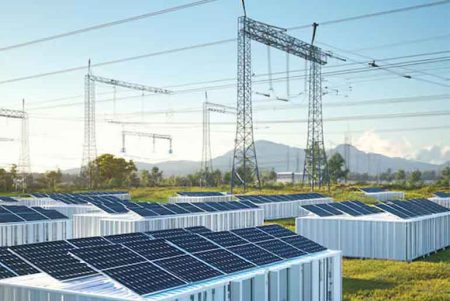
India’s energy-storage requirements are expanding alongside renewable-energy deployment. The government estimates a BESS requirement of 34 GWh by 2026-27 and 236 GWh by 2031-32, representing an estimated investment requirement of around ₹3.49 lakh crore by 2031-32.
This creates an interesting convergence between EV batteries and stationary storage. The underlying capabilities; battery management, thermal management, power electronics, safety, monitoring and lifecycle management are increasingly relevant across both applications.
For battery companies, therefore, the long-term opportunity is not simply to sell more battery packs. It is to build expertise around how energy is stored, managed, monitored and optimised across different use cases.
There is a strong technology crossover between EV batteries and stationary energy storage, although the application requirements are different. Experience gained from EV batteries in areas such as cell management, BMS, thermal management, safety, diagnostics, system integration and lifecycle management provides an important foundation for developing reliable energy-storage systems. The key difference is that stationary storage places greater emphasis on long-duration operation, energy management, grid interaction, scalability and system-level integration. We therefore see EV battery expertise as a strong technological foundation, which needs to be complemented by expertise in power electronics, energy management systems and grid-connected applications to fully address the stationary-storage opportunity. The experience in EV segment is now enabling us to expand aggressively into energy storage, across home, C&I and utility-scale applications. By combining our in-depth understanding of LFP cells, BMS, IoT, reliability and battery chemistry with inverter integration and energy-management systems, we aim to build scalable storage solutions delivering safety, intelligence and long-term performance.
Reliability will define the next phase
India has already demonstrated that consumers are willing to adopt electric mobility at scale. The next challenge is ensuring that the products they adopt deliver consistent value throughout their lifecycle.
That means moving the industry conversation from range to reliability, from upfront price to total cost of ownership, and from the battery pack to the complete battery ecosystem.
At Trontek, we believe the next phase of India’s EV journey will be shaped by companies that can combine technology, safety, manufacturing capability and long-term service support.
India’s EV race may have started with the vehicle. Increasingly, however, the battery will determine how far that race goes—and how sustainably it can be won.
 Electrify your feed! Click here to join our Whatsapp group and to get the latest updates, expert insights, and innovations driving India’s energy storage revolution.