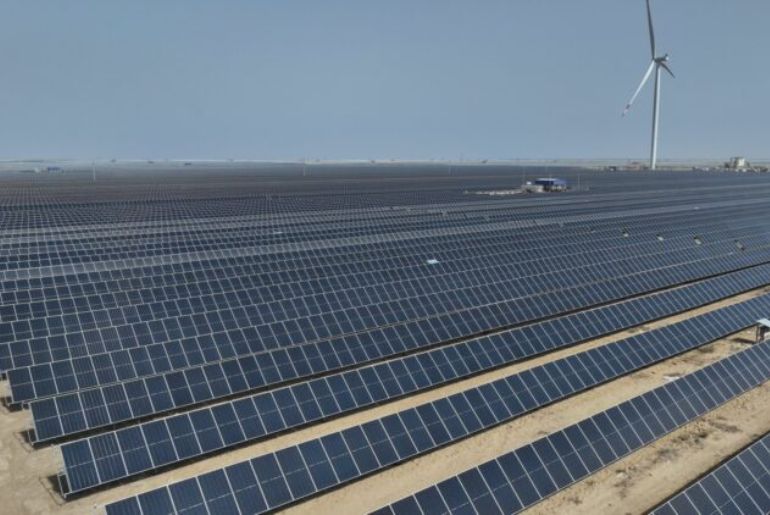
The Minister of State for Power, Shri Shripad Yesso Naik, submitted a written reply in the Lok Sabha stated that the India’s total installed electricity generation capacity has reached 5,05,023 MW as of October 31, 2025, with non-fossil fuel sources accounting for 2,59,423 MW, including 2,50,643 MW from renewable energy. Fossil-fuel-based capacity stands at 2,45,600 MW, the government informed Parliament.
The Government of India has undertaken multiple measures to accelerate renewable energy deployment and meet its target of 500 GW non-fossil energy capacity by 2030. Key initiatives include waiving Inter State Transmission System (ISTS) charges for eligible solar, wind, green hydrogen, and offshore wind projects; issuing standard bidding guidelines for renewable power procurement; and notifying a bidding trajectory of 50 GW annually from FY 2023–24 to FY 2027–28.
Other measures include allowing 100 percent foreign direct investment under the automatic route, strengthening transmission infrastructure through the Green Energy Corridor Scheme, implementing solar park and ultra-mega solar projects, and launching schemes such as PM-KUSUM, PM Surya Ghar Muft Bijli Yojana, the National Green Hydrogen Mission, and viability gap funding for offshore wind projects.
India achieved a major milestone in June 2025 by sourcing 50 percent of its installed electricity capacity from non-fossil fuel sources-more than five years ahead of its Nationally Determined Contribution target under the Paris Agreement. This achievement supports India’s long-term objective of achieving net-zero emissions by 2070 while ensuring energy security, affordability, and accessibility.
To further diversify its energy portfolio, the government is advancing nuclear power, targeting 100 GW of nuclear capacity by 2047. Initiatives include launching a ₹20,000 crore Nuclear Energy Mission for developing indigenously designed Small Modular Reactors, introducing the SHANTI Bill, 2025, upgrading Bharat Small Reactors, strengthening fuel security, and forming the ASHVINI joint venture between NPCIL and NTPC.
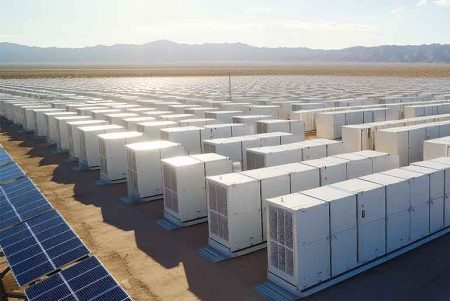
In energy storage, a viability gap funding scheme supports 13.22 GWh of battery energy storage systems, with an additional 30 GWh approved in June 2025. The government is also promoting pumped storage projects, with 10 projects totaling 11,870 MW currently under construction, and supporting offshore wind and green hydrogen development.
The details of the country’s current composition of installed generation capacity
| Installed Generation Capacity of the country as on 31.10.2025 | |||
| Category | Installed Capacity (in MW) | % Share in Total | |
| Fossil Fuel | Coal | 2,18,258 | |
| Lignite | 6,620 | ||
| Gas | 20,132 | ||
| Diesel | 589 | ||
| Total Fossil Fuel | 2,45,600 | 48.6 | |
| Non-Fossil Fuel | Renewable Energy Sources | 2,50,643 | 49.6 |
| Hydro (including PSPs) | 50,348 | ||
| Wind, Solar & Other RE | 2,00,295 | ||
| Wind | 53,600 | ||
| Solar | 1,29,924 | ||
| BM Power/Cogen. | 10,757 | ||
| Waste to Energy | 856 | ||
| Small Hydro | 5,159 | ||
| Nuclear | 8,780 | 1.74 | |
| Total Non-Fossil Fuel | 2,59,423 | 51.37 | |
| Total Installed Capacity | 5,05,023 | 100.0% | |
 Electrify your feed!