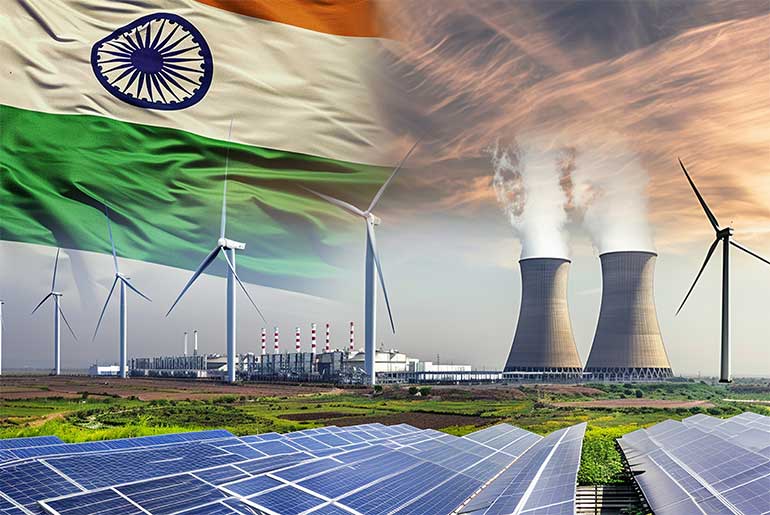
India’s renewable energy capacity has grown significantly over the past decade. From around 35 GW in 2014, the country now has over 197 GW of installed capacity, excluding large hydro. This remarkable expansion places India among the fastest-growing clean energy markets globally. The next phase of growth is focused not only on adding capacity but also on ensuring that it is absorbed efficiently through grid integration, storage deployment, and market reforms.
The sector is at an inflection point, transitioning from rapid capacity expansion to deeper structural integration. This shift reflects both the maturity of the market and the complexity of sustaining long-term growth.
As of 30.09.2025
Renewable Energy Implementing Agencies (REIAs) have issued Letters of Award (LoAs) for 43,942 MW of capacity where PSAs with end procurers remain unsigned. This figure reflects the scale of recent bidding activity and the evolving nature of demand aggregation and procurement timelines. Since April 2023, these agencies have successfully signed PSAs for 24,928 MW of capacity, indicating continued progress in contract execution and market alignment.
The government, with stakeholders, is actively exploring mechanisms to optimize transmission capacity and improve the contracting framework. These efforts include examining the feasibility of signing PPAs and PSAs for certain awarded capacities and reviewing provisions such as the green shoe option. No blanket cancellations of the bids are being envisaged.
The government is closely monitoring the cases where Letters of Award have been issued by Renewable Energy Implementing Agencies (REIAs), but Power Sale Agreements (PSAs) with DISCOMs or end procurers have not yet been finalized. Some DISCOMs have expressed apprehensions in signing PSAs for such bids wherein the likely start date of connectivity for the successful bidders is in the distant future. REIAs have been advised to carry out due diligence by reviewing and categorizing such cases based on the likelihood of securing PSAs with end procurers.
Some Factors of the assessment
This assessment would consider multiple factors, including the configuration of renewable energy envisaged to be supplied under the bid, the discovered tariff for the supply of renewable power, and the expected timeline for connectivity. Following this review, only those LoAs with minimal or no prospects of PSA execution may be considered for cancellation on a case-to-case basis. Even then, such cancellations are expected to be phased and undertaken only after all feasible and viable options for executing the Power Sale Agreements (PSAs) and corresponding Power Purchase Agreement (PPA) have been thoroughly explored. Further, the apprehensions regarding massive investments in renewable power that may get into limbo on account of cancellation of LoAs, which cannot secure PSA/PPA, are unfounded, since major investment in any renewable power project starts only after the execution of the Power Purchase Agreement, and the investments, if any, made by any RE power developer in land or connectivity are used by the RE power developers for other existing projects or future projects in their portfolio.
To facilitate the execution of PSAs, the government has undertaken several proactive measures. These include urging states to comply with the Renewable Consumption Obligation (RCO) under the Energy Conservation Act and advising Renewable Energy Implementing Agencies (REIAs) to aggregate demand from DISCOMs and other consumers before designing and issuing tenders. Regional workshops have been organized with major renewable energy-procuring states to address implementation challenges and accelerate PSA signing. In addition, the Standard Bidding Guidelines for solar, wind, hybrid, and Firm and Dispatchable Renewable Energy (FDRE) have been amended to allow for cancellation of Letters of Award (LoAs) that remain unexecuted beyond 12 months from the date of issuance.
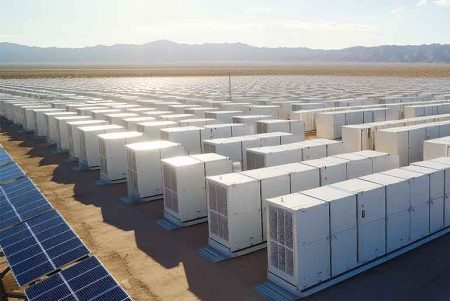
A key objective remains the optimization of overall renewable energy costs and associated transmission infrastructure. With the declining cost of solar-plus-storage and dispatchable renewable power, there is a growing preference among distribution companies and end procurers for such solutions. This shift has been accompanied by a reduced demand for plain solar power. Solar-plus-storage configurations are also proving to be more economically viable than wind-solar hybrid projects, particularly due to their ability to supply power during peak demand hours. Accordingly, the government is sensitizing the REIAs to move from plain solar tenders to tenders of solar and energy storage, tenders with configurations to supply renewable power during peak hours, and tenders with configurations to supply firm and dispatchable renewable energy (FDRE).
Transmission infrastructure is also being scaled up significantly to match the pace of renewable energy deployment. The ₹2.4 lakh crore investment plan for transmission associated with 500 GW of renewable energy, along with recent amendments to the General Network Access (GNA) regulations, is designed to unlock stranded capacity and enable dynamic corridor sharing. These reforms are expected to ease congestion and improve grid access in renewable-rich states.
Despite global challenges such as supply chain disruptions and tighter financing conditions, India added around 29 GW of renewable energy capacity (excluding large hydro) in the last financial year. Furthermore, around 25 GW has already been added in the first half of FY 2025–26. This growth is being driven not only by central and state-led bids but also by commercial and industrial consumers. Investor interest remains strong, with a clear shift toward integrated and storage-backed portfolios.
India’s clean energy transition is entering a phase defined by integration, reliability, and scale efficiency. The sector is aligning capacity growth with grid strength, domestic manufacturing, and financial discipline. This phase of consolidation is essential to ensure that the next leap forward is both faster and more sustainable.
MNRE remains committed to fostering a transparent, responsive, and future-ready renewable energy ecosystem that supports national decarbonization goals and global climate commitments.
 Electrify your feed! Click here to join our Whatsapp group and to get the latest updates, expert insights, and innovations driving India’s energy storage revolution.