
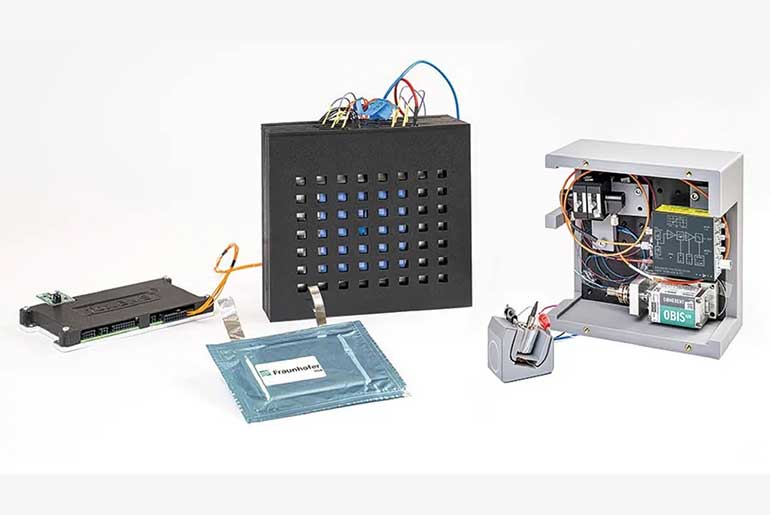
The INNOBATT research project, led by the Fraunhofer Institute for Integrated Systems and Device Technology (IISB), has successfully developed and evaluated a full-scale battery system demonstrator using aluminum-graphite dual-ion battery (AGDIB) technology. This milestone marks a significant step forward for lithium-free energy storage solutions.
The completed demonstrator confirms that aluminum-graphite cell chemistry delivers stable performance not only in controlled laboratory settings but also under realistic operating cycles that reflect practical application scenarios.
AGDIB is a rechargeable aluminum-ion battery that utilizes abundant, easily accessible materials—aluminum as the anode and natural graphite as the cathode. The technology is non-flammable and offers a cost advantage compared with traditional lithium-ion systems.
Tested cells achieved specific energy densities of up to 160 Wh/kg and power densities exceeding 9 kW/kg. The batteries also support extremely high charge and discharge rates, making them suitable for use cases requiring rapid power output and fast charging.
By replacing lithium with aluminum and relying on widely available graphite, this new battery chemistry reduces dependence on critical raw materials while maintaining the safety and performance levels needed for demanding operational environments.
The successful demonstration at the system level marks the completion of a crucial phase of the INNOBATT project and confirms that aluminum-graphite dual-ion technology can move beyond laboratory prototypes toward practical energy storage solutions that support the shift to sustainable power systems.
 Electrify your feed! Click here to join our Whatsapp group and to get the latest updates, expert insights, and innovations driving India’s energy storage revolution.