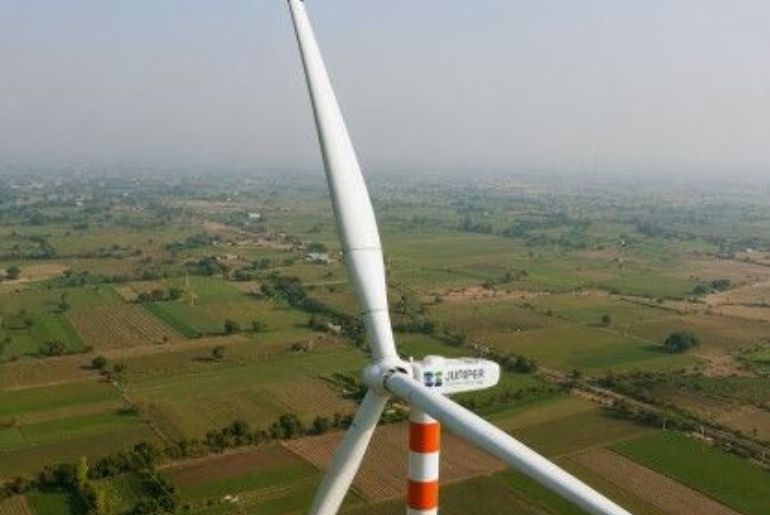
Juniper Green Energy has achieved a major milestone in India’s renewable energy sector by commissioning what is being described as the country’s largest wind turbine by rotor diameter. The installation is based on Envision Energy’s 5 MW platform, the EN-182 wind turbine, which features a 182-metre rotor designed to capture more wind energy and improve overall efficiency.
The larger rotor diameter allows the turbine to sweep a greater area, enabling higher energy generation even in relatively low wind conditions. This makes the EN-182 particularly suited for regions with moderate wind speeds, helping developers maximize output while reducing the number of turbines required for a project. Industry experts view such high-capacity, large-rotor designs as a key direction for next-generation wind technology, as they improve energy yield per installation and reduce land usage per megawatt generated.
In addition to this flagship installation, Juniper Green Energy has expanded its wind portfolio by adding 82 MW of new capacity across Rajasthan and Gujarat. Both states are among India’s most important renewable energy hubs, with strong wind corridors, supportive infrastructure, and established transmission networks. These regions continue to attract significant investments in wind power due to their high generation potential and policy support for clean energy development.
The combined expansion underscores the company’s focus on scaling renewable energy assets in alignment with India’s broader clean energy transition goals. India has set ambitious targets to increase its share of non-fossil fuel-based power capacity, and wind energy remains a crucial component of this strategy alongside solar power.
By deploying advanced turbine technology and expanding capacity in high-potential states, Juniper Green Energy is contributing to improved grid stability and increased renewable penetration in the national energy mix. The use of high-efficiency turbines like the EN-182 also reflects a broader industry trend toward technological consolidation—fewer turbines producing more power, which helps reduce maintenance complexity and project costs over time.
Overall, the commissioning of India’s largest rotor-diameter wind turbine, combined with the additional 82 MW expansion, highlights both technological progress and continued momentum in India’s renewable energy sector.
 Electrify your feed! Click here to join our Whatsapp group and to get the latest updates, expert insights, and innovations driving India’s energy storage revolution.