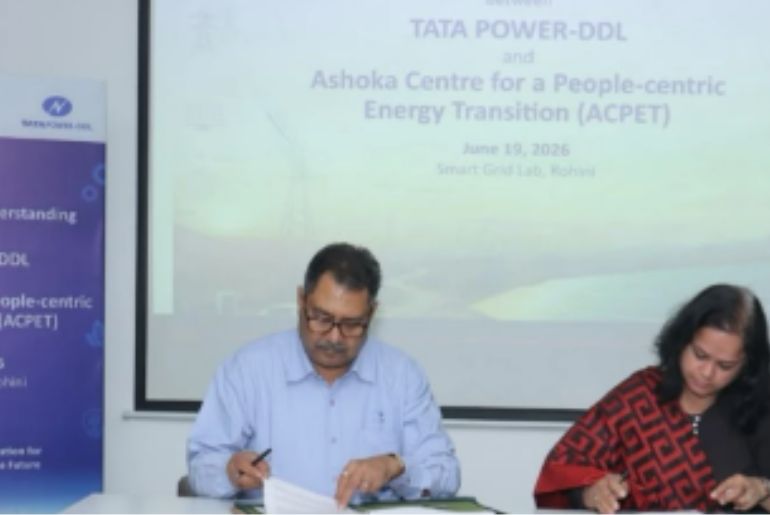
Ashoka Centre for a People-centric Energy Transition and Tata Power Delhi Distribution Limited have entered into a five-year Memorandum of Understanding (MoU) to collaborate on research, innovation, and capacity building initiatives aimed at supporting India’s ongoing energy transition.
The partnership is focused on developing practical and scalable solutions that can help strengthen the country’s power distribution system while enabling a faster shift toward cleaner and more sustainable energy sources. As India continues to expand its renewable energy capacity, distribution utilities play a crucial role in ensuring that clean electricity is efficiently integrated into the grid and delivered reliably to consumers.
Under the agreement, both organisations will work together on research studies, policy analysis, and pilot projects that explore key aspects of the energy transition. These include renewable energy integration at the distribution level, improvements in grid flexibility, demand-side management, energy efficiency measures, and innovative consumer engagement strategies. The collaboration is also expected to support the development of data-driven insights that can help improve decision-making in the power sector.
A major component of the MoU is capacity building. The partners aim to design training programs and knowledge-sharing platforms to equip professionals, policymakers, and other stakeholders with the skills required to manage an evolving and increasingly complex energy system. This includes understanding emerging technologies, regulatory frameworks, and sustainable energy practices.
Tata Power Delhi Distribution Limited is one of the key electricity distribution companies in the national capital, supplying power to millions of consumers. Its role in implementing modern grid solutions and ensuring reliable power supply makes it a critical participant in India’s energy transition journey. On the other hand, Ashoka Centre for a People-centric Energy Transition brings research expertise and a people-centric approach to energy policy and system transformation.
The collaboration reflects a broader trend in India’s power sector, where utilities are increasingly partnering with academic and research institutions to address complex challenges associated with decarbonization and grid modernization. As renewable energy penetration grows, such partnerships are expected to play an important role in building a more resilient, efficient, and inclusive electricity system.
Overall, the five-year MoU highlights a shared commitment to advancing innovation and knowledge in support of India’s clean energy goals and long-term energy security.
 Electrify your feed! Click here to join our Whatsapp group and to get the latest updates, expert insights, and innovations driving India’s energy storage revolution.