The Karnataka government’s 2026 budget outlines a strong push for renewable energy and clean mobility, with significant allocations for solar power expansion, battery energy storage systems (BESS), and electric vehicle (EV) charging infrastructure. The budget aims to accelerate the state’s transition toward clean and sustainable energy while supporting farmers, utilities, and urban energy needs.
Key Renewable Energy Initiatives
- 3 GW of solar capacity planned under the state’s Mukhyamantri Saura Krishi Yojane.
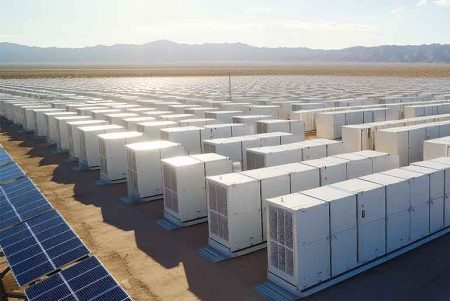
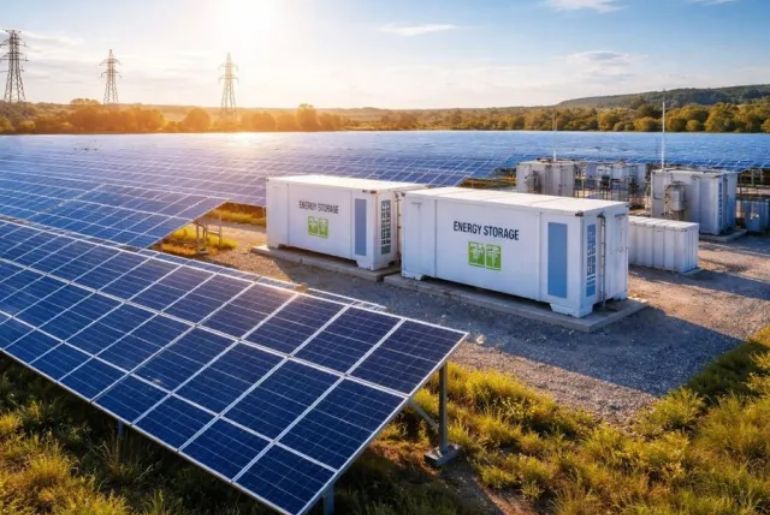
- 2 GWh of standalone BESS to be installed at select substations to enhance grid stability.
- Budget allocation of ₹3,400 crore for the development of battery storage infrastructure.
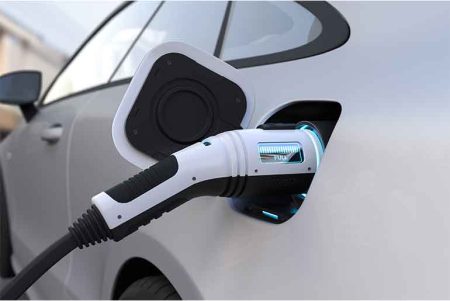
- 1,250 EV charging stations to be set up across urban and semi-urban locations.
The projects’ goal is to improve Karnataka’s renewable energy ecosystem by combining solar power generation with storage and smart distribution systems. The battery storage projects should help out during peak load times, and the EV charging infrastructure should make people more likely to use clean transportation.
Focus on Farmers and Rural Areas
The Mukhyamantri Saura Krishi Yojane will promote rooftop and ground-mounted solar projects for farmers, enabling additional income generation and energy self-sufficiency. The combined solar and BESS systems will ensure stable power supply for irrigation and other agricultural needs.
Government Statements
The government emphasized that these measures will:
- Support the state’s renewable energy targets.
- Encourage private sector participation in clean energy deployment.
- Facilitate the integration of advanced technologies such as EVs and energy storage in the power ecosystem.
Implementation and Benefits
- Projects are expected to be rolled out in phases, prioritizing areas with existing grid infrastructure for smooth execution.
- Investments in BESS and EV charging will enhance energy reliability and reduce dependency on fossil fuels.
- The budget’s focus on clean energy supports Karnataka’s broader goal of sustainable growth and environmental responsibility.
Karnataka’s 2026 budget shows a full approach to developing renewable energy by combining generation, storage, and mobility solutions to speed up the state’s transition to green energy.
 Electrify your feed! Click here to join our Whatsapp group and to get the latest updates, expert insights, and innovations driving India’s energy storage revolution.