As India accelerates its transition toward electric mobility and renewable integration, the battery conversation is no longer limited to manufacturing capacity alone. The next phase of growth demands integration, resilience, and circularity.
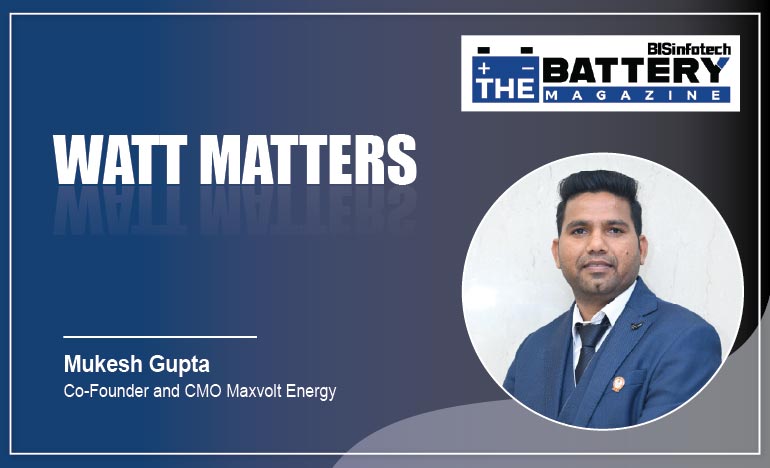
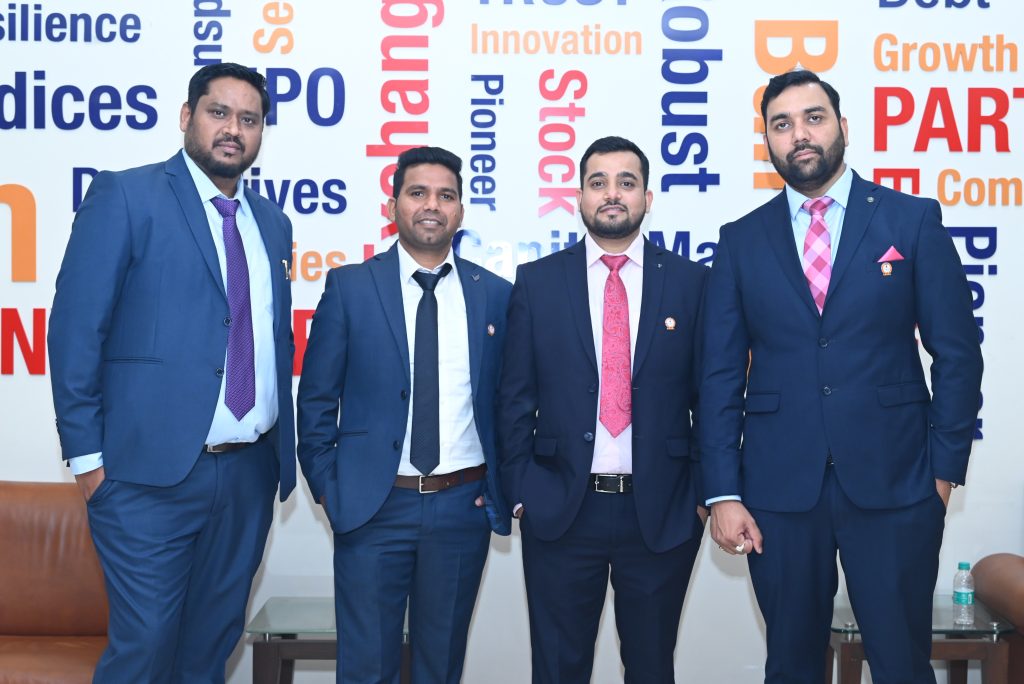
In this exclusive interaction with The Battery Magazine, Shweta Kumari, Sub-Editor, speaks with Mukesh Gupta, Co-Founder and CMO, MaxVolt Energy, to understand how the company is evolving from a lithium-ion manufacturer into a fully integrated clean-energy player. With the launch of MaxVolt ReEarth, the company is now extending its footprint into battery recycling and second-life applications—marking a decisive move toward building a circular battery ecosystem.
The discussion explores MaxVolt’s capacity expansion through its Ghaziabad facility, its chemistry choices tailored for Indian operating conditions, advancements in BMS-driven safety architecture, and its positioning in the rapidly growing Battery Energy Storage Systems (ESS) market. Equally important is the company’s focus on closing the loop—recovering critical materials, enabling reuse, and reducing dependence on primary raw materials.
As India works toward strengthening domestic manufacturing and recycling infrastructure, MaxVolt’s integrated approach signals a shift from linear growth to circular energy strategy.
Let’s delve into the conversation.
MaxVolt has expanded from lithium-ion battery manufacturing into energy storage and now battery recycling with the launch of ReEarth. How has your vision evolved, and where do you see MaxVolt’s strongest strategic focus over the next two years?
MaxVolt was founded as a lithium-ion battery manufacturer, but the vision has been to create an entire clean energy value chain. With the introduction of MaxVolt ReEarth, the strategy now encompasses production, energy storage solutions, and battery recycling. The next two years will see the greatest strategic focus on circular economy, which will integrate production, second-life solutions, and recycling. This will help promote EV adoption without relying on primary materials. Sustainability and autonomy will continue to be at the heart of MaxVolt’s expansion plans.
You are scaling up manufacturing capacity with the new Ghaziabad facility. Can you share your current production capacity and the targeted capacity and timelines once the expansion is fully operational?
The opening of the Ghaziabad facility is a significant expansion move for MaxVolt in terms of scaling up its manufacturing capacity. At present, the company’s production capacity is able to meet the growing demand in the EV and energy storage industries. The facility is planned to be expanded in phases to boost production capacity within the next 4-8 months. The planned production capacity will meet the local demand as well as some export markets.
Which battery chemistries and pack configurations are you currently prioritising for EV and energy storage applications, and why are these best suited for Indian operating conditions?
MaxVolt is prioritising lithium-ion chemistries for EV, which is well suited to Indian conditions, particularly for two-wheelers, three-wheelers, and Lithium Ferrous Phosphate (LFP) chemistries for stationary energy storage. These include chemistries that offer thermal stability, longer cycle life, and better tolerance to high ambient temperatures. Pack configurations are optimised for durability, vibration resistance, and compact form factors. This focus ensures performance consistency across diverse operating environments, from congested urban mobility to distributed renewable installations.
Fast-charging, safety, and thermal performance remain key concerns for EV customers. What technological advancements—at the cell, pack, or BMS level—set MaxVolt’s batteries apart in these areas?
Safety and reliability are central to MaxVolt’s battery design philosophy. Advanced Battery Management Systems (BMS) with smart battery control mechanisms monitor temperature, voltage, and current in real time. Enhanced thermal management and robust pack architecture reduce the risk of thermal runaway. Cell selection and pack-level safety features are aligned with stringent standards, ensuring faster charging without compromising lifespan or user safety.
Battery Energy Storage Systems are becoming critical for renewable integration. How is MaxVolt positioning its ESS offerings for applications such as grid support, commercial storage, and solar-plus-storage projects?
MaxVolt’s Battery Energy Storage Systems are designed to support renewable integration and grid resilience. The company is actively positioning ESS solutions for applications such as grid support, commercial and industrial storage, and solar-plus-storage projects. These systems help manage intermittency, peak load, and backup power requirements. By combining reliable battery packs with intelligent controls, MaxVolt aims to make energy storage more accessible and scalable for India’s clean-energy transition.
With the launch of MaxVolt ReEarth, how do you plan to close the loop in the battery lifecycle? Can you elaborate on your recycling capabilities, recovery targets, and plans for second-life battery applications?
MaxVolt ReEarth is central to closing the battery lifecycle loop. The initiative covers nationwide take-back, second-life deployment, and end-of-life recycling. Batteries suitable for reuse are repurposed into applications like solar streetlights, CCTV systems, and portable lighting. End-of-life batteries are processed through shredding, black mass production, and hydrometallurgical recovery of lithium, cobalt, and nickel. This approach maximises resource recovery while minimising environmental impact.
India’s battery ecosystem still faces challenges around raw material access, supply-chain stability, and policy clarity. From an industry perspective, what changes are most urgently needed to accelerate domestic battery manufacturing and recycling?
India’s battery ecosystem still faces gaps in raw material access, standardisation, and policy clarity. Stronger incentives for recycling, clearer extended producer responsibility (EPR) norms, and support for domestic material recovery are urgently needed. Standardised battery designs would also improve safety and recyclability. Policy stability and faster approvals can encourage long-term investments in manufacturing and recycling infrastructure. Together, these changes can accelerate India’s journey toward energy independence.
Looking ahead, what are MaxVolt’s key priorities for 2026 and beyond—in terms of product innovation, capacity expansion, partnerships, or entry into new markets?
Looking ahead, MaxVolt’s priorities include deeper product innovation, higher manufacturing capacity, and expanded recycling capabilities. Strategic partnerships with research institutions and technology providers will continue to strengthen R&D. The company also plans selective entry into new markets aligned with EV growth and renewable energy adoption. Above all, MaxVolt aims to lead responsible innovation by building a resilient, circular, and future-ready battery ecosystem for India and beyond.
 Electrify your feed! Click here to join our Whatsapp group and to get the latest updates, expert insights, and innovations driving India’s energy storage revolution.