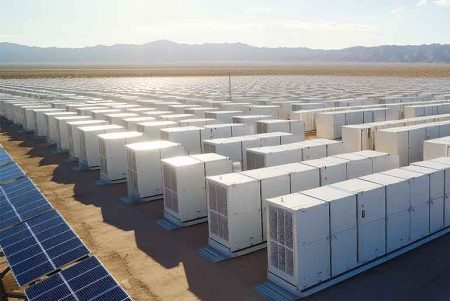
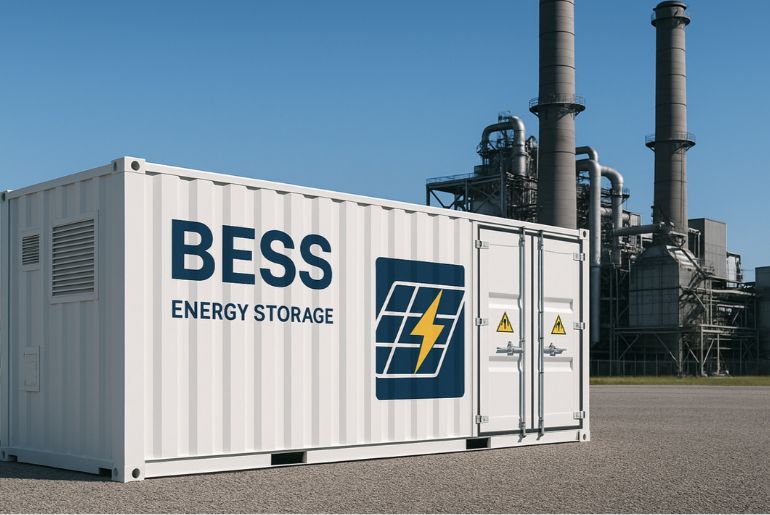
In a significant push to strengthen domestic manufacturing and supply chains, the Ministry of Power (MoP) has mandated a minimum 20% local content requirement for Battery Energy Storage System (BESS) projects supported under the Viability Gap Funding (VGF) scheme.
The directive was issued through a formal communication dated 24 December 2025, addressed to Principal Secretaries of Energy across all states and the Chairman & Managing Director of NTPC Ltd. The clarification outlines how “Make in India” procurement norms will apply to BESS projects receiving VGF support under the Power System Development Fund (PSDF) framework.
What the Ministry’s Clarification Covers
According to the Ministry of Power, all future BESS procurements backed by VGF must ensure at least 20% domestic value addition, reinforcing the government’s broader objective of building an indigenous energy storage ecosystem. The clarification provides guidance to states and implementing agencies on aligning tender conditions with local content norms without disrupting ongoing projects.
Importantly, the Ministry has introduced implementation flexibility, allowing tenders that have already been issued to proceed, provided bidders submit formal undertakings to meet the prescribed local content requirement within defined timelines.
Scope of Local Content
The local content requirement is not limited to hardware alone. It also covers indigenously developed components and systems, including:
- Energy Management System (EMS) application software
- Locally manufactured balance-of-system components
- Other qualifying domestic inputs contributing to overall project value
- This broader interpretation is expected to benefit Indian technology providers, system integrators, and software developers operating within the energy storage value chain.
- Industry Impact and Strategic Significance
The move marks a decisive shift in India’s BESS policy framework from pure capacity deployment toward structured localisation. With large-scale BESS tenders planned across states and central agencies, the 20% local content mandate is expected to:
- Improve supply chain resilience
- Encourage domestic manufacturing investments
- Support Indian companies in qualifying for future grid-scale storage projects
While a detailed PDF notification has not yet been published on the Ministry of Power’s official website, the 24 December 2025 communication, as reported by official and industry-tracking platforms, serves as the primary regulatory confirmation of the policy change.
A Clear Signal to the Market
The clarification sends a strong signal that energy storage is no longer treated as an imported, plug-and-play solution, but as a strategic infrastructure segment where domestic capability development is essential. As India accelerates grid-scale storage deployment to support renewable integration, such policy measures are expected to shape procurement strategies, bidding structures, and technology partnerships going forward.
 Electrify your feed! Click here to join our Whatsapp group and to get the latest updates, expert insights, and innovations driving India’s energy storage revolution.