
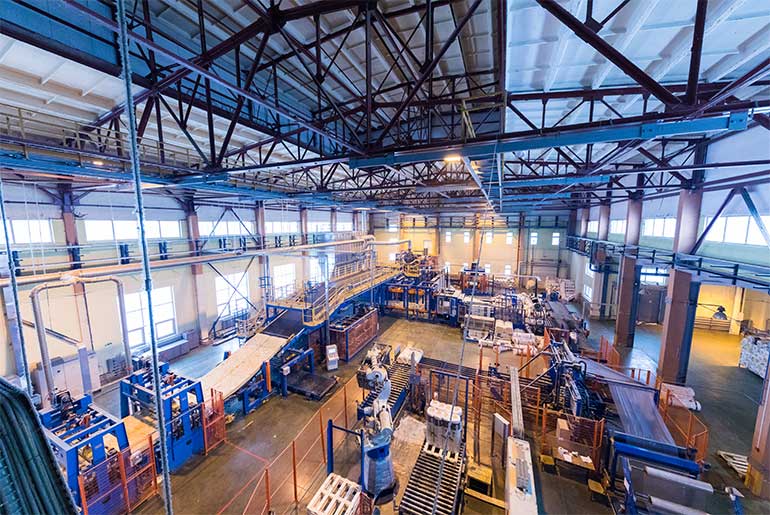
NITI Aayog has identified solar photovoltaic (PV) manufacturing, chemicals, textiles, and telecom and networking equipment as four priority sectors that could help India strengthen its position in global manufacturing. The policy think tank has highlighted import dependence and limited domestic value addition as common challenges that need to be addressed to build globally competitive manufacturing capabilities.
NITI Aayog Vice Chairperson Ashok Kumar Lahiri released the first volume of the report, Key Sectors to Position India as a Global Manufacturing Hub. The report examines the opportunities and challenges across four sectors and forms the first part of a broader exercise covering 12 priority industries.
The assessment initially examined 62 sectors before narrowing the list to 12 based on factors including strategic importance, market attractiveness, operational and financial viability, and potential for developing stronger domestic and global value chains.
Solar PV manufacturing has emerged as one of the sectors requiring greater attention, particularly as India expands renewable energy deployment and seeks to build a more integrated domestic clean-energy supply chain.
Key manufacturing challenges identified include:
- High dependence on imported inputs and components.
- Limited domestic value addition in several industries.
- Need for stronger and more integrated supply chains.
- Requirement for greater scale to compete in global markets.
According to the report, India is currently the world’s fifth-largest manufacturing economy but contributes only around 3% of global manufacturing output, estimated at approximately $17.6 trillion.
Manufacturing accounted for around 17.5% of India’s GDP in FY26, while its contribution to gross value added (GVA) has remained within a relatively narrow 16-18% range over the past two decades.
For India’s solar industry, increasing domestic value addition could become particularly important as the country seeks to expand its manufacturing base beyond modules and strengthen upstream capabilities such as cells, wafers, ingots and other critical components.
The focus on solar PV also comes as India continues to expand renewable energy capacity and aims to reduce exposure to global supply-chain disruptions. Developing a broader domestic manufacturing ecosystem could help improve supply security while creating opportunities for investment, technology development and employment.
The chemicals sector has also been identified as strategically important because of its wide-ranging role across multiple manufacturing industries. Similarly, textiles and telecom and networking equipment offer opportunities to expand India’s manufacturing footprint and increase participation in global value chains.
NITI Aayog’s broader exercise is intended to identify sectors where targeted interventions could help India achieve greater manufacturing scale and competitiveness. The remaining eight sectors are expected to be covered in subsequent volumes of the report.
For the renewable energy and battery industries, the report’s emphasis on domestic value addition and supply-chain development could have wider implications. As India builds capacity in solar generation, energy storage and electric mobility, strengthening domestic manufacturing of critical components will be essential to reducing import dependence.
The report therefore places manufacturing scale, supply-chain resilience and higher domestic value addition at the centre of India’s ambition to become a major global manufacturing hub.
 Electrify your feed! Click here to join our Whatsapp group and to get the latest updates, expert insights, and innovations driving India’s energy storage revolution.