
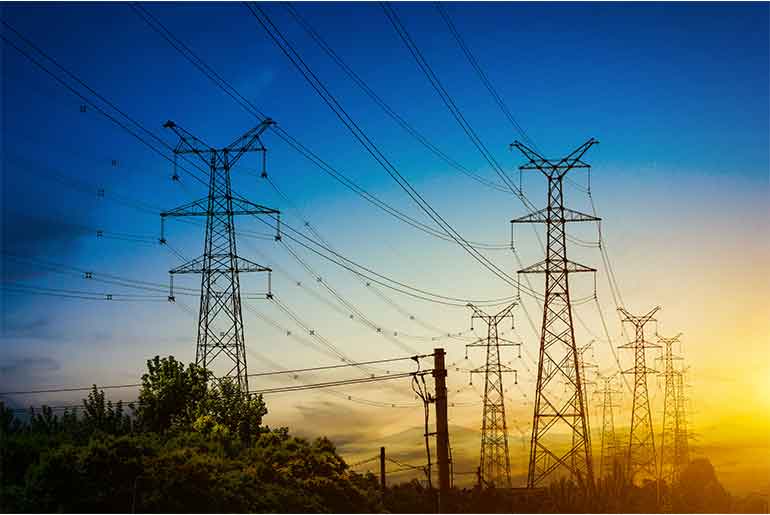
The Odisha government has approved an investment of ₹15,948.7 crore to strengthen and expand the state’s power transmission network, as it prepares for a sharp increase in electricity demand from upcoming industrial and urban development.
The decision was taken by the state Cabinet, chaired by Chief Minister Mohan Charan Majhi, and represents the largest single investment approved by Odisha for the power sector to date. The transmission expansion is aimed at ensuring that electricity infrastructure keeps pace with the state’s next phase of industrialisation while also supporting the evacuation of renewable energy.
The investment comes as Odisha has more than ₹20 trillion worth of investments in the pipeline, spanning sectors such as steel, aluminium, chemicals, manufacturing, data centres, semiconductors and renewable energy.
Chief Secretary Anu Garg said the investment would help create a stronger and future-ready transmission network capable of meeting growing industrial and urban electricity demand while facilitating renewable energy evacuation.
Odisha to Build First 765-kV Transmission Network
A key component of the plan is the development of Odisha’s first 765-kV transmission network. Three new grid substations will be established at Khuntuni, Duburi and Kolabira.
The high-voltage network is expected to provide the backbone for transmitting large volumes of electricity over longer distances, particularly as industrial consumption rises and renewable power generation expands across the state.
The government has also approved two new 400-kV grid substations at Kansbahal and Titilagarh. With six 400-kV substations already under construction and five currently operational, the total number of substations at this voltage level is expected to reach 13.
At the 220-kV level, 10 additional grid substations have also been approved. Six new substations have become operational during the past two years, while another 11 are under construction. This will take the number of 220-kV substations from 54 to an expected 75.
The expansion will enable the development of 220-kV ring networks in Rourkela, Sambalpur and Baragada, providing alternative power-flow routes and improving grid reliability in major industrial centres. Bhubaneswar’s 220-kV ring network was completed in March 2026.
Transmission Network to Support Renewable Energy
The transmission expansion is also being designed to support Odisha’s growing renewable energy capacity.
According to Garg, the upgraded network will facilitate the evacuation of electricity from floating solar projects on the Hirakud and Indravati reservoirs, along with land-based solar projects planned across western and southern Odisha.
The state is also pursuing additional solar and other renewable energy capacity, alongside pumped-storage projects aimed at providing balancing support for intermittent renewable generation.
OPTCL to Modernise Existing Grid
Alongside new infrastructure, the government plans to modernise Odisha’s existing transmission network. Odisha Power Transmission Corporation Ltd (OPTCL) will deploy AI-based inspection and predictive maintenance systems for transmission lines.
As many as 79 substations are slated for modernisation and upgradation, while OPTCL’s transformation capacity is projected to more than double from 29,889 MVA to 63,364 MVA.
The entire transmission network will also be brought under the State Transmission Asset Management System (STAMS), OPTCL’s digital smart-grid initiative. The system will enable centralised monitoring and remote operation of the state’s transmission network from four locations — Bhubaneswar, Brahmapur, Jharsuguda and Baleshwar.
Odisha Prepares Grid for Changing Power Mix
The investment comes as Odisha’s electricity landscape undergoes a significant transformation. While coal-based generation continues to account for a major share of actual power production, the state is simultaneously expanding solar, hydro and energy-storage capacity.
The resulting challenge is to integrate these diverse generation sources into a transmission network capable of delivering reliable electricity to large industrial consumers while supporting power flows between generation and consumption centres.
Economist Amarendra Das said the scale of the investment reflects a shift in Odisha’s power strategy. After building substantial generation capacity and emerging as a power-surplus state, the state is now focusing on the transmission infrastructure needed to move electricity from generation hubs to emerging industrial and consumption centres.
Odisha had an installed power capacity of approximately 9,255.86 MW in 2025-26, comprising 2,251.48 MW from central utilities, 3,821.85 MW from state utilities and 3,182.53 MW from the private sector. Non-fossil sources accounted for around 40% of the installed capacity.
According to the latest Economic Survey, Odisha exported more than 600 MW of electricity to other states during 2024-25.
Das said that while the state has adequate generation capacity, its transmission infrastructure must expand in line with the scale and geographic distribution of future demand. With major industrial and renewable energy projects being developed across different parts of Odisha, the grid will increasingly need to support both power evacuation and two-way electricity flows.
 Electrify your feed! Click here to join our Whatsapp group and to get the latest updates, expert insights, and innovations driving India’s energy storage revolution.