Close Menu
The Battery MagazineThe Battery Magazine
  • Just In
  • Batteries
    • Battery Manufacturing (BESS)
    • Battery Materials & Chemistries
    • Battery Recycling
    • C&I Storage
  • Solar
  • Renewable energy
    • Wind Energy
    • Hydropower
    • Green Hydrogen
    • Bioenergy
  • Tenders
    • Energy Storage
    • Solar Energy
    • Wind Energy
  • Policy
    • Storage
    • Solar
    • Wind
    • EV
    • Transmission
  • EV
    • EV Batteries
    • EV Charging Infrastructure
    • Electric Mobility Trends
  • Grid
    • Transmission & Distribution
    • Grid Infrastructure
    • Power Generation
    • Power Equipments
  • Exclusive
    • Cover Story
    • Watt Matters
    • Perspective
    • Articles
  • More
    • E-Mag
    • Events
    • Contact Us
Facebook LinkedIn WhatsApp
The Battery MagazineThe Battery Magazine
  • Just In
  • Batteries
    • Battery Manufacturing (BESS)
    • Battery Materials & Chemistries
    • Battery Recycling
    • C&I Storage
  • Solar
  • Renewable energy
    • Wind Energy
    • Hydropower
    • Green Hydrogen
    • Bioenergy
  • Tenders
    • Energy Storage
    • Solar Energy
    • Wind Energy
  • Policy
    • Storage
    • Solar
    • Wind
    • EV
    • Transmission
  • EV
    • EV Batteries
    • EV Charging Infrastructure
    • Electric Mobility Trends
  • Grid
    • Transmission & Distribution
    • Grid Infrastructure
    • Power Generation
    • Power Equipments
  • Exclusive
    • Cover Story
    • Watt Matters
    • Perspective
    • Articles
  • More
    • E-Mag
    • Events
    • Contact Us
LinkedIn Facebook WhatsApp YouTube
The Battery MagazineThe Battery Magazine
Home » Batteries » OPUS TITÁSZ Unveils New Energy Storage Systems to Boost Grid Stability and Renewable Integration
Batteries

OPUS TITÁSZ Unveils New Energy Storage Systems to Boost Grid Stability and Renewable Integration

PrakashBy PrakashJuly 17, 20253 Mins Read
Facebook Twitter LinkedIn WhatsApp
OPUS TITÁSZ Zrt. launches four grid-integrated energy storage systems to enhance renewable integration and stabilize Hungary’s power grid.

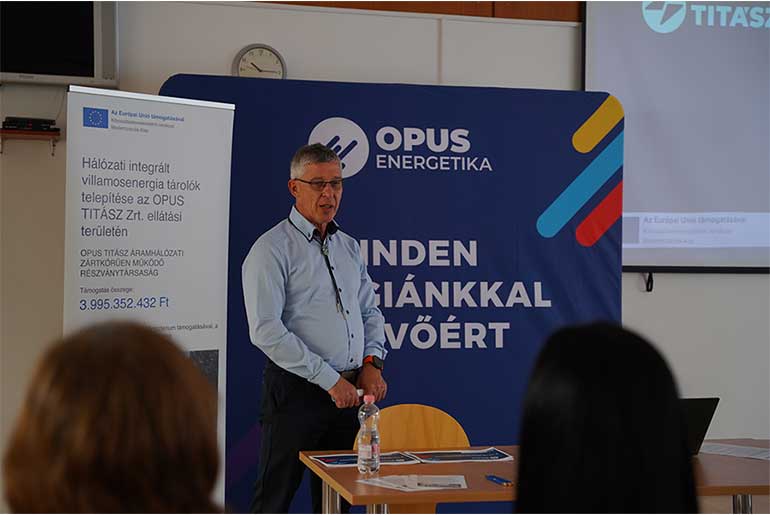
Four new grid-integrated energy storage systems have been put into operation in the supply area of OPUS TITÁSZ Zrt. The almost 4 billion forint development will enable the grid to receive even more electricity from renewable energy production. The investment will contribute to improving the quality of energy supply in the long term.

OPUS TITÁSZ Zrt. is a reliable, innovative company with a history spanning several decades, whose main task is to ensure uninterrupted electricity supply. In order to effectively connect the growing electricity demand and the increasingly significant proportion of weather-dependent production capacities, OPUS TITÁSZ Zrt. is continuously developing its electricity network. One such development is the current installation of grid-integrated electricity storage systems, which were implemented in order to increase the efficiency of weather-dependent, renewable energy production and use, decentralized and connected to low- and medium-voltage distribution networks.

In the context of the EU’s climate protection efforts, the possibilities of storing electrical energy are receiving increasing attention in Europe. Energy storage can play an important role in the decarbonization of the electricity sector, as it can facilitate the integration of renewable sources by balancing the amount of energy produced by wind and solar power plants.

For a significant part of renewables, the amount of energy produced is dependent on the weather, while consumption can follow a completely different pattern, which can make the entire electricity grid unstable. By storing electricity, production does not have to constantly adapt to consumption, and renewable energy producers do not have to be regulated, which otherwise reduces their efficiency and the amount of energy produced.

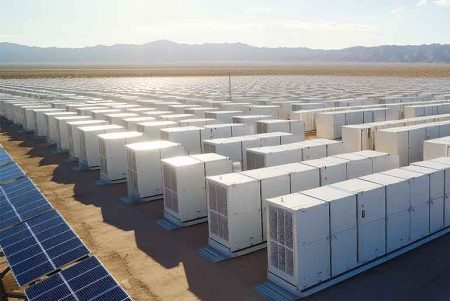
The new grid-integrated storage units were installed by OPUS TITÁSZ specialists in the areas of Rakamaz (2.75 MWh), Aranyosapáti (3.65 MWh), Csenger (6.9 MWh), and Nyírlugos (2.58 MWh). The total output of the units is 4.5 MW, and their nominal electricity storage capacity is 15.88 MWh. The storage units can be connected to at least two medium-voltage networks each, thus increasing their role in balancing. 1 MWh of capacity would be able to supply approximately 160 households for one hour.

By balancing unbalanced consumption/production, energy storage systems have a beneficial effect on voltage problems in the network. Thus, the energy flow of the medium- and low-voltage network has been further stabilized in the area of the installed storage systems, which has significantly reduced network voltage problems. However, these integrated storage systems are systems integrated into the electricity network and cannot be used for energy trading, only for improving network quality parameters (voltage regulation).

The project is being implemented with approximately 3.99 billion forints, supported by the Ministry of Energy, from the Modernization Fund.

“The use of storage also means that existing network capacities can be used more efficiently, there is no need to oversize the network, and the entire electricity system needs to be adapted to the peak production of renewables. Battery storage installed in the electricity network can ensure the balancing of the network for 10 years and is capable of eliminating voltage fluctuations on the network in real time, both on the low-voltage and medium-voltage sides.”

– Balázs Péli, Deputy CEO of the electricity network of OPUS TITÁSZ Zrt.

OPUS TITÁSZ Zrt. also contributes to the greening and competitiveness of the domestic energy sector with its development of energy storage.

whatsapp icon Electrify your feed! Click here to join our Whatsapp group and to get the latest updates, expert insights, and innovations driving India’s energy storage revolution.

BESS renewable energy
Prakash
  • Website
  • LinkedIn

I am a Junior Journalist with experience in researching, reporting, and creating engaging content across diverse topics and platforms. My work has strengthened my skills in communication, relationship building, and understanding people, while also honing my organisational and problem-solving abilities.

Keep Reading

NavPrakriti and IIT Kharagpur

NavPrakriti and IIT Kharagpur Partner to Advance Battery Recycling and Critical Mineral Recovery

India’s Clean Energy Sector

India’s Clean Energy Workforce Grows by 6.6 Lakh, Rooftop Solar Leads Job Creation

Advait Energy Secures 150 MW/300 MWh BESS Project from GUVNL

Advait Energy Secures 150 MW/300 MWh BESS Project from GUVNL

Comments are closed.

Renewable energy
PIP Partners with Fourier to Deploy Hydrogen-Powered Energy Storage System in Gujarat

PIP Partners with Fourier to Deploy Hydrogen-Powered Energy Storage System in Gujarat

June 4, 2026
IIT Guwahati

IIT Guwahati Develops Perovskite Technology Achieving 25.73% Solar Cell Efficiency

June 4, 2026
India’s Clean Energy Sector

India’s Clean Energy Workforce Grows by 6.6 Lakh, Rooftop Solar Leads Job Creation

June 4, 2026
SJVN Flags

SJVN Flags Renewable Power Demand Gap Amid Rising Capacity Additions

June 4, 2026
Batteries
NavPrakriti and IIT Kharagpur

NavPrakriti and IIT Kharagpur Partner to Advance Battery Recycling and Critical Mineral Recovery

June 4, 2026
Advait Energy Secures 150 MW/300 MWh BESS Project from GUVNL

Advait Energy Secures 150 MW/300 MWh BESS Project from GUVNL

June 4, 2026
cylib and Vianode

cylib and Vianode Partner to Advance Recycled Graphite for EV Batteries

June 4, 2026
Trina Storage

Trina Storage Wins 160 MWh Ultra-High Voltage Battery Project in Japan’s Kyushu Region

June 3, 2026

Subscribe for Updates

Get the latest news about energy storage in your inbox.

    © 2026 Thebatterymagazine.com.
    • Home
    • About Us
    • Contact Us
    • Privacy Policy
    • Terms of Service

    Type above and press Enter to search. Press Esc to cancel.