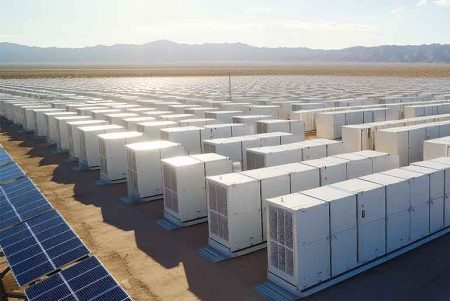
Payal Industrial Park (PIP) has teamed up with Fourier, a clean energy startup from the Bay Area, to bring a hydrogen-powered energy storage system to its industrial hub in Dahej, Gujarat. The goal is simple: give local factories a dependable, 24/7 stream of clean power, marking a major milestone for renewable energy adoption in India.
While wind and solar power are great, they aren’t always consistent. Because the wind stops blowing and the sun goes down, factories face a massive hurdle when trying to rely purely on renewables. Standard batteries work well for quick, short-term fixes, but finding a way to store clean energy for the long haul has traditionally been far too expensive and tough to scale up.
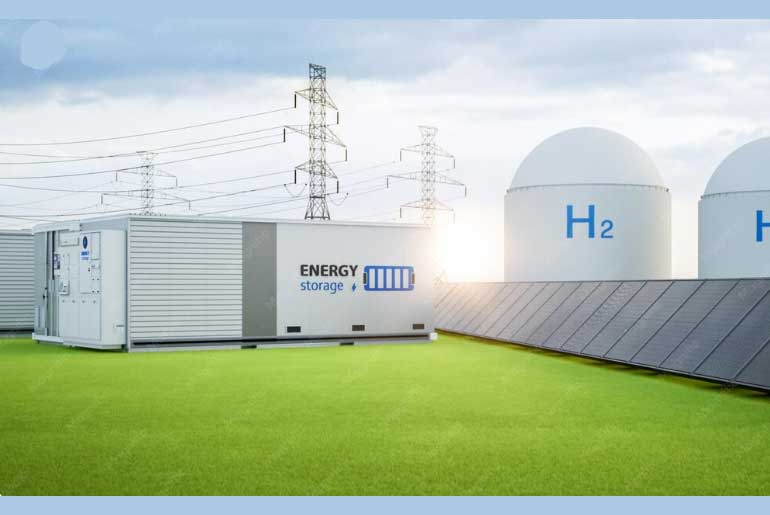
Fourier’s system tackles this challenge by pairing advanced battery tech with on-site hydrogen storage. Together, they can keep a factory running on backup power anywhere from 12 hours to well over a week, helping businesses stay productive without compromising their climate goals.
One of the smartest parts of this setup is that it makes hydrogen right where it’s needed. Generating the fuel on-demand at the industrial park cuts out the logistical headaches, risks, and high costs of shipping hydrogen across long distances.
The hardware itself borrows a page from IT design, using modular units shaped like server racks. Inside are swappable electrolyzer blades (devices that split water into hydrogen and oxygen). If one blade needs work, it can be swapped out easily without taking the whole system offline, and it makes expanding the system as simple as adding more racks.
Supporting the hardware is an intelligent battery management system. This software acts as the brain of the operation, keeping a real-time eye on power supply and demand. By optimising each module on the fly, it ensures everything integrates smoothly with wind, solar, and the local power grid.
This setup does more than just keep the lights on during an extended blackout. It gives companies a tool to handle the natural ups and downs of renewable energy and even participate in demand-response programs (where businesses adjust their power use to help balance the grid).
As a pilot project, this installation is a real-world test of how hydrogen can solve long-duration storage challenges. It also directly backs India’s National Green Hydrogen Mission by proving that hydrogen is a practical, scalable way to store energy.
For manufacturing hubs, going decentralized like this offers some massive perks:
- Better overall energy security
- Far less reliance on dirty, expensive backup fuels like diesel
- Strong protection against sudden grid outages
- A clear, actionable path to shrinking their carbon footprint
PIP is home to a wide mix of heavy industries, including chemicals, oil refining, steel, fertilizers, and heavy transportation. Because everyone from factory managers to data centre operators is hunting for around-the-clock green power, this pilot is meant to serve as a repeatable model for the rest of India.
“Our goal is to build a future-ready industrial ecosystem by integrating advanced and sustainable technologies. This collaboration with Fourier will help industries at PIP adopt cleaner energy solutions while maintaining operational efficiency and cost competitiveness.” — Siraj, Director of Arete Group.
“India is one of the world’s most promising markets for clean energy innovation. Our modular systems are designed to simplify hydrogen adoption by enabling on-site production, allowing industries to access clean and reliable electricity while reducing dependence on diesel-based backup power.” — Siva Yellamraju, Co-Founder and CEO of Fourier.
PIP has steadily become a magnet for both local and international corporate investments, particularly for companies focused on specialty chemicals, cutting-edge materials, and green tech. Adding this modular hydrogen storage infrastructure only cements its reputation as a sustainable industrial hub.
With major companies like Hindalco Industries, Silox Group, and Gharda Chemicals already operating out of the park, this new partnership is the next logical step in making clean energy a core feature of India’s industrial future.
 Electrify your feed! Click here to join our Whatsapp group and to get the latest updates, expert insights, and innovations driving India’s energy storage revolution.