Rajasthan has achieved another significant milestone in the solar energy sector by crossing the 4,000 MW production capacity mark under the PM-KUSUM scheme. It has been made possible under the able leadership of Chief Minister Bhajan Lal Sharma, along with the assistance provided by the Energy Minister, Mr. Heeralal Nagar, over the last two-and-a-half years.
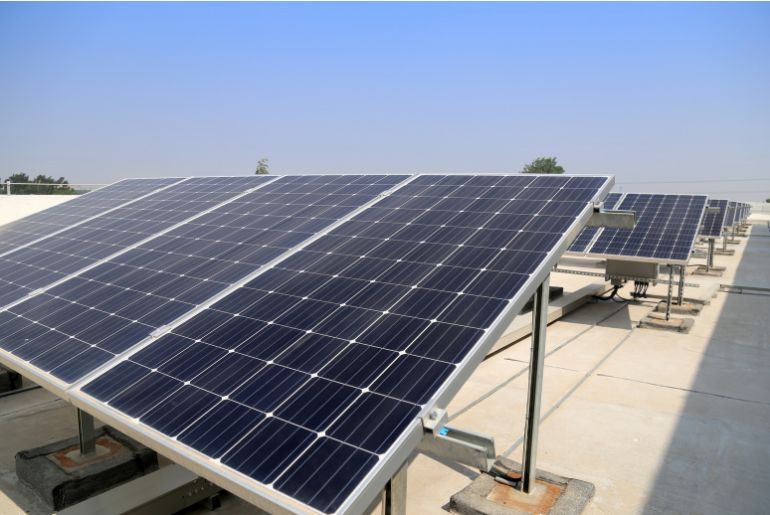
PM KUSUM aims at empowering the farmers through the ability to harness solar power for irrigation and other purposes in agriculture. This will be made possible through the installation of solar pumps and decentralized solar power plants, which would help them cut down on the cost of purchasing grid and diesel power.
Previously, only 92 plants with a capacity of 122 MW were installed; this number has now risen to 1,808 plants reaching 4,000 MW. With this achievement, Rajasthan holds the top position in the country in KUSUM Component-A, while ranking third in Component-C, following Gujarat and Maharashtra.
Daytime Power for Farmers: 2.62 Lakh Beneficiaries
There are around 2.62 lakh farmers who are getting day-time electricity through solar plants constructed under the PM-KUSUM scheme. The capacity of these plants does not exceed 5 MW and they are installed in barren lands near their respective farms.
The initiative also contributes to enhancing farmers’ income by allowing them to sell surplus power back to the grid. This additional revenue stream not only improves financial stability but also encourages wider adoption of renewable energy technologies in rural areas.
Environmentally speaking, increase in solar energy production through PM-KUSUM is beneficial in terms of low emissions and less reliance on fossil fuel sources of energy. As clean solar energy replaces traditional sources of energy, the initiative can contribute to achieving India’s environmental objectives.
10.7 GW Projects Sanctioned; Expansion Accelerating
The Union Ministry of New and Renewable Energy has sanctioned projects totalling 10.7 GW for Rajasthan, with Power Purchase Agreements already signed for all of them. These projects are targeted for completion by 2026-27.
It is clear from the rate of growth of the solar power industry in the state that whereas 48 months elapsed before hitting the 1,000 MW mark, just two and a half months were required to hit the 4,000 MW milestone. In just the month of March 2026 alone, plants producing a total of 543 MW of electricity were constructed.
The government has set a target to develop the remaining 6,700 MW capacity by October 2026. In the coming period, new capacity ranging from 500 MW to 1 GW is expected to be added every month, positioning Rajasthan as the leading solar energy state in the country.
Financially, the program is supported by subsidies and incentives that make solar installations more affordable for farmers. This reduces the initial investment burden and accelerates the transition toward clean energy solutions in the agricultural sector.
On the whole, it can be concluded that the success of Rajasthan in attaining 4,000 MW under PM-KUSUM is indeed a remarkable milestone in harnessing renewable sources in agriculture. This clearly demonstrates that how, with the help of proper policies, sustainable development can be achieved.
 Electrify your feed! Click here to join our Whatsapp group and to get the latest updates, expert insights, and innovations driving India’s energy storage revolution.