India has reached a significant milestone in its energy transition, with non-fossil sources now accounting for over half of installed capacity. The more challenging threshold—consistently and hourly producing more electricity from renewable energy sources than from coal—remains ahead. By 2035, renewable energy would surpass coal as India’s primary source of electricity, according to nearly 75% of the 250 experts surveyed by The Energy & Climate Initiatives Society (ENCIS) in Delhi NCR, Mumbai, Pune, Bangalore, and Chennai. Interestingly, 28% foresee the crossover by 2030, suggesting confidence that the change may occur sooner than projected by current planning.
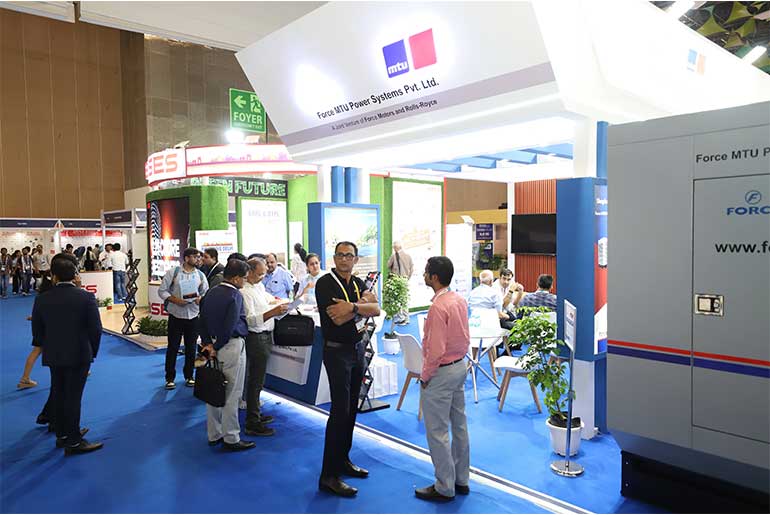
The findings will inform deliberations at Bharat Electricity, POWERGEN India and Indian Utility Week 2026, from 0-03 September 2026 at Yashobhoomi, IICC, New Delhi. The event will unite over 15,000 energy professionals, 250+ exhibitors, and 150+ industry leaders on a single, integrated platform. Featuring a high-level summit, exhibition, and awards programme, the event will showcase India’s clean energy transition, spotlight innovations in smart energy, and connect attendees with key buyers and thought leaders from India and the ASEAN region. These landmark events will set new benchmarks for sustainability and innovation, shaping the next phase of India’s energy leadership.
Bhupinder Singh Bhalla, IAS (Retd.), Honorary Chairman, Bharat Electricity Council, and Former Secretary, Ministry of New and Renewable Energy, Government of India, said, “Renewables are already the dominant destination for new investment. The defining question is whether India can convert variable capacity into dependable, affordable electricity when required. That demands storage, transmission, flexible generation, responsive demand and sophisticated markets operating as one system. The transition will be won not by megawatts alone, but by the firmness and intelligence of every megawatt-hour delivered.”
As of 31 July 2026, India had 291.7 GW of renewable capacity and 300.5 GW of total non-fossil capacity. Yet during FY2025-26, thermal sources generated approximately 1,307 billion units, against about 478 billion units from large hydro and other renewables combined. India has transformed its capacity base; its operating power system remains substantially thermal-dependent.
P. K. Pujari, IAS (Retd.), Honorary Chairman, ENCIS; Former Secretary, Ministry of Power; and Former Chairperson, Central Electricity Regulatory Commission, said, “This must not become a binary contest between coal and renewables. Coal’s role will evolve before it declines, from the default source of energy towards a flexible provider of adequacy and strategic reliability. Renewables will become predominant only when the system can absorb, store, move and dispatch them without transferring unacceptable cost or risk to consumers.”
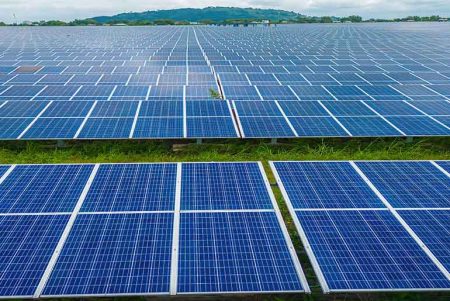
The industry is signaling a clear preference for solar energy, with 61% of respondents selecting it as the decisive growth choice. Wind energy follows, chosen by 14% of respondents, while green hydrogen and hydro/biomass are selected by 11% and approximately 12%, respectively. The main drivers of this transition are climate and Net Zero commitments, cited by 32% of participants, along with falling renewable costs, which account for 27%. However, significant barriers remain: grid integration and reliability are identified as the largest challenge by 29% of respondents, followed by financing gaps at 24%, and issues with land acquisition and permitting at 18%.
Shri Abhishek Bhatnagar, Director General, ENCIS, said, “The survey reveals a sector that sees the destination clearly and the execution gap honestly. India does not lack ambition or technology; it needs a stronger architecture of delivery linking policy, capital, infrastructure, institutions and markets.”
The survey presents an acceleration scenario, not a settled forecast. By 2035-36, the Central Electricity Authority projects 1,121 GW of capacity, with non-fossil sources at 70%. Still, coal will provide nearly half of electricity, while renewables contribute about 43%. This gap between industry ambition and planning highlights both opportunity and challenge. ENCIS calls for measuring reliable delivery, not just capacity, proactive grid investments, market reforms, and upgrading thermal assets. The real test for India is no longer building renewables competitively, but creating the systems needed for dependable, large-scale clean power.
The Energy & Climate Initiatives Society (ENCIS) is an independent, non-partisan, not-for-profit strategic knowledge and policy institution advancing India’s energy transition, climate resilience and industrial transformation. Guided by distinguished former Secretaries to the Government of India, regulators and industry leaders, ENCIS connects policy intent with institutional capability and industry execution. Through research, policy recommendations, leadership councils, strategic dialogues and national platforms, it convenes government, industry, finance, academia and technology to advance energy sovereignty, equitable access, climate resilience and globally competitive growth.
 Electrify your feed! Click here to join our Whatsapp group and to get the latest updates, expert insights, and innovations driving India’s energy storage revolution.