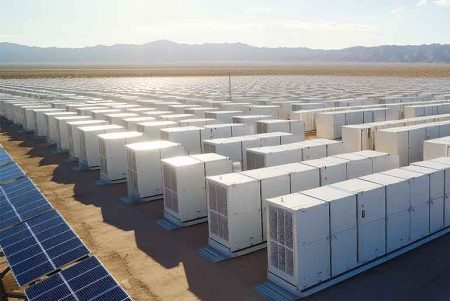
Rivian Automotive has partnered with Redwood Materials to develop a stationary energy storage system at its manufacturing facility in Normal, Illinois. The project will utilize more than 100 second-life battery packs from Rivian electric vehicles to create an initial storage capacity of approximately 10 megawatt-hours (MWh).
The partnership bwtween Rivian and Redwood is a big step toward giving used electric vehicle batteries a new purpose, allowing them to be used as distributed energy resources even after their automotive life is over.
Reducing Costs and Supporting Grid Stability
The energy storage system is meant to help Rivian better manage electricity demand by using stored energy during times of high demand. This method helps the company use less expensive grid electricity and puts less stress on the power system at the same time.
Stationary energy storage is increasingly being adopted by manufacturers and utilities to improve energy resilience and cost efficiency. By integrating second-life batteries, the project also demonstrates a scalable model for adding capacity without waiting for new grid infrastructure.
Technology and Deployment Approach
Using its own “Pack Manager” technology, Redwood Materials will combine the battery packs. This technology lets different types of EV batteries work together in modular, open-air storage systems. These systems use less power than they did in cars, which helps the battery last longer and cuts down on maintenance costs.
According to the companies, such installations can be deployed in as little as six months, offering a faster and more flexible alternative to traditional energy infrastructure expansion.
Expanding the Role of Second-Life Batteries
Redwood Materials, which was started by J. B. Straubel, the former CTO of Tesla, has been growing its energy storage capabilities through its Redwood Energy division. The company focuses on developing large-scale storage systems while also producing key battery materials such as lithium, nickel, cobalt, and copper.
RJ Scaringe, the CEO of Rivian, stressed that EV batteries are an important distributed energy resource. The partnership helps the grid be more flexible, lowers costs, and helps the larger goal of making energy more sustainable by using the technology in more than just cars.
 Electrify your feed! Click here to join our Whatsapp group and to get the latest updates, expert insights, and innovations driving India’s energy storage revolution.