

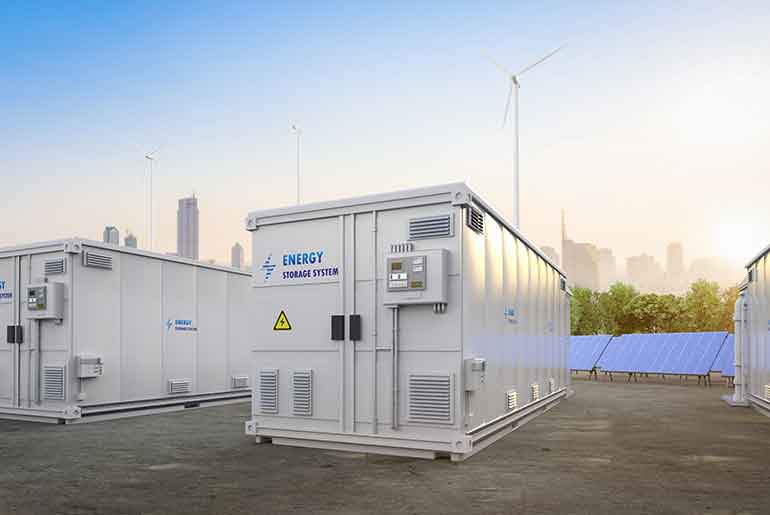
Sahaj Solar Ltd has approved plans to establish a Battery Energy Storage System (BESS) manufacturing facility with a capacity of 1.8 GWh at Dakor in Gujarat. The proposed facility will cater to both domestic and international markets, marking the company’s expansion beyond its existing solar energy business into battery storage.
The company plans to develop the facility over the next 12 months with an estimated investment of ₹25 crore. The investment will be funded through debt and internal accruals, according to the announcement. The move is aimed at strengthening vertical integration across Sahaj Solar’s existing solar systems business and expanding its presence in the growing energy storage market.
The planned facility comes as several solar companies in India explore opportunities in battery manufacturing, particularly through battery pack and system assembly. Growing demand for energy storage is creating opportunities for solar companies to offer integrated solutions that combine renewable power generation with battery storage.
BESS can store electricity for later use, helping manage variations in renewable energy generation and support power supply when solar output is low. The technology is increasingly relevant for renewable energy projects, commercial and industrial consumers, and grid-scale applications.
Sahaj Solar had previously identified Dakor, in Gujarat’s Kheda district, for a proposed 1,500 MW (1.5 GW) solar photovoltaic (PV) module manufacturing facility in late 2025. The new battery storage manufacturing plan adds another component to the company’s expansion strategy in the renewable energy sector.
By adding BESS manufacturing to its operations, the company aims to broaden its product portfolio and potentially serve customers seeking combined solar and storage solutions.
While battery storage assembly can require a lower capital investment than manufacturing battery cells, the wider battery supply chain remains capital-intensive. Cell manufacturing, along with the production of wafers and ingots in the solar industry, involves more complex processes, higher investment requirements and supply-chain challenges.
For Sahaj Solar, the proposed ₹25 crore investment represents a step towards entering the battery storage segment without moving immediately into the more capital-intensive stages of battery cell production. The facility’s planned capacity of 1.8 GWh could help the company address demand from customers in India and overseas.
The project also reflects a broader trend among renewable energy companies to diversify beyond solar generation and module manufacturing as energy storage becomes an increasingly important part of the clean energy sector.
 Electrify your feed! Click here to join our Whatsapp group and to get the latest updates, expert insights, and innovations driving India’s energy storage revolution.