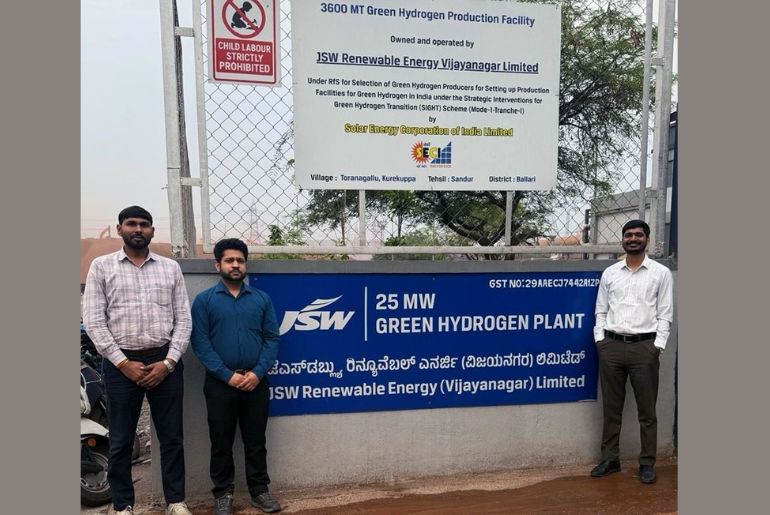
Solar Energy Corporation of India Limited (SECI), acting as the Scheme Implementing Agency for Green Hydrogen Production (Mode-1, Tranche-I), has announced the successful commissioning of the first green hydrogen production facility under the National Green Hydrogen Mission (NGHM).
JSW Renewable Energy (Vijayanagar) Limited came up with the idea for the project, which is at the JSW Vijayanagar Steel Complex in Ballari, Karnataka. The facility can make 3,600 tonnes of green hydrogen per year (TPA), which is a big step forward for India on its path to clean energy and industrial decarbonisation.
Renewable-Powered Hydrogen Production
The plant gets 25–27 MW of renewable energy every hour of every day from a mix of solar and wind assets that it owns. It makes green hydrogen using pressurised alkaline-based electrolyser technology, which is a big step forward for using hydrogen on a large scale in the country.
The green hydrogen generated at the facility will be used in the Direct Reduced Iron (DRI) process at JSW Steel. This application is expected to reduce carbon emissions in steel manufacturing, supporting the broader goal of decarbonising hard-to-abate industrial sectors. Additionally, the oxygen generated as a by-product during electrolysis is being utilised within the blast furnace, improving operational efficiency and ensuring optimal resource utilisation.
Early Commissioning Milestone
The project has been given the go-ahead much earlier than the planned commissioning date of February 2027. This early finish shows how quickly the National Green Hydrogen Mission is making progress on India’s green hydrogen roadmap.
SECI thanked the Ministry of New and Renewable Energy (MNRE) for helping with the project. The group also praised JSW Renewable Energy for reaching this important milestone, which is a big step forward in India’s transition to clean energy.
The successful opening of this facility shows that India is serious about increasing the production of green hydrogen and using sustainable energy solutions in industrial processes. This will help the country reach its long-term climate and energy goals.
 Electrify your feed! Click here to join our Whatsapp group and to get the latest updates, expert insights, and innovations driving India’s energy storage revolution.