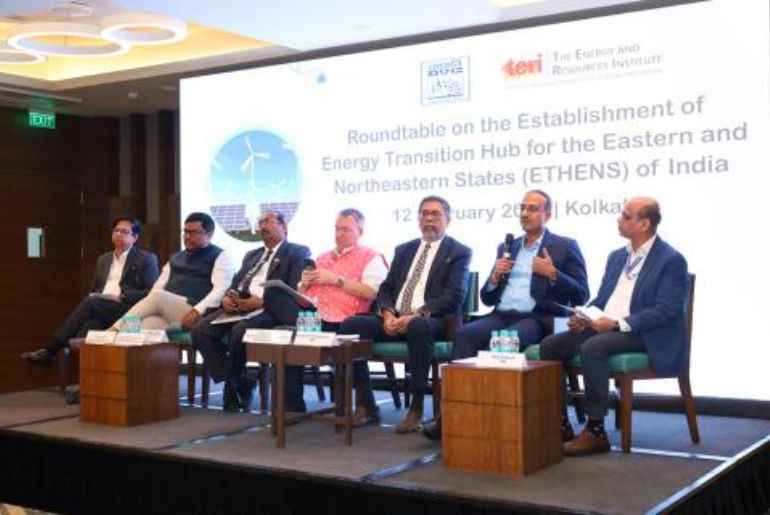
The Solar Energy Corporation of India (SECI) was represented at the roundtable meeting on the creation of the Energy Transition Hub for the Eastern and Northeastern States (ETHENS) by Shri Sivakumar V Vepakomma, Director (Power Systems). The Energy and Resources Institute (TERI) called the roundtable to order on February 12, 2026.
The meeting was mostly about how to work together better in the region to speed up the use of clean energy in eastern and northeastern India. As India’s renewable energy journey moves from quickly adding capacity to more deeply integrating the system, the focus of conversations is shifting more and more toward storage solutions, grid flexibility, and digital tools to keep the power system running smoothly.
Focus on Reliable and Demand-Based Renewable Supply
During the discussions, SECI underlined the growing importance of Hybrid, RTC (Round-the-Clock), Peak Power, and storage-linkedprojects. These models are designed to ensure that renewable electricity is available when required, rather than only when it is generated.
SECI highlighted that such approaches are critical to improving grid stability and making renewable power more dependable for consumers and industries. The proposed ETHENS platform was described as a mechanism that can help unlock the renewable energy potential of the eastern and northeastern states by aligning policy frameworks, technology adoption, financial structures, and on-ground implementation strategies.
Need for State-Specific Renewable Solutions
Shri Vepakomma emphasised that renewable energy development must be tailored to the unique strengths and requirements of each state. He noted that state-specific solutions are essential to maximise local resources and address region-specific challenges.
SECI reaffirmed its commitment to working closely with states and stakeholders to build a clean energy ecosystem that is flexible, resilient, and prepared for future demand growth. The organisation reiterated its continued support for initiatives that promote sustainable power development while ensuring reliability and system stability.
The roundtable marked another step toward strengthening coordination among policymakers, utilities, and renewable energy agencies to drive an integrated and region-focused energy transition.
 Electrify your feed! Click here to join our Whatsapp group and to get the latest updates, expert insights, and innovations driving India’s energy storage revolution.