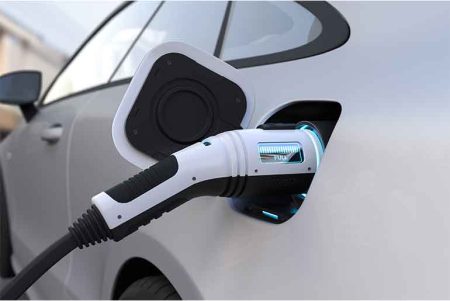

As electric vehicles (EVs) shift from niche to norm, the question of what happens to spent batteries has become urgent. Typically, EV batteries have a useful “first life” in vehicles but retain ~70–80% capacity after 8–10 years—often deemed insufficient for driving yet still valuable for stationary applications. Repurposing these batteries—known as ‘second-life’ deployments—is emerging as a cornerstone of circular economy strategies, offering both economic gains and a path toward sustainable grid-scale energy storage.
Why Second-Life Batteries Matter
Capital and Resource Efficiency: Second-life batteries cost up to ~50% less than new ones. Because the energy- and carbon-intensive production stage is bypassed, this reduces battery lifecycle carbon footprints—by 30% compared to new lithium-ion cells.
- Materials Conservation: These batteries contain lithium, cobalt, and nickel—critical minerals that are mostly imported in India (>95%). Reusing them domestically via second life can preserve strategic autonomy and ease raw-material constraints.
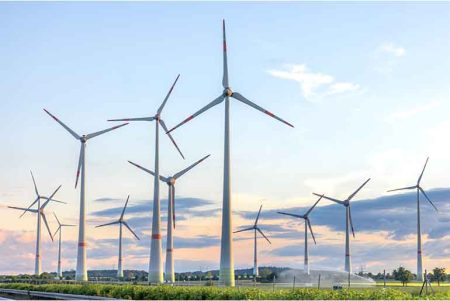
- Grid Resilience & Renewable Integration: With India targeting 500 GW renewables by 2030, second‑life batteries provide cost‑effective buffering for intermittent solar and wind—enabling stable, flexible grid operations.
Policy Backdrop in India
- Battery Waste Management Rules (BWMR) 2022: Mandate extended producer responsibility (EPR) for battery manufacturers/importers, requiring collection, recycling, and repurposing of spent batteries.
- National Framework for Energy Storage Systems (2023): Promotes ESS via viability gap funding covering up to 40% of capital costs. It explicitly supports second-life deployment alongside new storage installs.
- FAME & EV Incentives: By encouraging domestic EV adoption, the Faster Adoption and Manufacturing of EVs (FAME) scheme indirectly amplifies the second-life battery pipeline.
Scale and Economic Potential
- Indian Market Outlook: A report by NITI Aayog estimates 128 GWh of EV-grade batteries will retire by 2030—equivalent to nearly 32 million typical EV battery packs.
- Global Growth: The second-life battery market is forecast to reach US$28.2 billion by 2031, growing at a CAGR of ~44%. Asia-Pacific alone holds nearly 69% of the market share.
- Materials Savings: Repurposing second-life batteries could cut global lithium demand by 15–20% by 2035. Carbon savings of 50–90% compared to new ESS further reinforce environmental benefits.
Applications and Cases
- Grid-Scale Energy Storage: Second-life batteries integrated with solar/wind farms buffer supply-demand mismatches, reduce dependency on peaker plants, and enhance reliability.
- Building and Community Backup: From microgrids powering rural enterprises to urban commercial buildings, these systems deliver reliable backup power. Example: EVMag magazine noted that power-backup systems will dominate second life usage in 2024, capturing over 55% of demand.
- Peak Charging Stations (V2G): Batteries act as buffers in EV-charging hubs, drawing power from the grid at off-peak rates and discharging during peak times.
- Telecom & Rural Electrification: Low-demand, off-grid power systems—such as telecom towers and village electrification projects—can leverage modular second-life systems.
- Case Study – Lohum & MG Motor: Noida-based Lohum, in partnership with MG Motor India, launched a 5 kWh off-grid second-life BESS aimed at commercial and rural use.
Challenges to Scale
Despite promise, several obstacles remain:
| Challenge | Impact | Mitigation Pathways |
| Battery Quality & Variability | 2nd-life cells vary in use history and chemistry; need robust diagnostics | Develop testing standards; use ML-based health estimation like Cui et al. |
| Collection & Logistics | Current recycling capacity in India ~2 GWh/year; collection systems weak | Invest in supply chain, labelling, and accreditation infrastructure |
| Regulatory Lightness | EPR starts 2027; lack of testing/quality standards undermines stakeholder confidence | Accelerate roll-out of BWMR; define deployment norms |
| Ecosystem Readiness | Skills gaps in battery handling, refurbishment, and system integration | Launch skilling initiatives; facilitate academia-industry partnerships |
| Market & Finance | Uncertainties persist around asset valuation, performance, and investor confidence | Standardized warranties, PPAs, and insurance products for second‑life systems |
Global Precedents & India’s Advantage
- Redwood Materials (USA): Repurposed EV batteries into a 12 MW/63 MWh microgrid in Nevada—the world’s largest second-life deployment to date—capable of powering ~9,000 homes.
- Europe: Companies such as Nissan, Renault, Kia, and Deutsche Bahn are actively building second-life systems in Germany.
- Asia-Pacific Leadership: More than two-thirds of second-life battery capacity is in this region, with India showing high potential.
- India can leapfrog: building a complete “battery circular economy”—collection, repurposing, recycling—can create thousands of green‑jobs and conserve trillions in raw‑material imports.
Tech Innovations That Enable Scale Health Estimation Models:
With recent ML-powered diagnostic modelling systems yielding MAPE <2.3%, the systems can now reliably deploy systems with shifting costs attached to estimates, albeit still imperfectly. Battery Management & Repurposing IT Platforms: Lohum, as well as other innovators, are exploring tools to map second-life lifecycle-management for cell sorting and systems based on RUL, with the company licensing other technology developers as an example. Advanced Hydrometallurgical Recycling: New recycling technology will bypass many end-of-life applications sustainably (per EPR, material-recovery limitations). 8. B2B Impacts and Investment Opportunities OEM’s, Automaker’s: OEM’s can monetize end-of-vehicle batteries through resale/refurbishment, and circular business-models can be established (e.g. Tesla, Toyota, and MG all have active second-life business strategies).
- Storage System Integrators & EPCs: Commercialize plug‑and‑play second‑life ESS for microgrids, charging hubs, and telco towers.
- Renewable Developers: Deploy 2nd-life storage to secure fast-track capacities and financial support under National Framework.
- Financial Investors: Opportunity to pioneer a novel asset class with predictable degradation profiles and diversified revenue (e.g., energy arbitrage, backup services, V2G).
- Skilling & Tech Providers: Supply training, diagnostic tools, and refurbishment networks to support deployment scale.
Path Forward: A Roadmap for India
- Strengthen Collection & Reverse Logistics: Create accredited EPR-focused collection networks with standardized battery labelling.
- Certify & Standardize: Establish national labs and quality benchmarks for second-life battery health, safety, and performance.
- Deploy Pilot Projects: Scale lighthouse initiatives— e.g., Lohum’s 5 kWh units, community microgrids, EV-charging hubs—backed by capital incentives.
- Skilling & Training: Launch targeted certification programs in battery refurbishment, system integration, and regulatory compliance.
- Financial Instruments: Offer warranties, indexed leases, and blended finance (public‑private partnerships) to de‑risk investments.
- Close the Loop: Integrate second-life systems with recycling facilities to eventually refurbish, dismantle, and recycle cells at end‑of‑stationary life.
Second‑life batteries are no longer a niche concept—they’re a strategic lever in India’s march toward clean, secure, and circular energy systems. With 128 GWh of retirement-bound EV capacity by 2030, supportive regulations, and emerging technical solutions, the pieces are falling into place. Scaling this ecosystem—from cell diagnostics and repurposing, to deployment and end-of-life recycling—can unlock new business models, drive green‑job growth, and significantly reduce import dependency. For B2B stakeholders—OEMs, EPCs, renewable developers, financiers—this is prime time to align with the future of battery circularity.
 Electrify your feed! Click here to join our Whatsapp group and to get the latest updates, expert insights, and innovations driving India’s energy storage revolution.