State-owned power generator SJVN has highlighted a widening gap between the volume of renewable energy capacity being awarded through tenders and the actual procurement demand from power distribution companies (DISCOMs), underscoring a key challenge facing India’s rapidly expanding clean energy sector.
Speaking during the company’s FY26 earnings call, SJVN Chairman and Managing Director Bhupender Gupta said renewable energy implementing agencies have collectively awarded large capacities across solar, wind and hybrid segments, but power sale agreement (PSA) signings have lagged behind.
SJVN alone has awarded around 16 GW of renewable energy projects across solar, wind, hybrid and storage segments, while PSAs have been signed for only about 6 GW. “The problem is that a lot of tenders came into the market simultaneously. Demand from DISCOMs has not been that much,” Gupta said.
Issue Not Specific To SJVN
According to the company, the issue is not specific to SJVN and is being witnessed across major renewable energy tendering agencies. Utilities are becoming increasingly selective in procurement as they align purchases with long-term resource adequacy plans and grid requirements. Gupta said states are no longer looking at standalone renewable power purchases but are evaluating combinations of solar, wind, hydro and thermal power to meet round-the-clock demand and peak-hour requirements.
The development comes even as India continues to aggressively pursue its renewable energy targets, raising concerns over the pace at which awarded projects can secure long-term offtake agreements. SJVN acknowledged that a portion of awarded capacity may struggle to find buyers as newer auctions continue to discover lower tariffs and state utilities reassess procurement requirements.
Despite near-term challenges, the company remains bullish on renewable energy demand, particularly for storage-backed and dispatchable green power solutions.
Storage Emerges As Next Growth Driver
Management indicated that future procurement is expected to increasingly shift towards Solar-plus-BESS, hybrid projects and Firm & Dispatchable Renewable Energy (FDRE) solutions rather than standalone solar projects. “The demand will not decrease for renewable power. However, the configuration of demand is changing,” Gupta said.
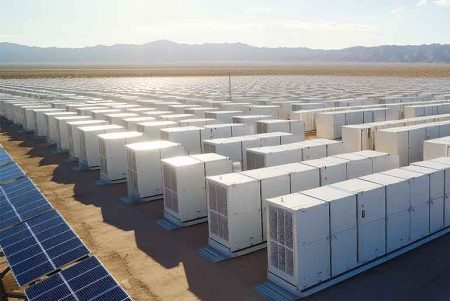
Reflecting this transition, SJVN has already awarded 2,000 MWh of Battery Energy Storage System (BESS) projects across Uttar Pradesh and Haryana. The company believes energy storage will play a critical role in supporting higher renewable penetration and addressing intermittency concerns as India’s renewable fleet expands.
Solar Remains Centrepiece Of Expansion Plans
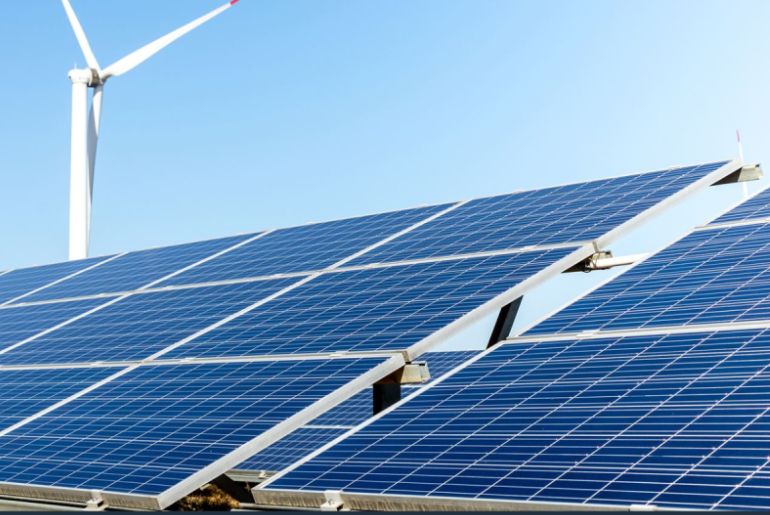
Even as storage gains prominence, solar continues to dominate SJVN’s growth pipeline. The company commissioned the 1,000 MW Bikaner Solar Power Project in Rajasthan and a solar project in Assam during FY26, taking total solar capacity additions during the year to 1,070 MW. SJVN plans to add around 1,555 MW of solar capacity in FY27 and another 650 MW in FY28.
However, grid infrastructure remains a challenge. The Bikaner project is currently facing curtailment of around 120 MW due to the delayed installation of grid-balancing equipment mandated under revised regulations. The issue is expected to be resolved by October 2026. The company also cautioned that some upcoming projects in Gujarat’s Khavda renewable energy zone may face temporary curtailment because of transmission connectivity delays.
Focus Expands Beyond Standalone Solar
SJVN said its renewable energy portfolio is becoming more diversified, with growing emphasis on solar, wind, hybrid, and energy storage projects as the sector moves toward firm and dispatchable clean power solutions. The company expects upcoming tenders to see increased participation from hybrid and storage-integrated projects, reflecting DISCOMs’ rising preference for reliable renewable energy that can support grid stability and meet demand around the clock.
The trend highlights a new phase in India’s energy transition, where the focus is gradually shifting from simply adding renewable capacity to ensuring that clean power is dependable, efficiently integrated into the grid, and backed by long-term demand from buyers.
 Electrify your feed! Click here to join our Whatsapp group and to get the latest updates, expert insights, and innovations driving India’s energy storage revolution.