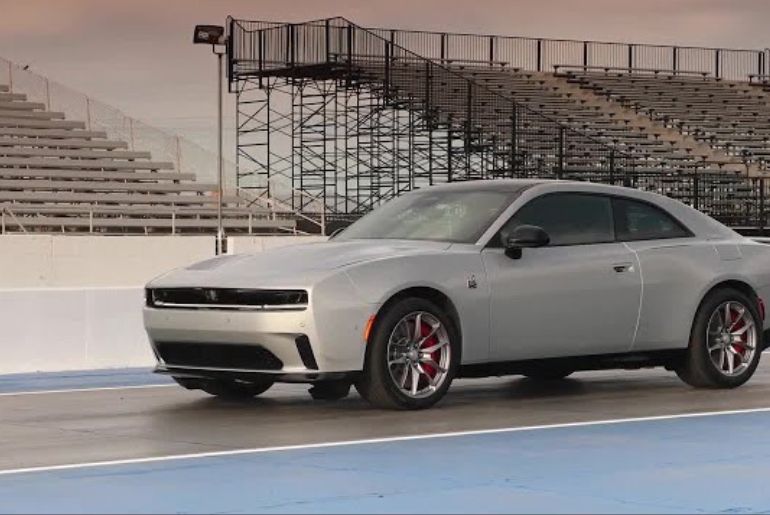
Stellantis and Factorial Inc. (Nasdaq: FAC) have achieved a major milestone by integrating Factorial’s advanced FEST® (Factorial Electrolyte System Technology) solid-state battery technology into a Dodge Charger Daytona development vehicle. The companies have also started a road-testing program to evaluate the battery technology’s performance, safety, and reliability under real-world conditions.
The integration follows the successful validation of automotive-scale FEST® solid-state battery cells and represents the first time Stellantis has incorporated solid-state battery technology into one of its vehicles. The development marks an important step toward advancing next-generation battery solutions for future electric vehicles and accelerating the adoption of automotive-grade solid-state technology.
Battery development is a balancing act. It’s not enough to optimize a single metric. We need a system that delivers real benefits in a real vehicle,” said Ned Curic, Stellantis Chief Engineering and Technology Officer. “This milestone shows we are bringing solid-state batteries closer to our customers with the potential for longer range, faster charging and lower costs. Just as important, FEST®’s strong compatibility with lithium-ion manufacturing processes gives us a critical path to scale this technology.
In 2025, Stellantis and Factorial demonstrated FEST® cells with an impressive energy density of 375 Wh/kg, ultra-fast charging from 15% to 90% in just 18 minutes and robust reliability from -30 °C to 45 °C.
Transitioning from these cell testing results to a development vehicle demanded advanced engineering solutions from Stellantis and Factorial engineers. FEST® solid-state battery cells were integrated into the existing battery pack using an innovative, patented new mechanical architecture, designed by Stellantis, to bring out the best of solid-state cell performance. Engineers also adapted the control systems and pack design to optimize cell performance while meeting rigorous automotive requirements for safety and durability. These technical designs and adaptations are essential for ensuring cell performance in all conditions.
With this integration milestone complete, Stellantis and Factorial have started a road testing and calibration program. The testing program will help tune and further verify pack performance and reliability under charging and driving conditions, in addition to vehicle safety.
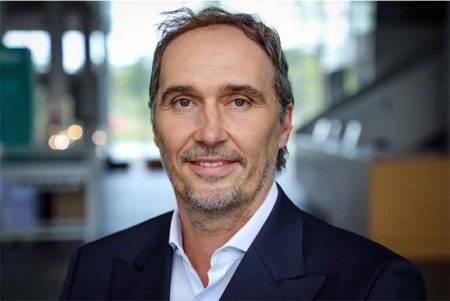
“We are honored to collaborate with Stellantis, one of the world’s leading mass-market automakers, on this STLA Large-based development vehicle,” said Siyu Huang, CEO of Factorial. He highlighted that the partnership combines advancements across cell chemistry, battery pack architecture, and real-world vehicle testing, demonstrating the importance of close collaboration in bringing solid-state battery technology to the automotive sector.
According to Huang, the milestone reinforces the capabilities of FEST® technology and establishes a new benchmark for automotive-grade solid-state batteries. The development is expected to support future electric vehicles designed to address the evolving requirements of drivers, including improved performance, safety, and efficiency.
The achievement builds on the previously announced demonstration program between Stellantis and Factorial and represents another step forward in Factorial’s efforts to develop, optimize, and commercialize solid-state battery technology for automotive applications.
 Electrify your feed! Click here to join our Whatsapp group and to get the latest updates, expert insights, and innovations driving India’s energy storage revolution.