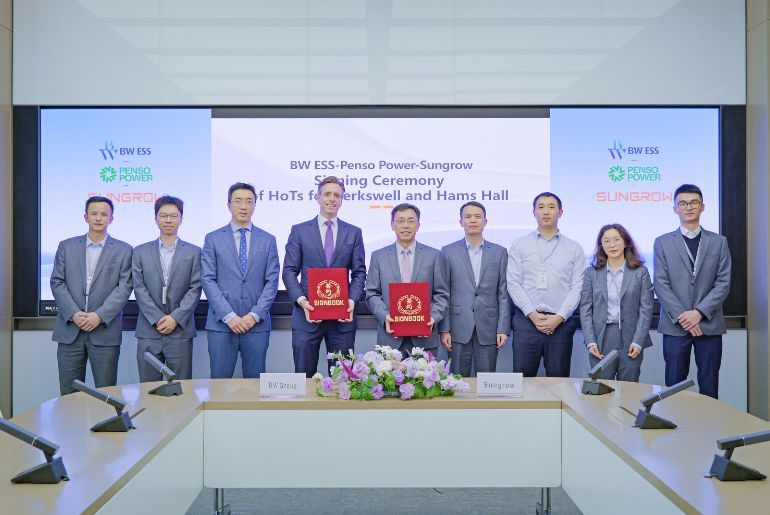
Sungrow, a global provider of PV inverters and energy storage systems, has signed an agreement with Masdar to supply energy storage and PV inverter solutions for the UAE’s first gigascale round-the-clock renewable energy project.
Developed by Masdar and the Emirates Water and Electricity Company (EWEC), RTC combines 5.2GW of solar photovoltaic (PV) capacity with a 19GWh battery energy storage system (BESS), delivering baseload renewable energy at unprecedented scale.
Under the agreement, Sungrow will supply 7.5GWh of PowerTitan 3.0 ESS, alongside 2.6GW of PV inverter solutions, supporting the project’s operational reliability and efficiency.
Designed to help meet growing demand for uninterrupted clean power, the project will support a range of applications, including energy-intensive industries, business operations, residential communities and emerging digital infrastructure.
RTC represents a major advancement in the integration of solar PV and battery storage technologies at the utility scale. Once operational in 2027, it is expected to support the delivery of reliable clean energy around the clock while enhancing grid resilience and flexibility.
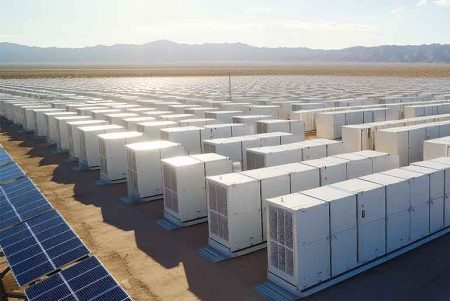
RTC will deploy more than 1,000 Power Titan 3.0 liquid-cooled ESS integrated with advanced PV inverter technologies to support continuous power delivery and enhanced grid stability.
Each system operates on an optimized cycle of 8-hour charging and 16-hour discharging to support a stable and flexible renewable energy supply. Featuring an AC block design and rack-level management, the system is designed to enhance operational safety and efficiency.
Efficiency and Performance in Challenging Conditions
The system incorporates a fully liquid-cooled Silicon Carbide Power Conversion System (SiC PCS), achieving a maximum efficiency of 99.3 percent and a system RTE of 90 percent.
Designed for operation in demanding climates, the system can operate at temperatures of up to 55°C without derating, making it well suited to the UAE environment.
The RTC project aims to redefine renewable energy by addressing the challenge of intermittency. Once operational, it will deliver giga scale baseload renewable power at globally competitive tariffs for the first time. It is also intended to serve as a scalable model that can be replicated in other regions worldwide.
 Electrify your feed! Click here to join our Whatsapp group and to get the latest updates, expert insights, and innovations driving India’s energy storage revolution.