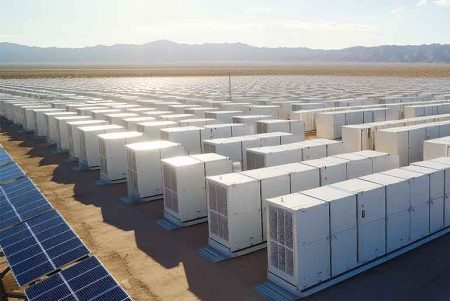
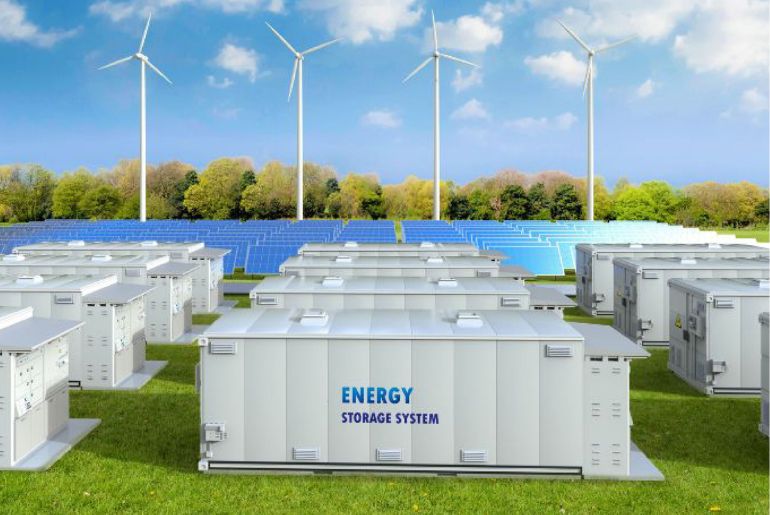
Andhra Pradesh is preparing to deploy large-scale Battery Energy Storage Systems (BESS) with a total planned capacity of 3,000 MWh, aimed at strengthening grid reliability and enabling higher integration of renewable energy. The rollout will be executed in phases, with approximately 1,000 MWh targeted for completion by January 2027. The state government is expected to invite tenders shortly, with significant participation anticipated from private developers.
The proposed BESS installations will store extra solar power made during the day and release it when demand is highest in the evening. This method will help balance the supply and demand for electricity more effectively, lower the state’s reliance on costly thermal power, and make power more widely available.
The investment for the project is estimated at around ₹1.68 crore per MWh, with viability gap funding and central government support likely to play a role. Authorities are also evaluating the co-location of storage systems with solar and wind projects to enhance system efficiency and utilisation. Multiple substations and load centres, particularly in regions with high renewable energy penetration, have been identified for deployment.
Key Highlights:
- Total planned capacity: 3,000 MWh BESS
- Phase 1 target: 1,000 MWh by January 2027
- Estimated cost: ₹1.68 crore per MWh
- Expected savings: ₹400–500 crore annually
- Peak power cost reduction: From ~₹10/unit to ~₹4.85/unit
- Tenders: To be issued soon with private sector participation
The initiative is expected to significantly reduce peak power procurement costs, lowering them from around ₹10 per unit to approximately ₹4.85 per unit. This could result in annual savings of ₹400–500 crore for the state’s power distribution companies, thereby improving their financial health.
Battery storage is increasingly being recognised as critical infrastructure for managing the intermittency of renewable energy sources like solar and wind. By enabling energy shifting and reducing reliance on spot market purchases during peak demand, BESS will help stabilise the grid, minimise outages, and enhance supply quality.
At the same time, the state government has given the go-ahead for the building of two ultra-mega solar parks in the YSR Kadapa and Kurnool districts. Each park will have a planned capacity of 1,000 MW. This move goes hand in hand with the storage initiative and shows how Andhra Pradesh wants to increase the amount of renewable energy that can be connected to the grid.
With declining battery costs and growing policy support, the state’s push towards grid-scale storage is expected to play a crucial role in ensuring reliable, cost-effective, and sustainable power for the future.
 Electrify your feed! Click here to join our Whatsapp group and to get the latest updates, expert insights, and innovations driving India’s energy storage revolution.