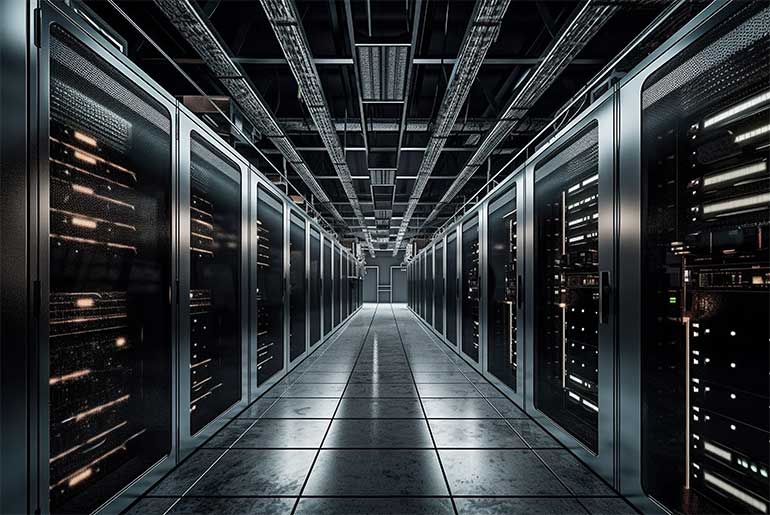
India’s data centre industry is entering a period of rapid expansion, with installed capacity expected to increase from 1.5 GW in 2025 to 6.5 GW by 2030, according to a report by Rubix Data Sciences. The growth is expected to drive a sharp increase in electricity demand while creating new opportunities for renewable energy and battery energy storage systems (BESS).
The findings were published in the Rubix Industry Insights: India’s Data Centre Sector report, which highlighted the increasing investment momentum in the sector, supported by artificial intelligence (AI), hyperscale cloud services and the country’s growing digital economy.
India’s installed data centre capacity has nearly quadrupled since 2020. The projected 2030 capacity is more than four times the current level, with capacity additions during the past year alone exceeding those recorded over the previous three years combined, according to the report.
For the battery and energy storage sector, the rapid expansion of data centres is expected to increase the need for reliable, uninterrupted and resilient power infrastructure. As data centres operate around the clock, energy storage solutions can play a role in supporting backup power, peak-load management, renewable energy integration and grid stability.
India generates nearly 20% of global data but accounts for only around 3%–4% of global data centre capacity, indicating significant potential for further expansion.
The report identified hyperscale and colocation data centres as key contributors to the sector’s growth. Continued investments by global technology companies, supportive government policies and India’s expanding renewable energy capacity are also expected to strengthen the country’s position as a major global data centre hub.
India added 387 MW of IT capacity in 2025, more than double the 191 MW added in 2024, representing a 103% year-on-year increase. As of January 2026, the country had 271 data centres, with Mumbai, Hyderabad, Delhi-NCR, Bengaluru and Chennai accounting for nearly 65% of the total facilities.
The Ministry of Power expects electricity demand from India’s data centre industry to increase from around 1 GW currently to 13.56 GW by 2031–32. This substantial increase is likely to intensify the focus on energy efficiency, renewable power procurement and energy storage technologies.
As data centre operators seek to reduce their carbon footprint and support India’s target of achieving net-zero emissions by 2070, battery storage could become increasingly important in managing renewable energy intermittency and ensuring power availability during grid disruptions.
The report estimates India’s current data centre investment pipeline at approximately $90 billion, including projects under development and formally announced projects. This is around six times the $13–15 billion invested between 2020 and 2024.
Major technology companies are leading the investment wave. Amazon Web Services (AWS), Microsoft and Google have committed approximately $35 billion, $17.5 billion and $15 billion, respectively, amounting to around $67.5 billion in combined investments.
The Government of India has separately projected that AI-driven digital infrastructure, including data centres, could attract up to $200 billion in investments in the coming years.
The sector’s expansion is being driven by cloud adoption, AI infrastructure requirements and digital services such as 5G, e-commerce, UPI and OTT platforms. India’s data centre market also benefits from relatively lower construction costs, estimated to be 30%–40% lower than in China and the US.
However, rapid growth is also creating challenges around energy and water consumption. India’s data centres currently consume an estimated 150 billion litres of water annually, with this figure projected to reach nearly 359 billion litres by 2030. More than half of the country’s data centre facilities are located in water-stressed regions.
The combination of rising electricity consumption, renewable energy targets and the need for reliable backup power is expected to strengthen the role of battery energy storage systems, renewable energy and other clean power solutions in India’s expanding data centre infrastructure
Commenting on the findings, Tushar Bhaskar, President,, Rubix Data Sciences, said: “India’s data centre industry has moved past its early growth phase and is now in the middle of a large-scale, AI-driven investment cycle, with the current pipeline significantly outpacing historical investments. As demand from hyperscalers, AI workloads, and digital enterprises accelerates, the next test for the industry will be execution. Long-term leadership in this sector will depend on how effectively stakeholders address structural constraints around power, water, and sustainability, while building resilient, energy-efficient, and AI-ready infrastructure. The coming phase development will be defined as much by the ability to deliver integrated, future-ready digital infrastructure ecosystems as by investment size.”
 Electrify your feed! Click here to join our Whatsapp group and to get the latest updates, expert insights, and innovations driving India’s energy storage revolution.