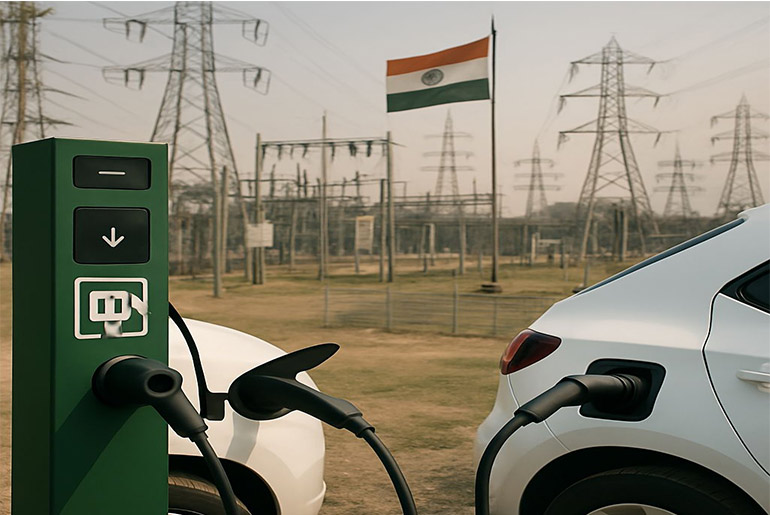
India is poised for an electric vehicle (EV) revolution, with incentives from the government, environmental consciousness, and technology driving the industry. But this explosive growth is a major challenge to the already stressed power infrastructure of the country. As millions of EVs get ready to come onto the grid, the potential for grid overload and wasteful energy consumption grows. Smart charging software has thus come to play a critical role in solving these problems. Smart charging software maximizes charging habits, regulates energy distribution, and makes it possible for a smooth interaction between EVs and the grid.
Understanding Smart Charging
Smart charging software refers to digital systems that manage when, where, and how EVs are charged. Contrary to conventional charging, which taps power indiscriminately, smart systems employ real-time information, machine learning techniques, and predictive analysis to optimize charging sessions in accordance with the grid status, energy prices, and users’ preferences.
Now, let’s talk about the advantages of smart charging software:
- Dynamic Load Balancing: Schedules power among a number of vehicles to prevent overloading the grid.
- Time-of-Use Pricing: Charges power into automobiles when electricity demand and cost are low.
- Remote Monitoring & Control: Provides centralized monitoring of charging networks.
- Vehicle-to-Grid (V2G) Capacity: Offers two-way energy transfer, and EVs can be utilized as energy storage units during peak hours.
Throughout the globe, smart charging has transformed EV adoption in countries like Europe and the United States. India, with its unique energy situation, is following suit.
India’s Grid Challenges
India’s grid has numerous structural and operational issues. T&D (transmission and distribution) losses are excessive, power cuts are common, and peak loads are an issue, which makes its capability to handle a mass adoption of EVs challenging. Discoms are already experiencing fluctuations in demand, and uncontrolled charging of EVs would compound those issues further.
Also, most EV users are in urban areas, and this loads localized urban grids, which can have the potential to cause transformer failure risks and voltage imbalance. If precautions are not taken, the EV boom can undermine grid stability and power quality.
How the Smart Charging Software can be the Hero of this problem
Smart charging software presents a strategic solution to these grid issues. It optimizes energy utilization by charging EVs in line with grid capacity and renewable energy levels, minimizing system stress. Principal advantages are:
- Demand Response Management: Makes real-time rate adjustments to prevent grid overload.
- AI and Predictive Analytics: Forecasts charging behaviors and grid strain, allowing pre-emptive action.
- Renewable Integration: Coordinates EV charging with solar and wind supply, optimizing use of green energy.
Demonstration projects in Delhi and Mumbai led by Tata Power and BSES have been displaying encouraging results. They involve smart chargers with solar panels, real-time pricing, and cloud-based control systems, demonstrating the revolutionary power of smart software.
Key Players and Innovators
Some Indian startups and energy corporations are at the forefront of smart EV infrastructure:
- Fortum Charge & Drive India: Provides real-time monitored cloud-based smart charging services.
- Kazam: A domestic start-up providing IoT-based intelligent chargers.
- Statiq: Develops intelligent public charging networks with load management using AI.
- Ather Grid: Over-the-air update-sustaining, smart scheduling-facilitating proprietary network by Ather Energy.
Collective effort is the key, and joint ventures involving OEMs, technology providers, and Discoms are building a synergistic environment. Government incentives under programs like FAME II and the Smart Grid Mission are further driving development.
Future Perspective and Policy Support
The future of EV charging in India is green, expandable, and smart. Vehicle-to-grid (V2G) integration, albeit in its nascent stage, has huge promise in load balancing and ancillary services. Future policies addressing data-sharing protocols, smart metering integration, and infrastructure harmonization will complement this shift even more.
India’s net-zero by 2070 target renders the uptake of smart charging software not only useful but also inevitable. The intersection of EVs, renewables, and digital tech will be what shapes the next chapter in India’s energy story.
Smart charging software is turning into the key in India’s drive towards an smart and robust EV ecosystem. It solves immediate grid issues while setting up the long-term sustainability foundation. As the EV industry continues to gain momentum, smart charging will make sure that India not just keeps up but also takes the lead in connecting transportation with smart energy systems.
 Electrify your feed! Click here to join our Whatsapp group and to get the latest updates, expert insights, and innovations driving India’s energy storage revolution.