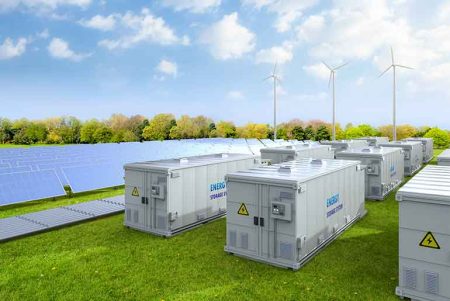
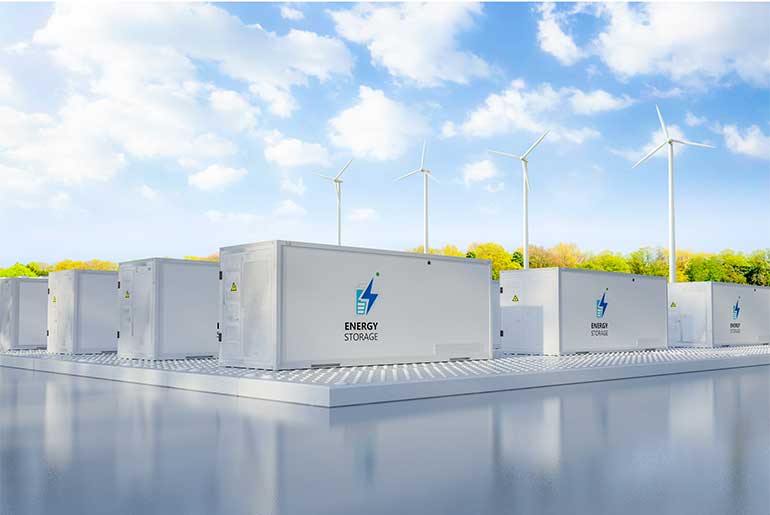
The Ministry of Heavy Industries (MHI) has issued a global Request for Proposal (RFP) inviting bids for the establishment of 10 GWh of ACC battery manufacturing capacity in India under the Production Linked Incentive (PLI) Scheme for ACC Battery Storage. The new capacity has been exclusively earmarked for Grid-Scale Stationary Storage (GSSS) applications to support India’s rapidly growing renewable energy and energy storage ecosystem.
The bidding process will be conducted online through a transparent two-stage Quality and Cost Based Selection (QCBS) mechanism via the Central Public Procurement (CPP) Portal, enabling both domestic and international companies to participate.
The tender documents are available from July 15, 2026, while a pre-bid conference has been scheduled for July 29, 2026. Interested bidders must submit their proposals by October 13, 2026, with technical bids set to be opened on October 14, 2026.
Key Tender Highlights
- Tender Issued By: Ministry of Heavy Industries (MHI)
- Manufacturing Capacity: 10 GWh
- Application: Grid-Scale Stationary Storage (GSSS)
- Selection Process: Two-stage Quality and Cost Based Selection (QCBS)
- Mode: Online through Central Public Procurement (CPP) Portal
- Tender Release Date: July 15, 2026
- Pre-Bid Conference: July 29, 2026
- Last Date for Bid Submission: October 13, 2026
- Technical Bid Opening: October 14, 2026
The latest tender marks the final allocation under the ₹18,100 crore PLI Scheme on National Programme on Advanced Chemistry Cell (ACC) Battery Storage, approved by the Union Cabinet in May 2021. The scheme aims to establish 50 GWh of domestic ACC manufacturing capacity, reduce India’s reliance on imported battery cells, and create a globally competitive battery manufacturing ecosystem.
Of the total 50 GWh target, 40 GWh has already been awarded to domestic manufacturers, while the newly announced 10 GWh capacity has been reserved specifically for grid-scale stationary storage, reflecting the government’s growing emphasis on energy storage infrastructure alongside renewable energy expansion.
The additional manufacturing capacity is expected to play a crucial role in meeting India’s increasing demand for battery storage driven by large-scale renewable energy deployment. Besides enhancing grid reliability and supporting renewable integration, the initiative is intended to strengthen energy security, reduce import dependence on advanced battery technologies, and accelerate the development of a robust domestic battery manufacturing industry capable of serving both the Indian and global markets.
The announcement reinforces the government’s long-term strategy of positioning India as a global manufacturing hub for advanced battery technologies while supporting the country’s clean energy transition and future energy storage requirements.
 Electrify your feed! Click here to join our Whatsapp group and to get the latest updates, expert insights, and innovations driving India’s energy storage revolution.