Uttar Pradesh is stepping up efforts to build a green hydrogen ecosystem through a new partnership with Japan’s Yamanashi Prefecture, aimed at accelerating clean-energy technology, research and investment in the state.
The collaboration took shape at the UP–Japan Investment Meet 2026 in Lucknow, where government officials and industry representatives explored opportunities spanning green hydrogen production, storage, technology development and research.
A key outcome of the meeting was the signing of a Memorandum of Understanding (MoU) for a pilot green hydrogen project in Uttar Pradesh. Under the agreement, Yamanashi Prefecture will provide technical expertise and support to help the state develop and deploy suitable green hydrogen technologies.
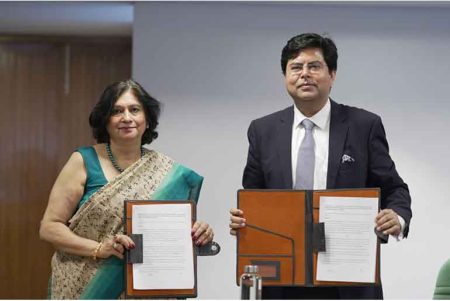
The MoU was signed in the presence of Uttar Pradesh Energy Minister A.K. Sharma and Kotaro Nagasaki, Governor of Yamanashi Prefecture, strengthening cooperation between the Indian state and Japanese prefecture in the emerging clean-energy sector.
Green Hydrogen Gains Strategic Importance
Speaking at the investment meet, Sharma highlighted the growing role of green hydrogen in building a cleaner and more sustainable energy economy.
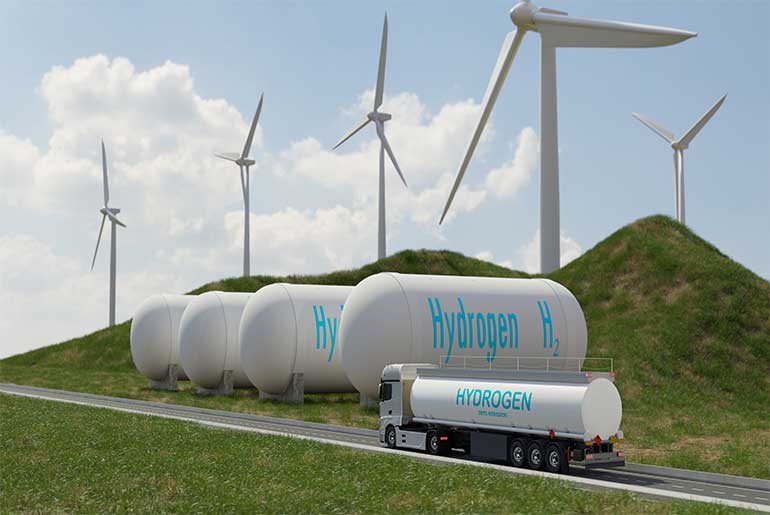
Green hydrogen, produced using renewable electricity to split water into hydrogen and oxygen, is increasingly being considered for sectors where direct electrification can be challenging. These include heavy industry, long-distance transport, chemicals and other energy-intensive applications.
For Uttar Pradesh, developing green hydrogen capabilities could help industries reduce their dependence on fossil fuels while creating new opportunities across clean-energy manufacturing, infrastructure and technology services.
The state is also seeking to establish itself as a destination for investments in emerging energy technologies. A successful pilot project could provide valuable experience in hydrogen production, storage, distribution and end-use applications before larger projects are developed.
Yamanashi Brings Hydrogen Expertise
Yamanashi Prefecture has built expertise in hydrogen production, storage and fuel-cell technologies, making it a potential technology partner for Uttar Pradesh as the state develops its hydrogen strategy.
The Japanese prefecture’s experience could support the Indian state in evaluating technologies suited to local energy requirements and identifying practical approaches for scaling green hydrogen production.
The partnership could also facilitate technology transfer, joint research and knowledge sharing between institutions and companies in India and Japan.
For the battery and energy-storage sector, the development is particularly relevant because hydrogen and battery storage can play complementary roles in future low-carbon energy systems. Batteries are well suited to short-duration electricity storage and grid balancing, while hydrogen can potentially provide longer-duration energy storage and support industrial applications.
Pilot Project Could Open Door to Larger Investments
The pilot initiative is expected to serve as a foundation for broader green hydrogen projects in Uttar Pradesh. Demonstrating the technical and economic viability of hydrogen technologies at the pilot stage could help attract additional private-sector participation and international investment.
The collaboration also creates opportunities for companies involved in renewable power, electrolyzers, hydrogen storage, fuel cells, power electronics and related infrastructure.
As India works to expand its clean-energy capacity and reduce carbon emissions, partnerships that combine international technology expertise with domestic manufacturing and project development could become increasingly important.
The Uttar Pradesh–Yamanashi agreement therefore represents more than a single pilot project. It signals an effort to build a wider green hydrogen and clean-technology ecosystem, while strengthening India-Japan cooperation in the energy transition.
If successfully implemented, the pilot could provide a blueprint for larger-scale hydrogen projects across Uttar Pradesh and support the state’s ambition to attract investment in sustainable energy and low-carbon industrial infrastructure.
 Electrify your feed! Click here to join our Whatsapp group and to get the latest updates, expert insights, and innovations driving India’s energy storage revolution.