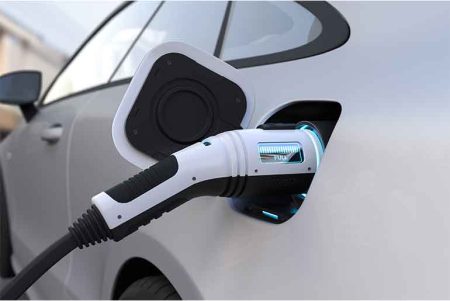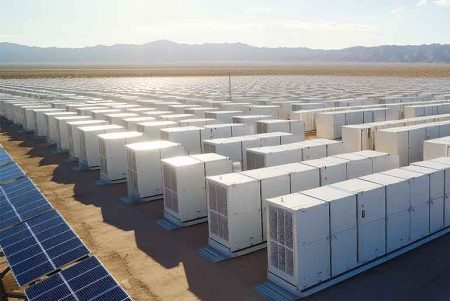

A quiet but profound shift is happening inside India’s EV ecosystem. Battery safety, once treated as a background engineering function, has now become the defining pillar of reliability and consumer trust. And in every technical meeting, every R&D huddle, every OEM strategy discussion, one phrase has become impossible to ignore: “We’re moving to BMS 2.0.” It isn’t a marketing slogan or a cosmetic upgrade. This transition marks the moment when the battery stops being a sealed black box, monitored only for voltage and temperature, and starts becoming an intelligent organism—one that learns, predicts, and self-corrects.
To understand why this shift has captured the imagination of OEMs across India, it helps to look at where we’ve come from.
From BMS 1.0 to BMS 2.0 — How Safety Evolved
The earliest generation of battery management systems—what we today call BMS 1.0—was built around one purpose: protection. These systems were designed to watch over voltage, temperature, current limits and basic state-of-charge, stepping in only when something crossed a threshold. It was a reactive guardian, waiting for a signal to intervene. Back then, this made sense. EVs were simpler, loads were predictable, charging speeds were modest and thermal conditions were manageable.
But India’s EV usage changed dramatically. Hot summers, dense stop-go traffic, unpredictable charging patterns, intensive fleet duty cycles and fast-charging adoption pushed batteries far beyond what early BMS systems were built for. Suddenly, monitoring wasn’t enough. OEMs needed a system that could sense problems before they became problems. They needed intelligence.
And that is where BMS 2.0 begins.
What BMS 2.0 Really Means
If BMS 1.0 operated like a basic thermometer, BMS 2.0 behaves more like a full-fledged doctor—observing subtle symptoms, learning from patterns, and predicting future issues. It uses AI and machine learning not as buzzwords, but as the backbone of a new safety architecture.
This new generation of BMS is characterised by its ability to detect cell-level irregularities that traditional methods often miss. Tiny current fluctuations, impedance changes, thermal drifts—these signals are too subtle for classical algorithms but easily spotted by pattern-recognising models. And unlike rigid mathematical thresholds, ML models evolve. They continuously improve as they digest more data from real-world behaviour: charging habits, climatic conditions, driving style, aging patterns and fleet usage cycles.
Instead of simply cutting off power, the BMS can now adapt. It can reroute current, rebalance cells, slow the charging rate to protect the pack, issue an early alert, or suggest preventive servicing. The battery becomes participatory, not passive.
The AI Advantage: Seeing the Unseen
The true power of AI-driven battery safety lies in its predictive capability. Many battery failures begin quietly. A slightly warmer cell in one corner, a subtle rise in internal resistance, a tiny dip in voltage consistency—these weak signals are fingerprints of ageing or early degradation. Humans cannot see these patterns. Traditional BMS systems cannot see them either.
But machine learning models can.
These systems learn from thousands of cycles and environmental variables to forecast potential faults long before a user notices anything wrong. This is especially critical in India, where the combination of heat, dust, fast charging and long daily distances puts exceptional stress on cells. A predictive model allows the vehicle to manage itself better: to distribute thermal load, to modify charge profiles, and to ensure that no single cell becomes the weak link that triggers a chain reaction.
The result is a safety architecture rooted in foresight rather than reaction.
Why OEMs in India Are Racing Toward BMS 2.0
OEM interest in predictive BMS is not theoretical—it is business survival. Battery safety incidents damage consumer confidence faster than any other factor. A single viral video can shape public perception for months, even years. As EV volumes rise, brand reputation hinges on a safety system that eliminates surprises.
Beyond brand trust, the Indian operating environment makes predictive safety indispensable. Heat alone is a formidable adversary, capable of triggering accelerated ageing and thermal instability. Add to this the rising number of fast chargers, commercial fleet demands and high-utilisation mobility patterns, and you have a demanding ecosystem where intelligent thermal and charge management is not optional.
Moreover, fleet operators—from delivery platforms to shared mobility networks—now demand predictive maintenance. For them, downtime equals revenue loss. BMS 2.0 gives them the ability to monitor real-time battery health across hundreds or thousands of vehicles, intervening before problems escalate. This also extends battery life—one of the strongest cost levers for fleet economics.
In short, OEMs are embracing BMS 2.0 because the market demands it, the environment requires it, and the technology finally allows it.
The Technology Behind Predictive Battery Safety
Inside BMS 2.0, safety is achieved through a layered stack of intelligence. It begins with cell-level sensing, where the system captures highly granular data from every single cell instead of watching the pack as one unit. This data feeds into advanced SoC and SoH models that adjust dynamically based on usage behaviour, temperature cycles and charge-discharge patterns.
Cloud-connected analytics add an additional layer, especially for fleets. Thousands of EVs send anonymised operating data into cloud servers where patterns emerge at population scale. This allows OEMs to refine their models, push firmware updates, and identify emerging risks in the field long before they become incidents.
Some predictions even happen directly on the vehicle—what’s known as edge AI. This is crucial for thermal-runaway prevention, where decisions must be made within milliseconds. Many systems use digital twins—virtual replicas of the battery pack—to simulate ageing and predict how the battery will behave under varying stress conditions.
Put simply, the battery learns itself.
How BMS 2.0 Helps Prevent Thermal Runaway
Thermal runaway is the scenario everyone wants to avoid. Predictive BMS plays a transformative role here. By identifying heat signatures and electrical anomalies that precede runaway, the system can intervene much earlier than traditional BMS ever could. It may reduce load, redirect current, lower charging power, or balance cell groups more aggressively. It can send warnings to the user and automatically activate protective algorithms designed to isolate problematic cells.
This layered intelligence is precisely why predictive BMS is becoming the cornerstone of EV safety standards across the world.
Challenges That Still Remain
Despite its promise, BMS 2.0 faces challenges. High-quality data is essential for training AI models, and newer OEMs may lack historical datasets. The hardware needed to support cell-level intelligence and edge computing can add cost in price-sensitive segments like two-wheelers. Cybersecurity becomes more complex when batteries are connected to cloud networks. And every algorithm must be tuned specifically for India’s operating environment, not blindly imported from other markets.
But none of these challenges outweigh the benefits. OEMs know that predictive battery safety is not an upgrade; it is the baseline required for the next phase of India’s EV story.
Conclusion: The New Era of Intelligent Battery Safety
India’s EV transition will ultimately be defined not by range or speed, but by trust—trust that the vehicle is safe, reliable and ready for the country’s demanding roads and climate. BMS 2.0 is the quiet revolution enabling that trust. With AI-driven battery safety at its core, the battery becomes smarter, safer and more durable. It predicts failures, adapts to behaviour, and learns from every cycle.
This is not the future.
This is what is being built right now.
 Electrify your feed! Click here to join our Whatsapp group and to get the latest updates, expert insights, and innovations driving India’s energy storage revolution.