Wiltson Energy, a pioneer in low-temperature lithium battery technology, revealed a ground-breaking accomplishment that shows unparalleled dependability for demanding power solutions both domestically and internationally. At 29,032 feet, the company’s patented low-temperature battery solution provided faultless, maintenance-free performance, effectively supporting a crucial national Mount Everest trip. Under some of the most severe conditions on Earth, this robust system made sure that the world’s highest autonomous weather station and essential ice core drilling equipment continued to function.
Battery technology has always faced significant hurdles when operating in the harsh conditions of Mount Everest, which include extremely high altitude, extreme low air pressure, and temperatures that can drop below -40°C (-40°F). Ternary lithium and ordinary lithium iron phosphate were two examples of previous systems that used regular or externally heated batteries, but they were unable to deliver the long-term stability and sustained power needed for crucial scientific procedures.
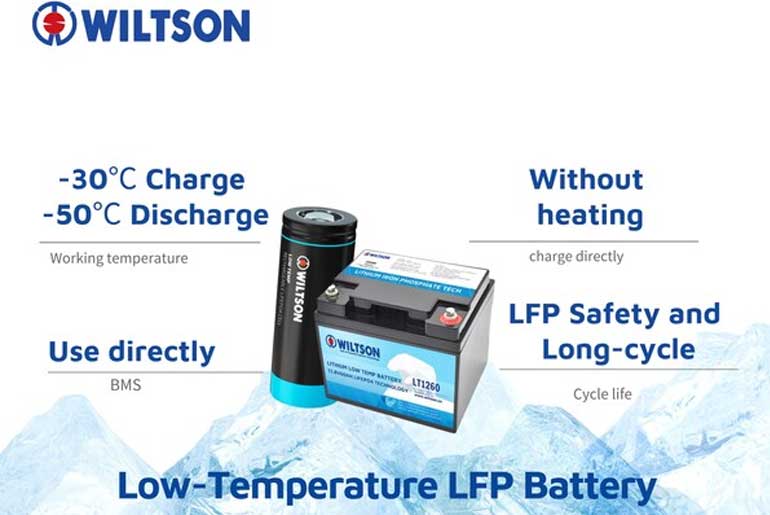
By utilizing their cutting-edge low-temperature LiFePO4 battery technology, Wiltson’s technical team was able to overcome these difficult difficulties, overcoming three main ones:
- Exceptional Discharge Performance in Extreme Cold: Achieving over 80% discharge efficiency at -40°C (-40°F), comparable to normal temperature operation., ensured critical equipment remained reliably powered.
- Direct Solar Charging Capability at Freezing Temperatures: Enabling direct charging via solar power at temperatures as low as 0°C (32°F) eliminated the need for complex, energy-consuming heating systems and solved the critical challenge of energy replenishment in remote, frigid locations.
- Robust Pressure-Resistant Design: Employing a durable cylindrical steel case design effectively mitigated the risk of pressure differential failures common at extreme altitudes and low atmospheric pressure, ensuring consistent, reliable operation.
The remarkable dependability and durability of Wiltson’s battery technology in the most demanding conditions on the planet were well demonstrated by this successful expedition. For an astounding 12 days, the battery system powered the scientific apparatus continuously and without interruption, negating the need for an external power source or maintenance.
Broad applications of this demonstrated capability exist, especially for demanding environments across the United States, such as robust outdoor photovoltaic power solutions, critical infrastructure in cold climates (such as telecommunications or remote monitoring), and scientific research in polar or high-altitude regions. Wiltson’s direct low-temperature lithium battery core enables smooth charging and discharging at temperatures as low as -40°C (-40°F), in contrast to traditional low-temperature methods that depend on external heating. This ‘no-heat-needed’ strategy efficiently removes cold weather as a deterrent to the usage of high-performance lithium batteries and leads to a remarkably straightforward, effective, and reliable battery product design. Supported by global certifications such as UL, CB, CE, UN38.3, and REACH, Wiltson uses the long cycle life and inherent safety of lithium iron phosphate chemistry to produce this ground-breaking performance.
“Successfully powering critical scientific equipment on Mount Everest, enduring temperatures down to -40°C and extreme low pressure for 12 days, is a monumental achievement for Wiltson Energy,” stated Robert Xie, Wiltson’s Chairman and CTO. “This mission unequivocally demonstrates the unmatched reliability and performance of our low-temperature battery technology in the world’s most demanding environments. We are incredibly proud of this validation and are eager to bring these proven capabilities to customers across the US market who face similar challenges requiring dependable power in extreme cold, high altitude, or remote locations. This technology changes what’s possible for applications from scientific research and polar expeditions to critical infrastructure and off-grid solar.”
 Electrify your feed! Click here to join our Whatsapp group and to get the latest updates, expert insights, and innovations driving India’s energy storage revolution.